

Carefully selected materials that deliver exceptional print quality, durability, and shelf presence.


 New
New


Types of Finishes Used in Custom Boxes
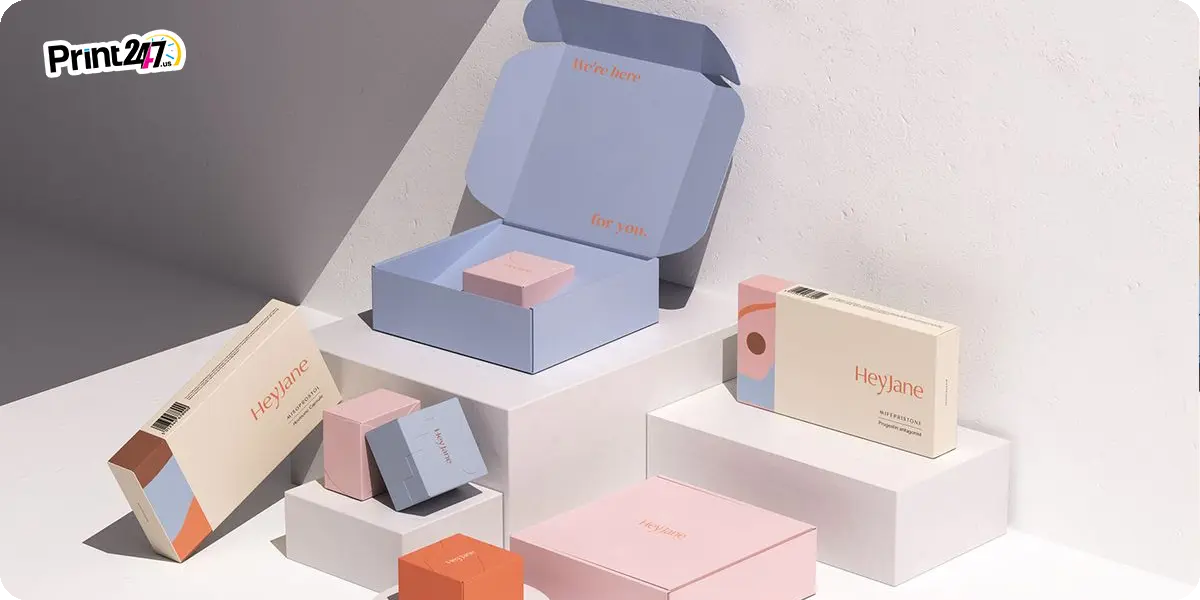
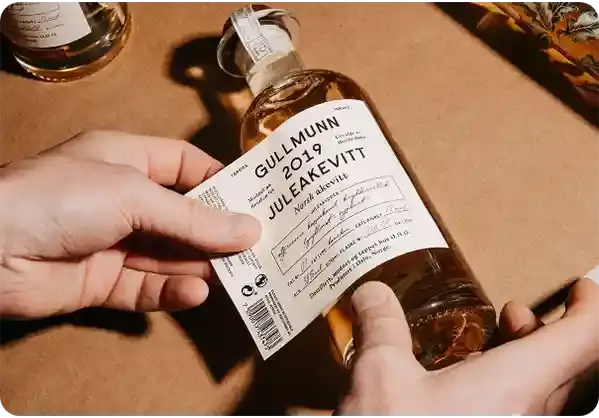
When strolling through the shelves in retail stores or in packaging tradeshows, you don’t only see exclusive designs printed but also something more. And this additional touch is what you can feel on the surface of the custom box when you hold it in hand.
In short, think of finish as a clear coating, film, or special effect that is added on top of the printing to change how the box looks and feels.
Moreover, the right finish can make colors brighter, diminish glare, add a soft or velvety touch, protect against scratches, and even add shine to the overall appeal of the packaging.
The market size of custom boxes was estimated to attain 5.26 billion USD in 2025 and forecasted to achieve 7.72 billion USD in 2035. Growing exponentially at a CAGR of 3.9%.
In this guide, you’ll learn the main types of packaging finishes for custom boxes so you can pick what fits your brand and budget. Also, how we as a proficient manufacturer and supplier of premium packaging solutions help you make the right choice for your business needs.
Coating Finishes: The Basic Protective Layer
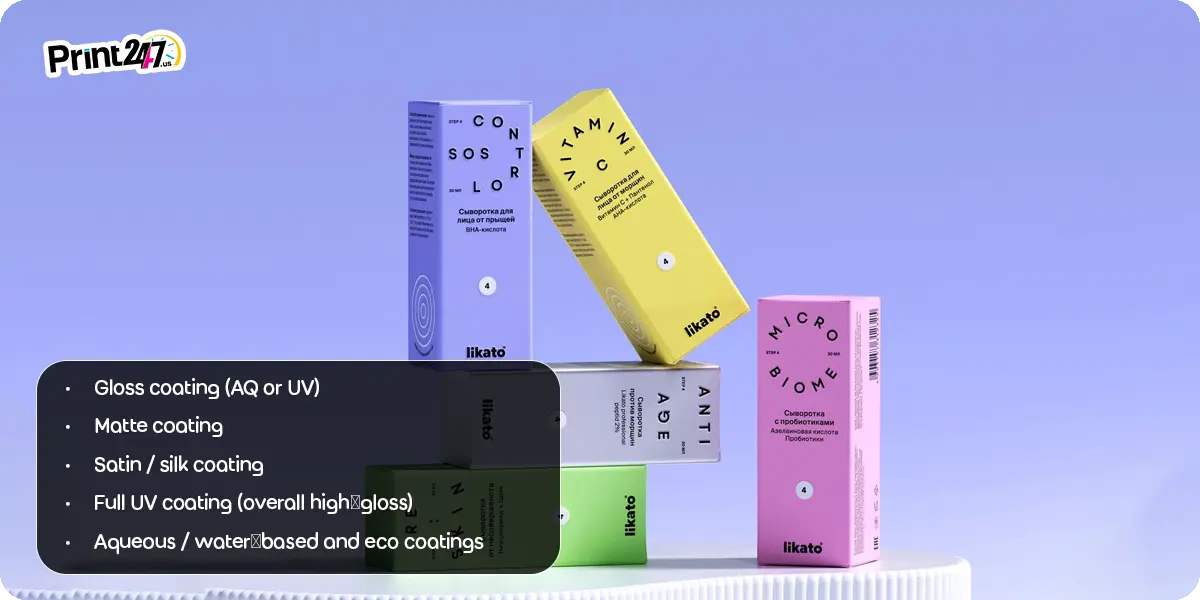
Coating finishes are thin liquid layers applied over the printed box and then dried or cured. They are usually the most common and cost‑effective way to protect your print as well as change the overall look of the box surface. Some of the common coating finishes are discussed below.
Gloss coating (AQ or UV)
Gloss coating gives a shiny surface that makes colors look bright and rich. It is good for colorful designs, photos, and retail boxes that need to stand out under store lights.Matte coating
Matte coating has almost no shine. It gives a calm, flat look that feels soft on the eyes. It is great for modern, minimal, or natural‑style packaging.Satin / silk coating
Satin, or silk coating, sits between gloss and matte. It has a gentle sheen, so the box is not too shiny and not too flat.Full UV coating (overall high‑gloss)
Full UV is a very glossy, hard coating cured with UV light. It gives strong shine and good resistance against rubbing and moisture.Aqueous / water‑based and eco coatings
These are water‑based, low‑VOC coatings made to be safer and more recycling‑friendly than heavy liquid based coatings. They are a good choice for brands that care about sustainability.
Coating type | Look and feel | Protection level | Best for |
Gloss coating | Shiny, bright colors, high contrast. | Good rub and moisture resistance. | Colorful designs, retail shelves, product photos. |
Matte coating | Flat, non‑shiny, soft and premium. | Moderate protection. | Minimal, luxury, or natural‑style boxes. |
Satin / silk coating | Gentle sheen between gloss and matte. | Similar to gloss. | Brands wanting a balanced look. |
Full UV coating | Very glossy, mirror‑like shine. | Strong, very durable. | High‑impact graphics, strong shelf presence. |
Aqueous / eco coats | Can be gloss or matte, thin, natural. | Light to moderate protection. | Eco‑minded and recyclable paper boxes. |
Lamination Finishes – Film for Extra Protection and Feel
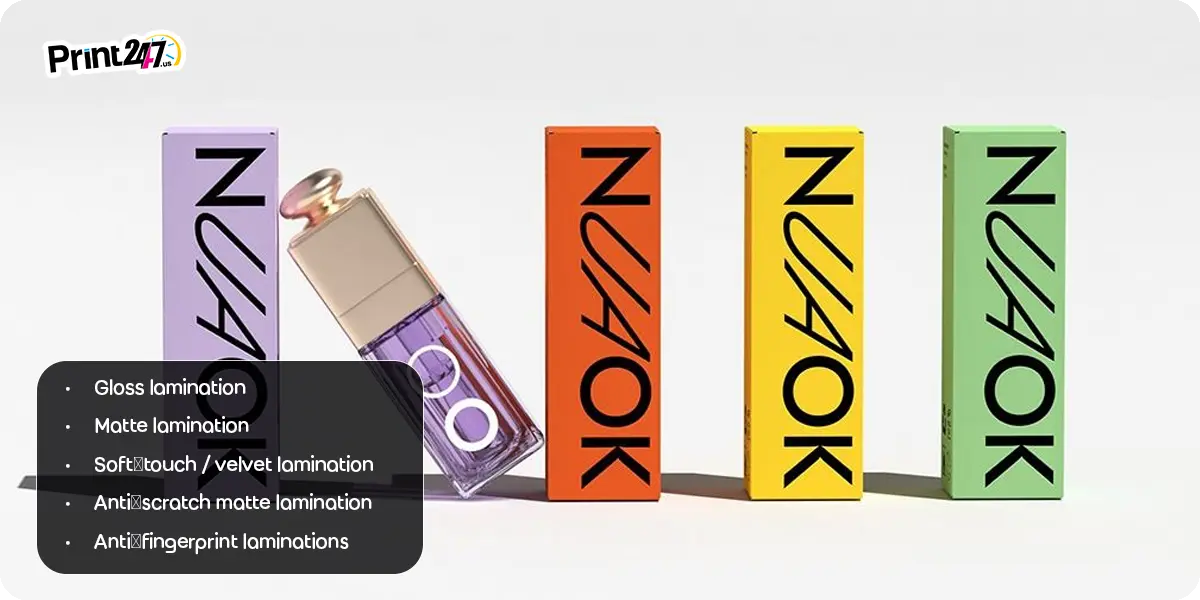
Lamination finishes add a thin plastic or specialty film on top of your printed board. This film gives stronger protection and a very clear change in feel. Some of the most common lamination finishes are as follows:
Gloss lamination
Gloss lamination is a shiny film that makes colors look deep and bold. It helps protect against moisture, scuffs, and general wear. This is common on retail boxes and products that customers handle a lot.Matte lamination
Matte lamination is smooth and non‑reflective. It cuts glare and gives a quiet, premium look. It is popular on rigid boxes, cosmetics, electronics, and gift boxes.Soft‑touch / velvet lamination
Soft‑touch lamination feels like velvet or “peach skin” when you run your fingers over the box. It instantly makes packaging feel high‑end and is most of the times used for premium cosmetics, tech, and subscription boxes.Anti‑scratch matte lamination
This is matte lamination with extra scratch resistance. It helps dark colors and large flat areas stay clean even when the boxes rub during shipping.Anti‑fingerprint laminations
These laminations prevent fingerprints and smudges to stay on the packaging, which is very helpful on dark, smooth surfaces.
Lamination type | Look and feel | Durability / resistance | Common uses |
Gloss lamination | Very shiny, slick, bold colors. | Strong moisture and scuff protection. | Retail boxes, toys, food sleeves, bright designs. |
Matte lamination | Smooth, non‑glare, elegant. | High protection, hides small marks. | Rigid boxes, cosmetics, electronics, gift packaging. |
Soft‑touch lamination | Velvety, “rubberized,” luxury feel. | Good protection, can show scratches if abused. | Premium boxes, brand launches, influencer kits. |
Anti‑scratch matte lam | Matte look with extra scratch resistance. | Very strong on rub and scuffs. | Dark colors, long‑distance shipping, high‑traffic products. |
Anti‑fingerprint films | Matte or satin with less smearing from hands. | Keeps surfaces cleaner. | Luxury rigid boxes, display packs, dark brand colors. |
Metallic and Reflective Finishes – Shine That Grabs Attention
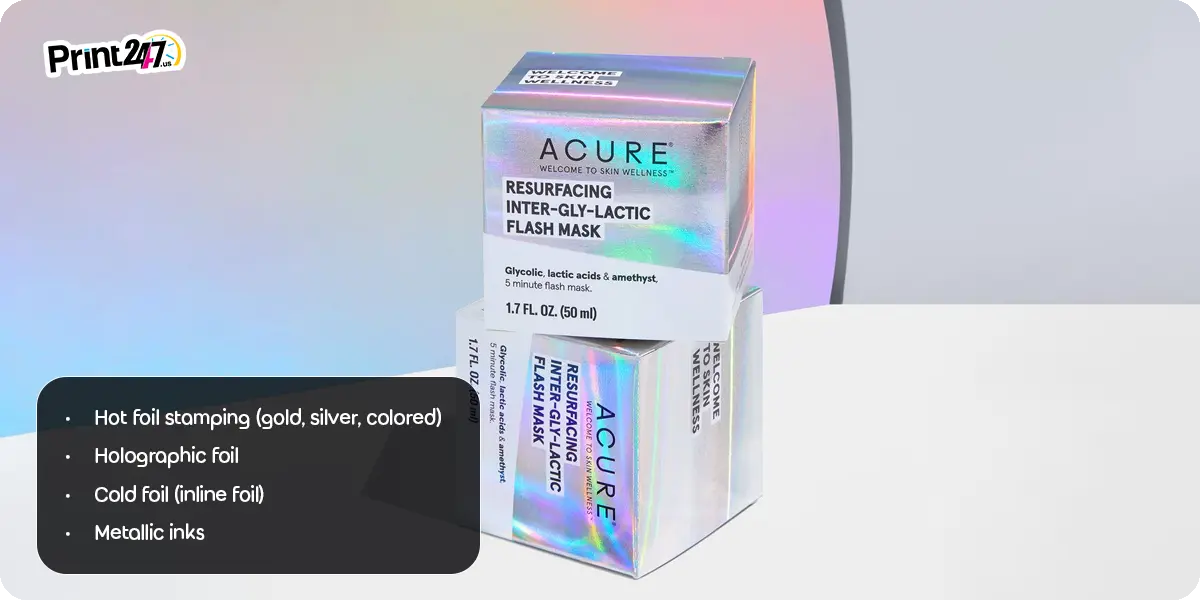
These types of finishes are famous to add bright shine, metal‑like looks, or rainbow effects on the box packaging that catches the eye at a glances. These are very common in cosmetics, personal care, tech, and luxury products. Common options include:
Hot foil stamping (gold, silver, colored)
Hot foil uses heat and pressure to press a thin metallic foil onto the box surface. It is perfect for logos, borders, seals, and small decorative elements.Holographic foil
Holographic foil has a rainbow or patterned shine that changes with the angle of light. It works well for tech gadgets, special editions, and beauty products that want a futuristic feel for their product packaging.Cold foil (inline foil)
Cold foil is applied on the press using adhesive and UV curing. It is good for fine details, large foil areas, and faster runs.Metallic inks
Metallic inks contain tiny metal particles that reflect light. They print like normal inks but give a softer metallic sheen than foil.
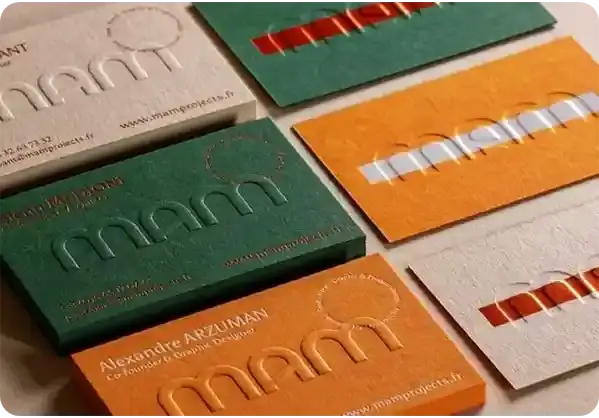
Foil stamping can also be combined with special finishing touches like embossing or debossing to make raised or recessed metallic logos that look and feel very premium to look at.
Textured and 3D Finishes – Making Boxes Feel Different
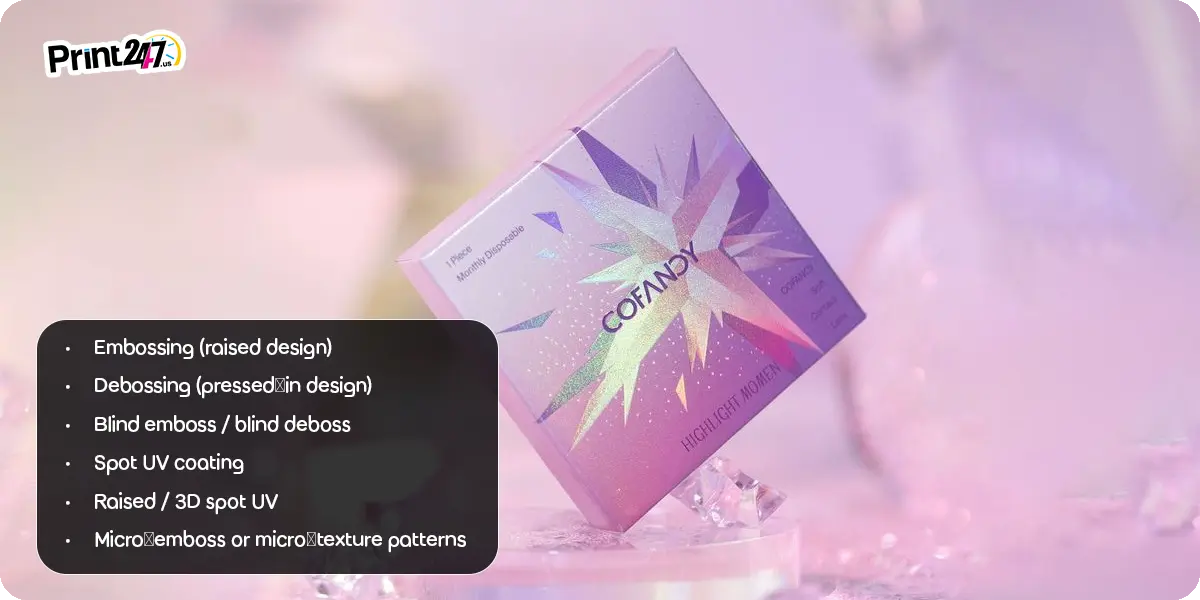
Textured and 3D finishes change how your box feels when someone holds it, not just how it looks on a screen. These finishes are powerful for unboxing and for luxury branding.
Embossing (raised design)
Embossing pushes the design up from the surface so it feels raised and 3D.Debossing (pressed‑in design)
Debossing presses the design down into the board so it sits below the surface, making a neat indentation.Blind emboss / blind deboss
These are emboss or deboss effects with no ink or foil on top. It is just a pure texture.Spot UV coating
Spot UV is a clear, very glossy coating added only on selected areas such as logos, text, or patterns. It is often used over matte or soft‑touch backgrounds to create strong contrast.Raised / 3D spot UV
This is a thicker spot UV that you can actually feel as a bump on the surface.Micro‑emboss or micro‑texture patterns
These are fine textures pressed into the surface to create linen, leather, or geometric patterns and improve grip.
Finish type | What it does | How it feels | Best for |
Embossing | Raises design above the surface. | Bumpy, 3D, easy to feel. | Logos, names, seals, pattern backgrounds. |
Debossing | Presses design down into the board. | Smooth groove, subtle. | Minimal logos, rigid boxes, luxury brands. |
Blind emboss/deboss | Texture only, no ink or foil. | Very tactile, tone‑on‑tone. | Premium, minimal packaging and stationery. |
Spot UV | Extra‑glossy coating on selected areas. | Slick only where applied. | Logos or patterns on matte/soft‑touch boxes. |
Raised / 3D spot UV | Thicker, raised spot UV. | Noticeable glossy bump. | Strong logo and icon emphasis on premium boxes. |
Micro‑emboss texture | Fine all‑over or panel textures. | Slight grain or pattern. | Rigid boxes, gift boxes, anti‑slip or textile‑like feel. |
Special Effect and Protective Finishes
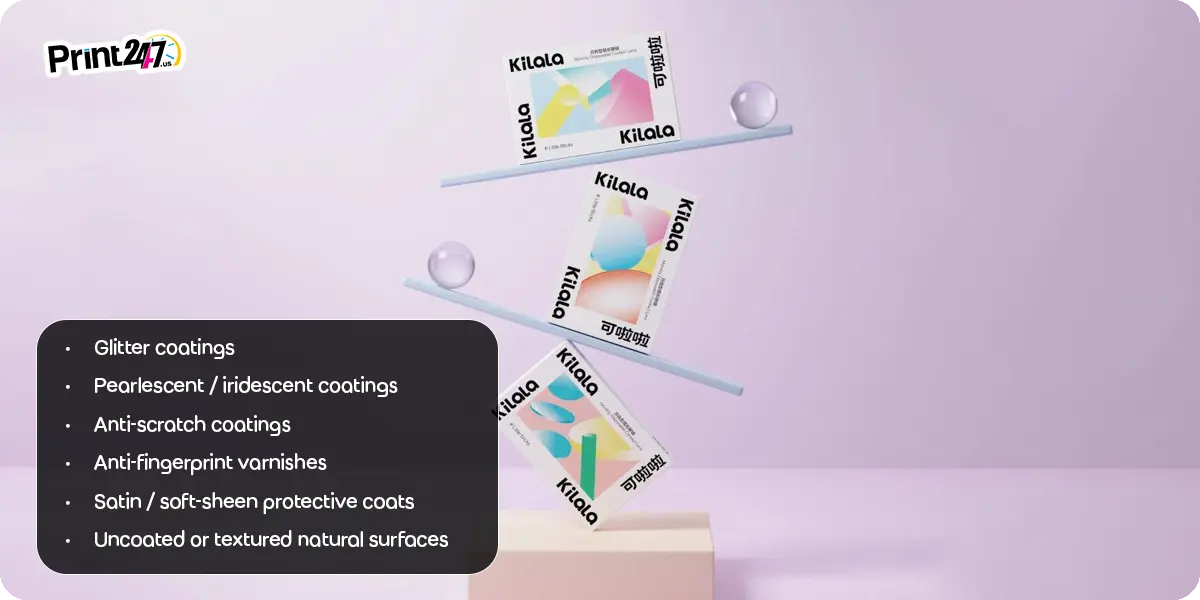
Some finishes are used mainly for special campaigns or to protect boxes in tough conditions.
Glitter coatings
Clear coatings mixed with glitter for sparkle on beauty, festive, or kids’ packaging.Pearlescent / iridescent coatings
Coatings that give a soft, pearl‑like shine that changes slightly with light.Anti‑scratch coatings
Hard clear layers used on dark or high‑gloss boxes to reduce visible scuffs.Anti‑fingerprint varnishes
Special coatings that help keep smooth surfaces free from oily marks.Satin / soft‑sheen protective coats
Coatings that add both gentle shine and extra resistance to wear.Uncoated or textured natural surfaces
Sometimes the “finish” is actually no heavy finish at all. Brands choose uncoated Kraft, recycled, or textured boards with minimal coating for an eco, natural look that is easy to recycle.
How to Choose the Right Finish for Your Custom Boxes
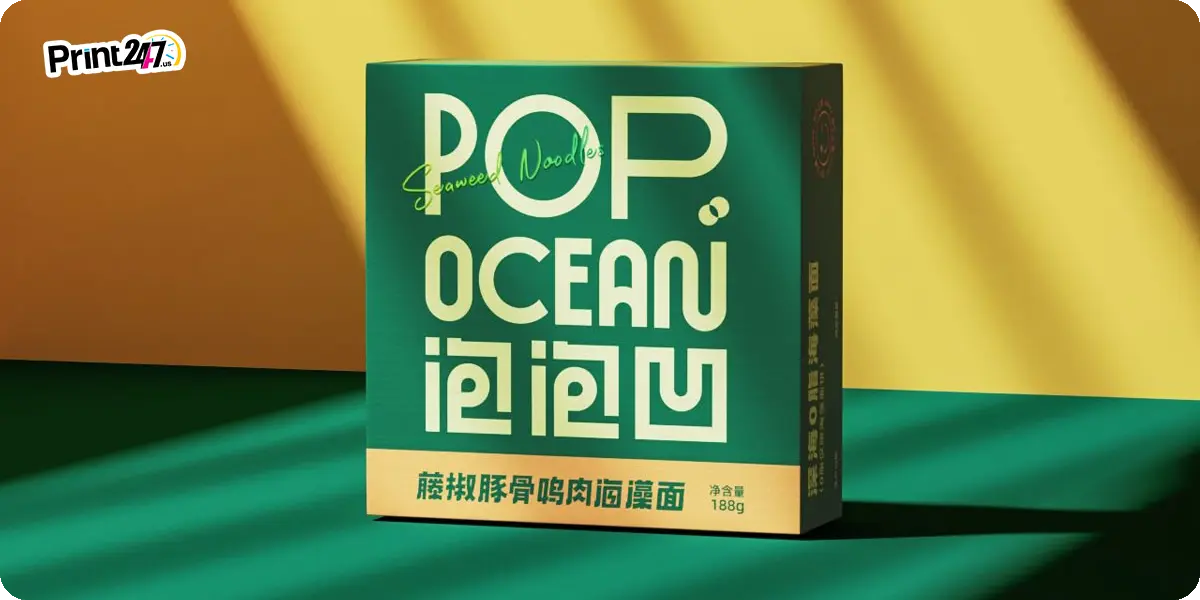
With so many finishes, how do you make a final choice? Here is a simple finish selection guide by which you can make a better decision.
Your main goal | Good finish choices |
Strong color pop and shine | Gloss coating, full UV, gloss lamination, foil. |
Calm, luxury, minimal look | Matte coating, matte lamination, soft‑touch, debossing. |
Maximum durability in shipping | Gloss or matte lamination, anti‑scratch coatings. |
High‑end unboxing experience | Soft‑touch lamination, embossing, foil, spot UV. |
Eco‑friendly and recyclable boxes | Aqueous coatings, light matte coats, uncoated Kraft boards. |
How Print247 Helps You Pick and Use Box Finishes?
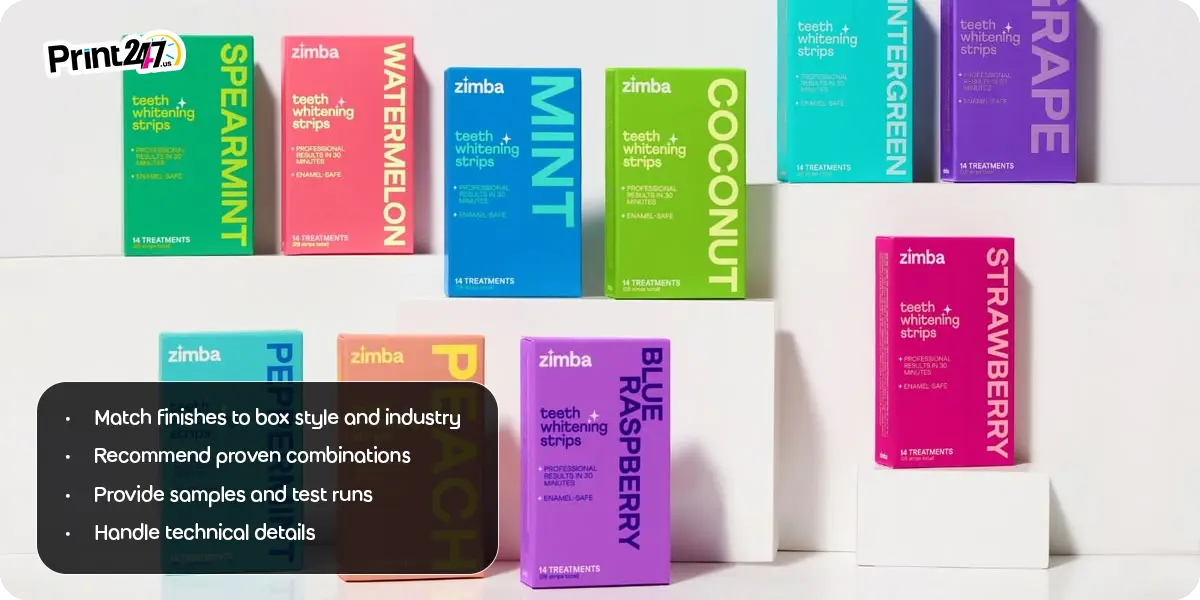
Choosing finishes can feel confusing and mind-boggling if you do it alone without any expert assistance. A packaging partner like Print247 can guide you so each finish supports your brand instead of just adding random cost.
Here’s how our team at Print247 can help:
Match finishes to box style and industry
We look at your product (cosmetics, food, electronics, apparel) and your box type (mailer, rigid, folding carton) and suggest finishes that we know perform well in that category.Recommend proven combinations
Common winning combos include:Matte lamination + spot UV for bold logos.
Soft‑touch + gold foil for luxury rigid boxes.
Kraft board + simple aqueous coating for eco‑first brands.
Provide samples and test runs
Before you commit to large orders, you can see and feel gloss, matte, soft‑touch, foil, and embossing on real boards. This makes it easier to decide what is truly worth paying for.Handle technical details
At Print247, we take care of file setup, die lines for foil and embossing, and checking that your chosen finishes work well with your paper stock and design.
Conclusion
In simple words it can be said that ink and artwork bring your brand to the box, but the finish is what your customers feel and remember when they pick it up. Coatings protect and set the mood, laminations add strength and texture, metallic effects grab attention, and 3D finishes like embossing and spot UV create real “wow” moments.
By understanding the main types of finishes used in custom boxes, you can choose a small set that matches your style, your budget, and your sustainability goals instead of guessing. When you’re ready to turn those choices into real packaging, a partner like Print247 can help you combine the right finishes so every box that leaves your warehouse looks and feels exactly the way your brand should.
Frequently Asked Questions
What is the core difference between lamination and coating?
Coatings are thin liquid layers (like gloss or matte varnish) that dry directly on the board, while laminations are thin plastic or specialty films (like gloss, matte, or soft‑touch) that are glued onto the printed sheet for stronger protection and a more noticeable feel.
Gloss vs matte finish: which should I choose?
Gloss finishes reflect more light, make colors look brighter, and are great for bold, colorful designs, while matte finishes absorb light, reduce glare, hide small marks better, and give a more premium, low‑key look.
What are spot UV and raised UV finishes?
Spot UV is a clear, very glossy coating applied only to chosen areas, such as logos or patterns, often on top of a matte or soft‑touch base, while raised or 3D UV uses a thicker layer so that shiny areas can also be felt as a bump.
Can all finishes be combined on the same box?
Many combinations work well like matte lamination with spot UV or soft‑touch with foil, but not every finish stacks cleanly with others, so complex combinations should be tested with your printer to avoid cracking, poor adhesion, or registration issues.
Get a Quick Quote

More Articles
 Bill ‘Hogg’ Ryan
8 T-Shirt Packaging Ideas for More Sales
 Bill ‘Hogg’ Ryan
Materials Used in Medicine Boxes and Why They Matter
 Bill ‘Hogg’ Ryan