










How to Calculate Custom Box Costs: Materials, Quantity & Finishes Breakdown
Getting an exact estimate of the cost of your custom box can feel like a complex task. As a business owner, you need packaging that protects your products and impresses your customers. However, you should also protect your profit margins.
Custom box costs range from $1 to $5 per unit. It all depends on the type of material you choose, the box size, the printing method, and the quantity you purchase. When you buy in large quantities, you can lower the per-unit cost. The use of a packaging cost calculator makes it easier for brands to estimate these expenses accurately.
The price of a custom box depends on a few key factors. These prices vary depending on material choice, printing style, and order volume. We break down each and every factor that influences packaging expenses. You will learn how to calculate these costs exactly to balance beautiful design with a smart budget.
Let's take a look at the main packaging pricing factors so you can make the right decision.
Key Takeaways
Material type is the primary factor in your final packaging price.
Ordering higher quantities greatly reduces your cost per box.
Having custom sizes eliminates empty space and lowers shipping fees.
Special finishes like foil stamping add luxury but increase the budget.
Digital printing is a great option for small orders without setup fees.
What Are Custom Box Costs? Understanding the Basics
Custom box costs are the prices associated with building packaging specifically for your special product. This costs more than cheap or mass-produced stock boxes and includes extra charges for custom sizing, material thickness, and logo printing.
Understanding how much custom boxes cost begins with knowing the basics. You must cover more than just cardboard in your packaging costs. A custom logo, ink, the exact size and thickness of the material are all extra charges. Any e-commerce brand owner can face challenges when it comes to setting a budget. There are always a few cents or dollars added to your invoice for every detail.
A basic understanding of these dynamics can help you control your spending. With a little creativity, you can create a visually stunning unboxing experience for your products while keeping costs low.
Breaking Down Custom Box Costs by Material and Design
Research shows that premium packaging increases your brand's chances of being recommended by 50%. The premium feel, however, has a direct impact on your custom box costs. The final invoice is affected by every design decision you make.
Let's examine the core elements that determine your product’s box price.
Packaging Materials: Corrugated, Rigid, and Folding Cartons
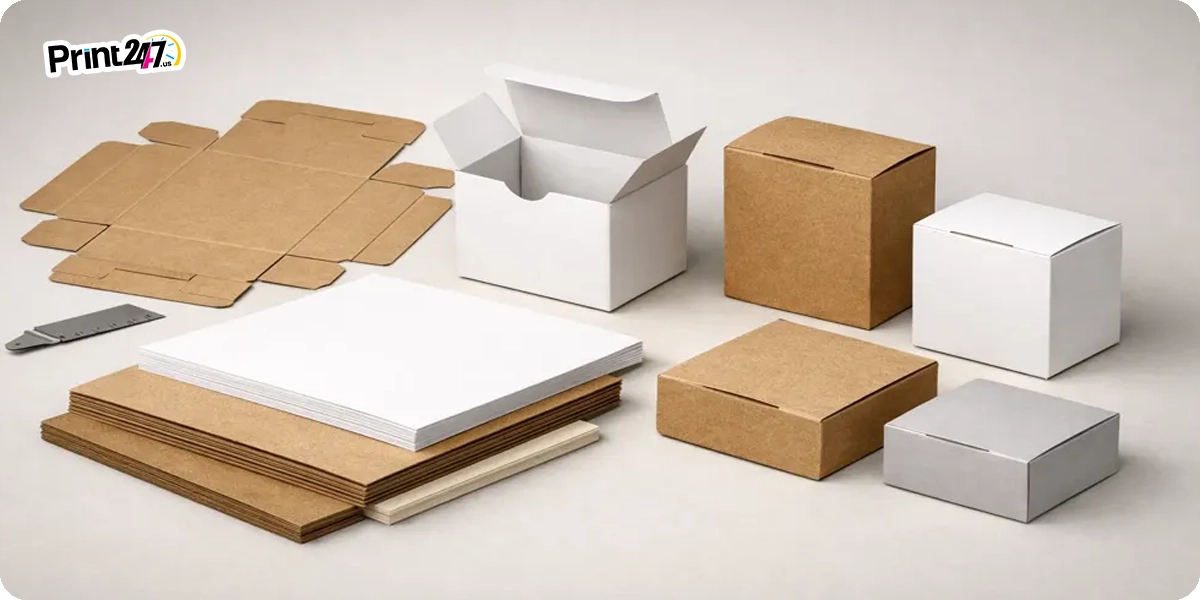
The first step in estimating packaging costs is choosing the right base material. There are three main types of boxes used by small and medium businesses. Cardboard folding cartons are very affordable and are made from thin cardstock. Corrugated boxes are made of thick, fluted cardboard, which helps to protect heavy items during shipping. The last one is rigid boxes that are thick, premium, and most expensive.
Material | Price Scale | Best Product Use Cases |
Folding Cartons | $ | Lightweight cosmetics, food, small electronics |
$$ | E-commerce shipping, heavy items, subscription boxes | |
Rigid Setup Boxes | $$$ | Luxury jewelry, high-end electronics, premium gifts |
Box Dimensions and Structural Complexity
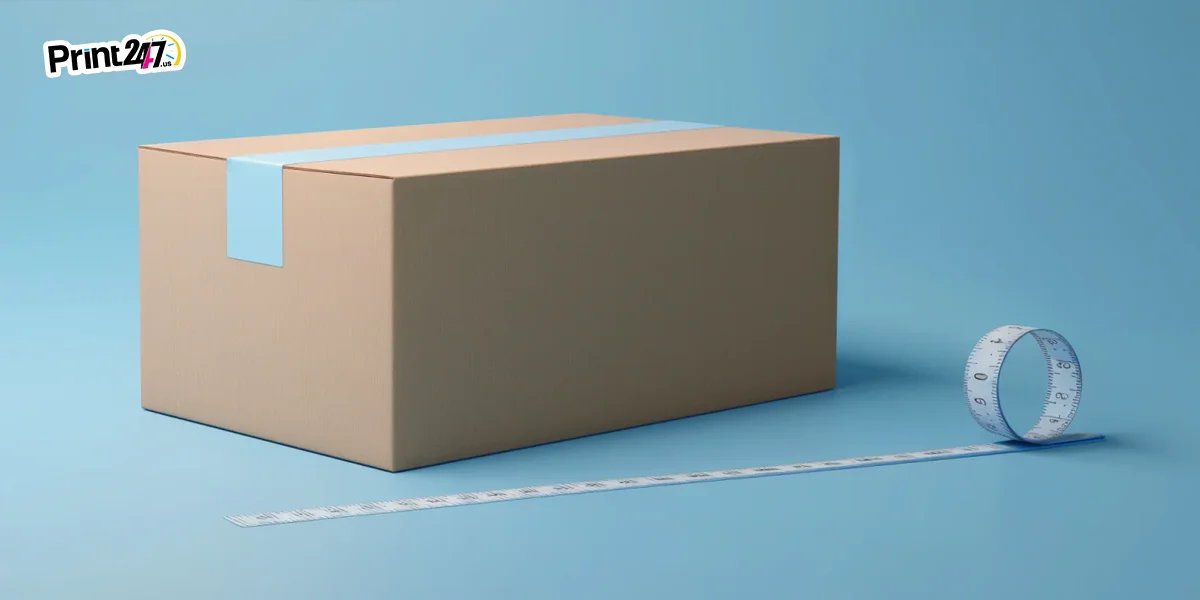
You can quickly change your final price based on your packaging dimensions. It is the total length, width, and height (L x w x h) that tells the packaging manufacturer how much material they need. The bigger the box, the more paper it uses and the more waste it produces. It is also more expensive to produce boxes with complex shapes or inserts that are custom made. There is a dimensional weight charge by shipping companies.
In other words, snug boxes save you money twice. Materials are less expensive to manufacture. Additionally, you pay less for shipping the product to your customer. It is always a good idea to select the smallest box that fits your item safely.
Printing Methods: Flexo, Litho, and Digital Printing
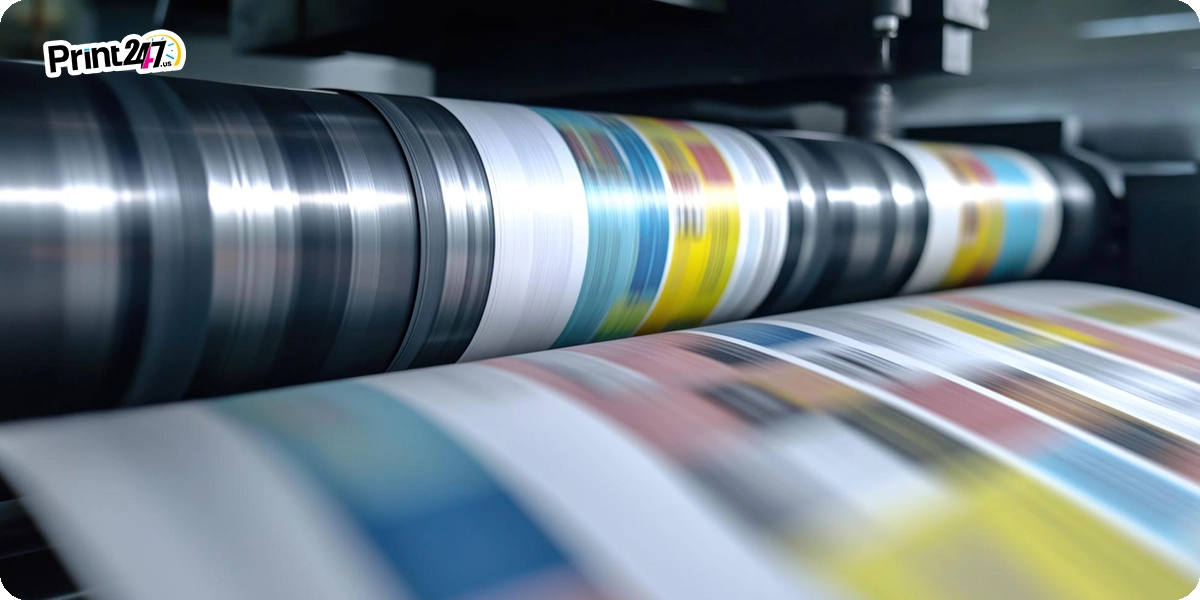
Custom printed boxes can be costly depending on the ink and artwork you choose.
Flexography (Flexo): The price flexography is very reasonable. On basic shipping boxes, it is perfect for printing simple logos.
Lithography (Litho): The images are of high-end and magazine-quality with lithography printing technique. The process requires expensive printing plates, so it is better suited to large orders.
Digital Printing: You don't need setup plates for this printing technique. In case of a quick run or a detailed design, it is perfect.
A digital or lithographic method is best suited to cosmetics and electronics brands. Retailers can use these options to improve the aesthetic appeal of their products.
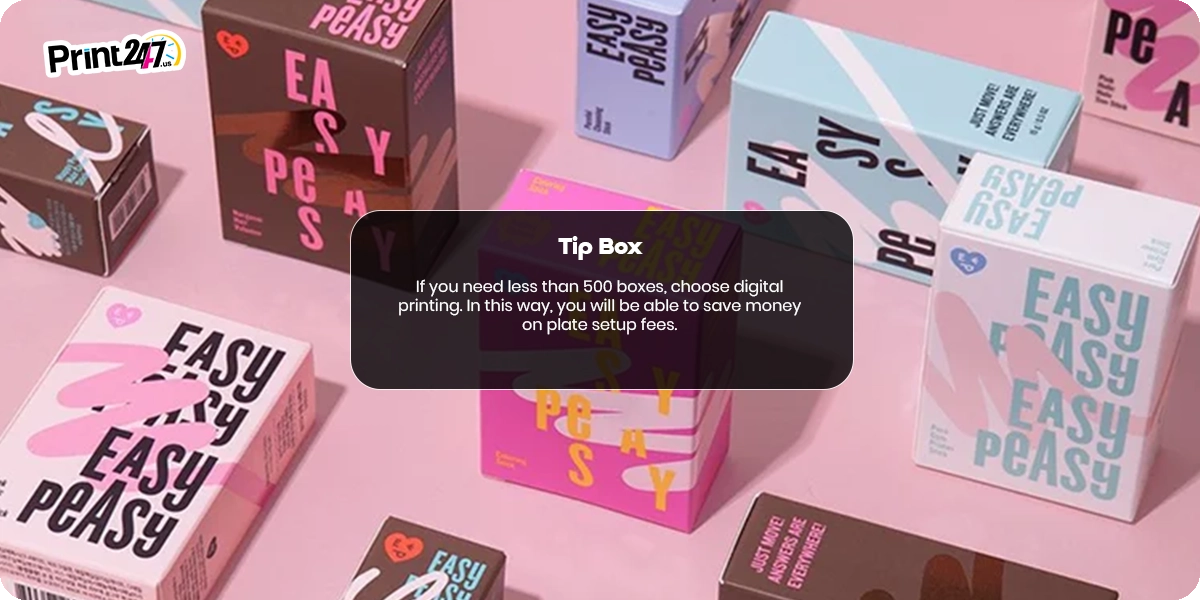
If you need less than 500 boxes, choose digital printing. In this way, you will be able to save money on plate setup fees.
Premium Finishes: Foil Stamping, Spot UV, and Embossing
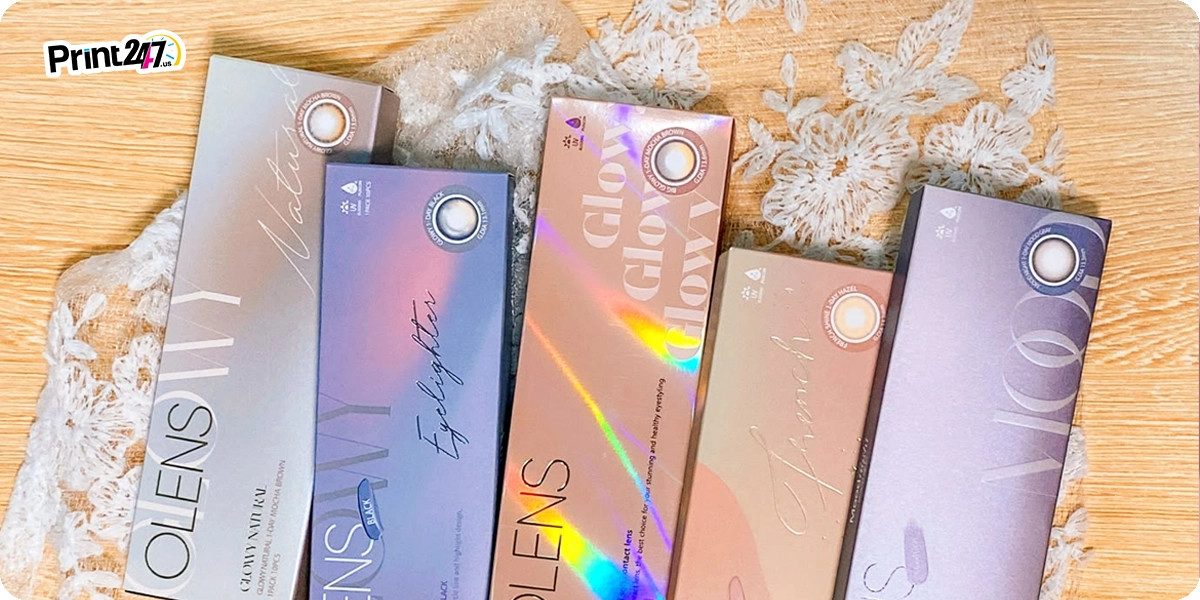
The special finishes on a box make it look luxurious. These custom packaging additions increase the cost per unit.
Foil Stamping: Adding shiny metallic gold or silver foils adds an extra step to production.
Embossing: Raising the paper to create a 3D logo requires a custom metal die.
Spot UV: Painting a glossy clear coat over specific letters makes them pop but costs extra.
Consider these finishes a special upgrade. Invest in them strategically for high-margin products like luxury gifts or premium skincare.
Order Quantity: Understanding MOQs and the Price-Break Curve
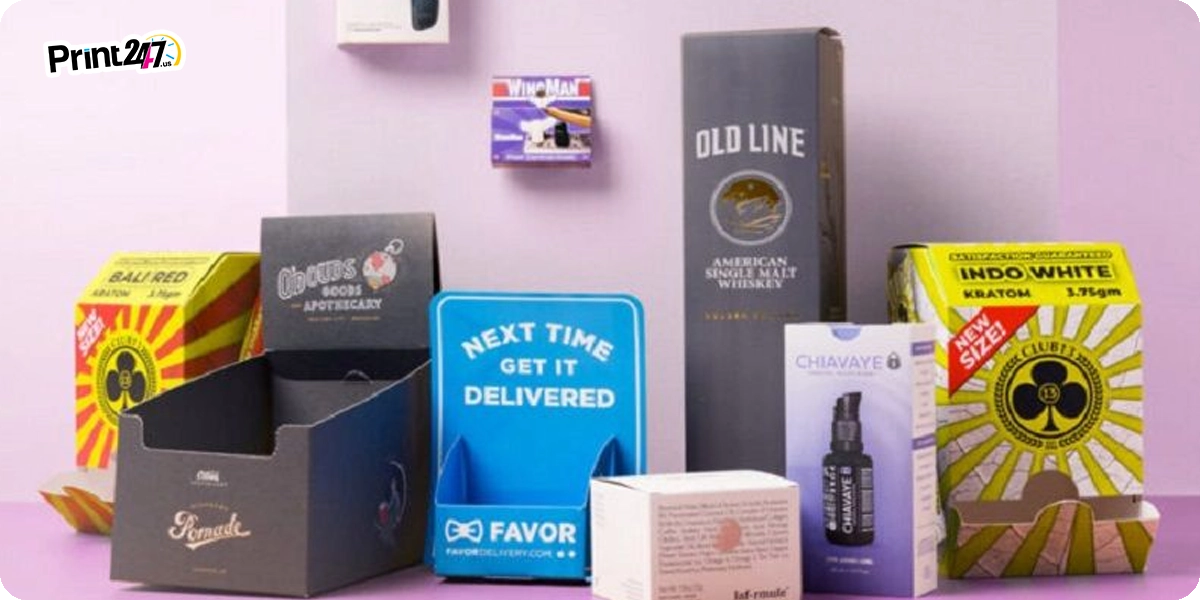
You can determine your custom box costs based on your order volume. It costs money for manufacturers to set up factory machines, so they have minimum order quantities (MOQs). By purchasing more units, you spread setup and printing plate costs over a greater number of boxes.
When you reach critical quantities, the cost per unit drops dramatically. The price usually drops significantly when you reach 500, 1,000, and 5,000 units. The price of custom packages varies depending on the volume, which can help you plan a smart budget.
Tiered Pricing Example (Estimated):
100 units: $3.20 per box
500 units: $2.10 per box
1,000 units: $1.10 per box
5,000 units: $0.75 per box
It is obvious that buying packing containers in bulk has many benefits. It saves you a lot of money per item.
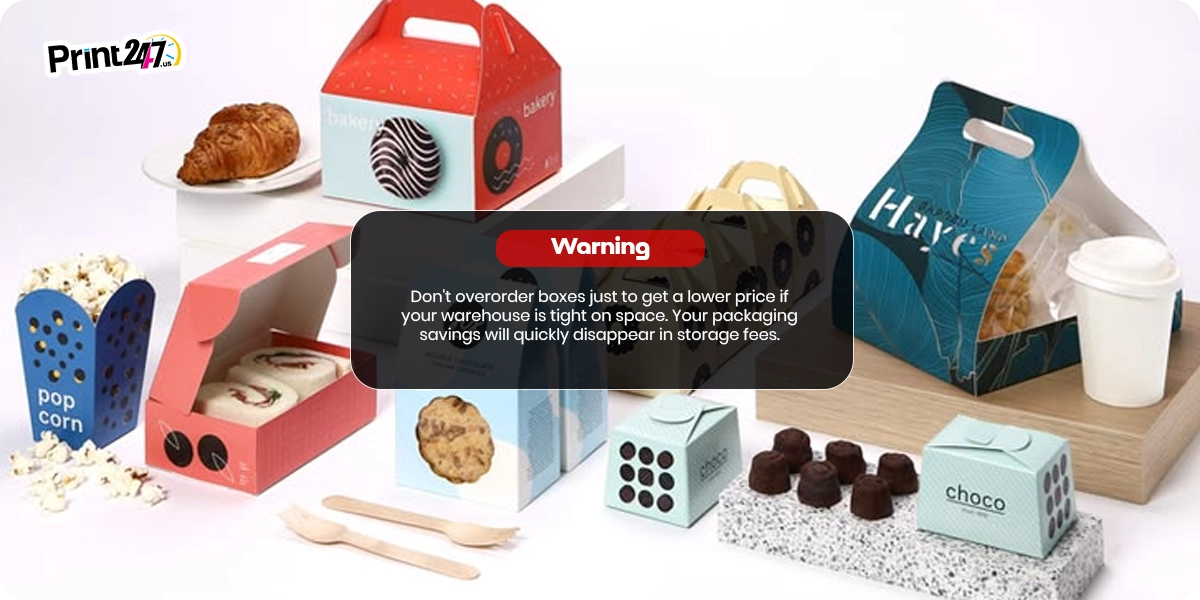
Don't overorder boxes just to get a lower price if your warehouse is tight on space. Your packaging savings will quickly disappear in storage fees.
How to Calculate Custom Packaging Costs for Your Brand?
Now you know the theory behind custom box costs. You need to crunch the numbers for your business. It's not necessary to struggle to find your exact price. It's just a matter of executing a few simple steps.
Follow these steps to get an accurate price tag for your brand.
Step 1: Measure Your Product and Determine Box Style
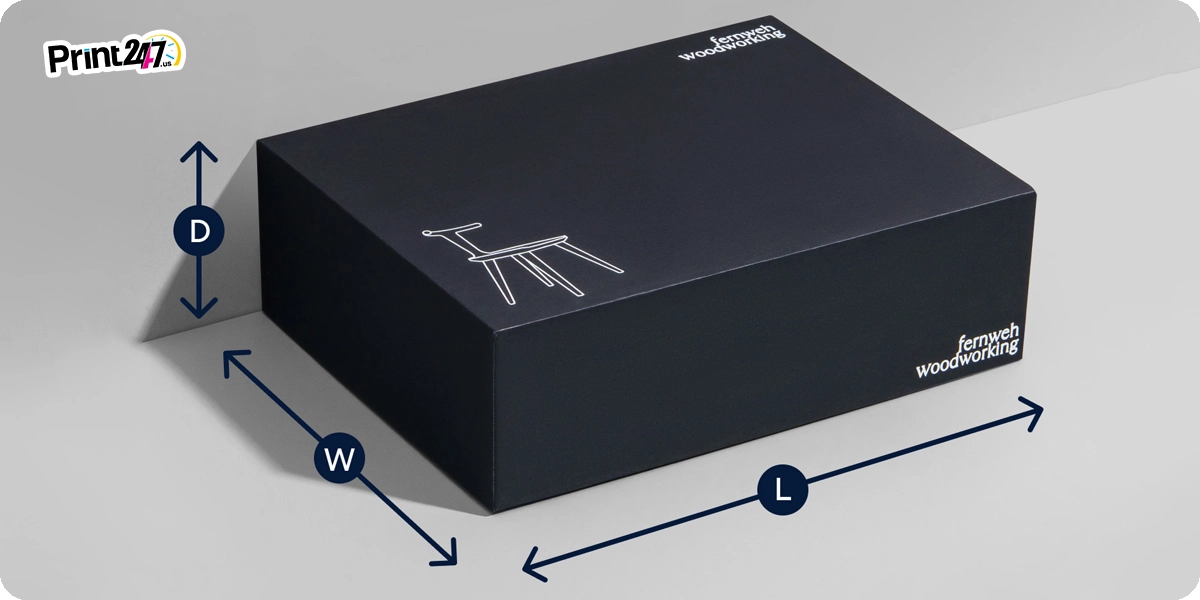
Learning how to measure products for packaging is your very first step.
Measure the item: Measure the length, width, and height of your product.
Add clearance room: Leave some room for bubble wrap, tissue paper, or custom inserts.
Pick a box style: Use a folding carton for lighter items, a mailer box for e-commerce, or an RSC (Regular Slotted Container) for bulky goods.
You should always measure in millimeters or inches according to the packaging manufacturer's instructions. Incorrect sizing can lead to costly mistakes and wasteful materials.
Step 2: Select Materials and Estimate Structural Needs
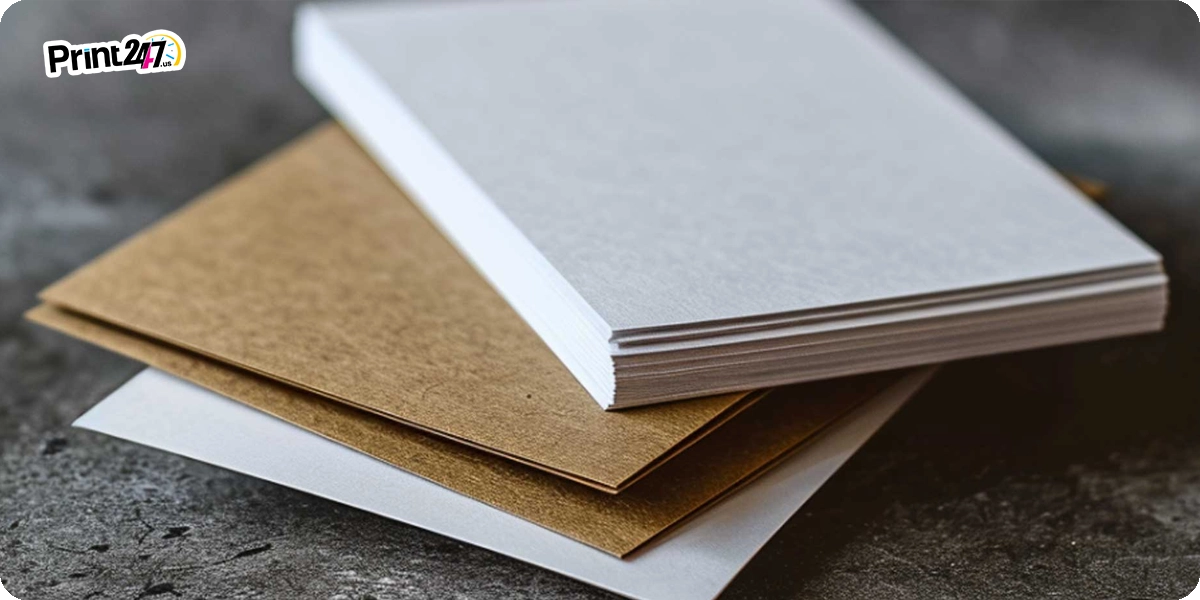
The product packaging you pick for your item must match its specifications. It is necessary to use thick corrugated cardboard if you sell heavy electronics. The perfect carton for lightweight cosmetics is a thin cardstock folding carton. Think about how your product travels.
Are you planning to place it on a retail shelf or will it bounce around in a delivery truck? Your material choice should reflect the weight and fragility of the product. It is always a good idea to ask your custom box supplier for a blank, unprinted structural sample. It is recommended that you test this sample with your actual product inside it before placing a wholesale order. It is this simple test that ensures a perfect fit.
Step 3: Use a Custom Packaging Cost Calculator
Once you've determined your measurements and material options, you're ready to receive a quote. A custom packaging cost calculator can assist you in finding a quick baseline price. The only thing you need to do is type in the dimensions of the box, the material, and the quantity of the order.
Additionally, you can select any premium print finishes you desire. The tool will instantly generate an estimated price per box. Using this budget as a starting point is a great idea. There are, however, a few drawbacks to these online tools. There is no way they can see your unique product.
It is best to speak directly with a packaging specialist if you want to discover hidden savings. Experts can suggest alterations to your custom box's size or material that calculators may not.
According to research, 72% of American consumers say packaging design directly influences their purchasing decisions. A great box is worth the investment.
Next Steps for Your Custom Packaging Costs Journey
We've covered all the most important factors that affect packaging cost estimates in this blog. It all boils down to the materials you choose, your printing methods, extra premium finishes, and the total amount of your order.
It's time to act now to calculate custom box costs accurately. Get a ruler and start measuring your products. Compare your options side by side with quotes from reliable suppliers. Don't forget that great packaging isn't just an expense for your business.
Make your packaging stand out with Print247, the leading packaging company in the US. Whenever you order, you'll get free design support and free shipping. Get a real, physical sample of our eco-friendly materials before making a purchase. We'll help you create the perfect custom boxes fast and hassle-free.
FAQs
How much does a custom shipping box typically cost?
The cost of a custom shipping box typically ranges from $1 to $5 per unit. A number of factors determine the price, such as cardboard thickness, box size, print design, and order volume. Your final cost per box will always be lower if you buy wholesale.
Are custom boxes more pricey than plain boxes?
The cost of custom boxes is higher than the cost of plain stock boxes. There is a price difference due to the custom tooling, the printing plates, and the unique setup of the design. Due to their mass production and standard sizes, plain boxes are much cheaper to manufacture.
How can a small business afford custom packaging?
When using standard box sizes and custom stickers or tape, small businesses can save money. They can also avoid expensive plate fees by using digital printing. It is also helpful to order fewer box sizes for multiple products.
Do manufacturers offer free prototypes?
Usually, no. The cost of fully printed prototypes is higher since they require full machine setups. Nevertheless, many suppliers are happy to send you a free, unprinted structural sample. This enables you to test the size and strength before purchasing.
What is the cheapest printing option for custom boxes?
When it comes to printing custom boxes in large quantities, flexography is the most cost-effective option. It uses simple rubber plates and fast-drying inks. It's perfect for printing basic, one-color logos directly on corrugated boxes.
Get a Quick Quote

More Articles
 Bill ‘Hogg’ Ryan
Custom Boxes for Small Businesses Without Breaking the Budget
 Bill ‘Hogg’ Ryan
Christmas Mylar Bags: Complete Guide for Food & Candy Brands (2026)
 Bill ‘Hogg’ Ryan