


Carefully selected materials that deliver exceptional print quality, durability, and shelf presence.


 New








What Is an RSC Box? RSC Boxes vs Die-Cut Boxes Explained
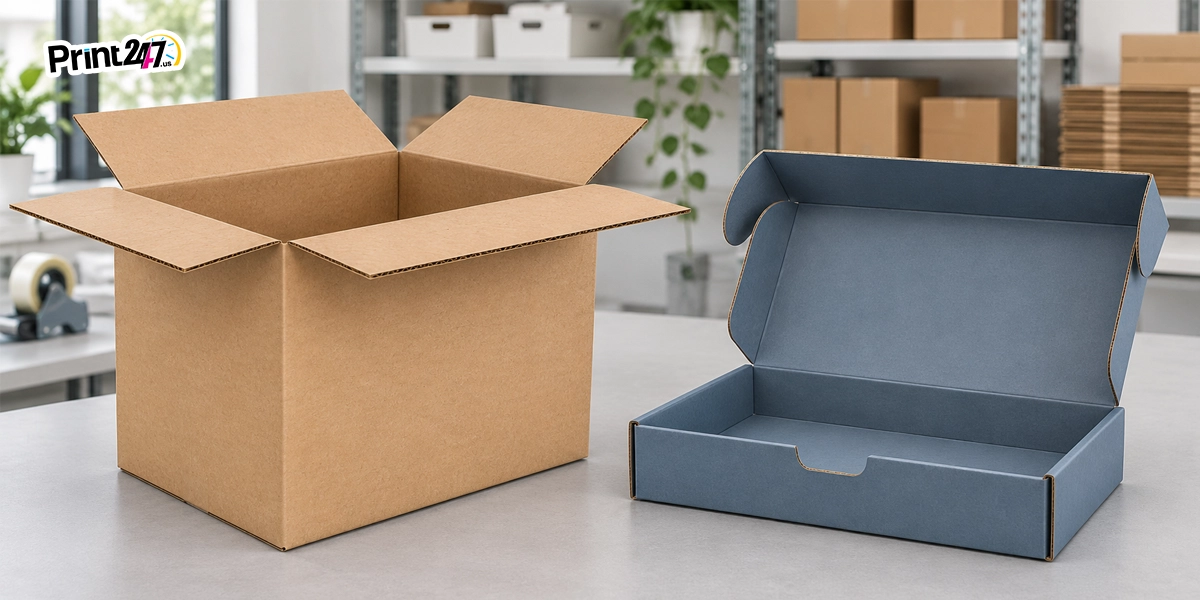
An RSC box is also known as a regular slotted container. It is a single piece corrugated shipping box with four equal length flaps on both the top and bottom. There is a center point where the outer flaps meet when closed. It is the most common box style because it is simple, strong and cheap to produce.
Your supplier quotes ‘RSC, 32 ECT, C flute’ and nobody on your team can tell whether that’s the good box or the cheap one. You have two options when you want to pack your products securely - RSC boxes vs. die-cut boxes. Choosing regular slotted containers is an affordable choice as they have become a versatile choice for shipping.
The real question is whether they suit your product, or whether a die-cut mailer is worth paying more for. Choose wrong and you either overpay on every shipment or pay for damaged returns. This blog is written to help you know which style to order, how to size it, and what affects the price.
What Is an RSC Box?
An RSC box is a corrugated box made from a single sheet of board. It comes with four flaps at each end that are all cut to the same length. Once the top is closed, the two outer flaps should meet at the center, ready for one strip of tape.
Spec sheets call it a regular slotted container or regular slotted carton. Buyers say RSC carton or RSC case. Machine makers sometimes say the American case. The Fibre Box Association, the trade group for North American box makers, lists it as the most common box style.
This box style is renowned because it wastes very little corrugated fiberboard, runs fast on box-making equipment, and does not require custom cutting dies. The result is a low unit cost and a short lead time.
How a Regular Slotted Container Is Made
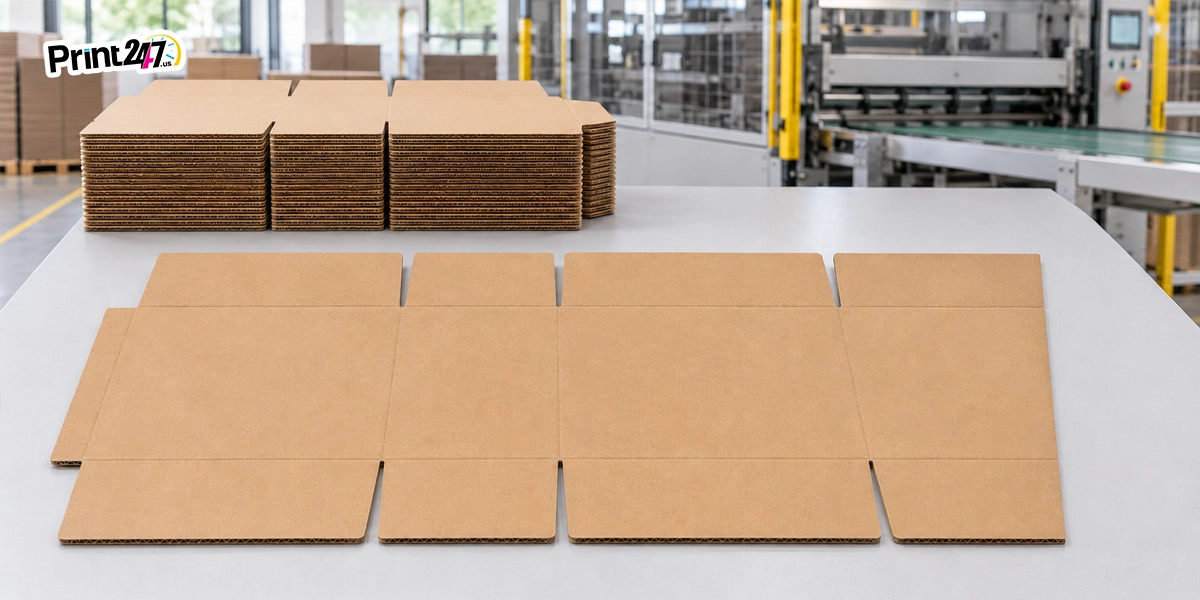 Regular slotted containers begin as one flat blank that's scored, slotted, and joined at one corner, so they ship flat and open within seconds.
The parts on a spec sheet:
Outer flaps
Long-panel flaps, folded last to converge in the center.
Inner flaps
Short-panel flaps, folded first to sit underneath.
Score lines
Pressed creases where the board bends.
Slots
Narrow cuts that let each flap fold on its own.
Manufacturer's joint
The corner seam that is glued, taped or stitched.
Remember the key rule that every flap is half the box's width deep, so the outer flaps meet flush. There is a gap in the middle of RSC corrugated boxes longer than they are wide. Don’t consider it a defect. It's normal.
How to Measure RSC Boxes Correctly
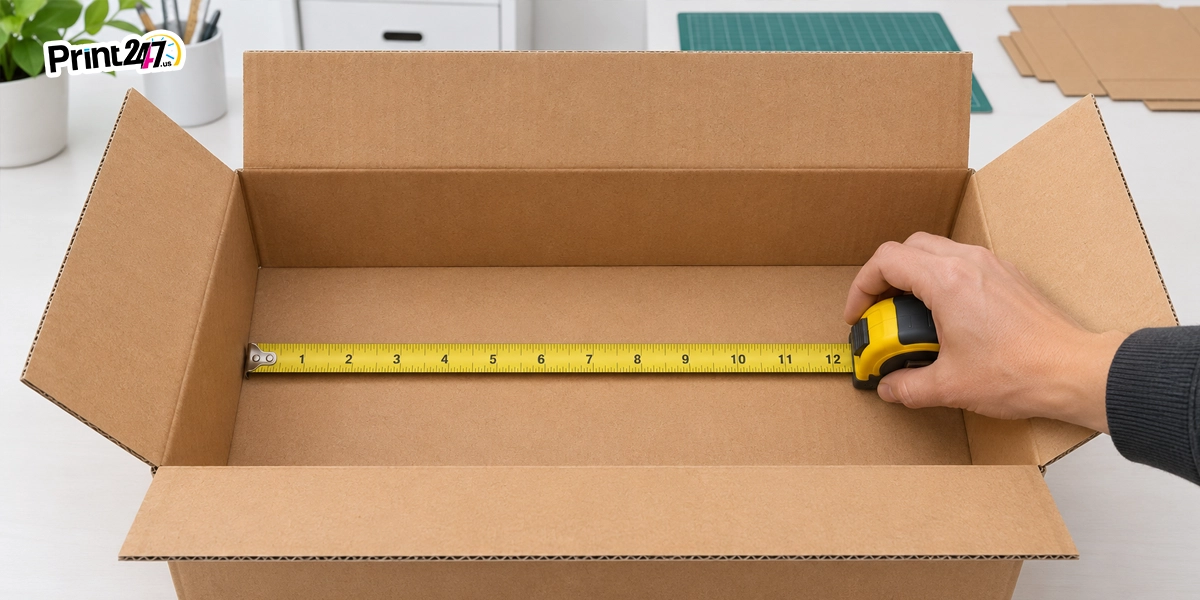 Take measurements from the inside of RSC boxes, and write them down as Length x Width x Depth.
Length refers to the longer dimension of the box opening.
Width refers to the shorter dimension of the box opening.
Depth is the vertical distance from the bottom inner flaps to the top inner flaps.
Suppose you ship a countertop appliance of roughly 11 by 9 by 7 inches. Leave room for padding and you'd order a 12 x 10 x 8 RSC box: a 12 by 10 inch opening, 8 inches tall.
Type it as 10 x 8 x 12 by mistake and you get a tall chimney of a box with a smaller opening. Although the numbers are the same but the boxes will be different. Ensure you measure the actual product and not a box. The board thickness makes the outside sizes bigger.
Material Grades and Strength for RSC Corrugated Boxes
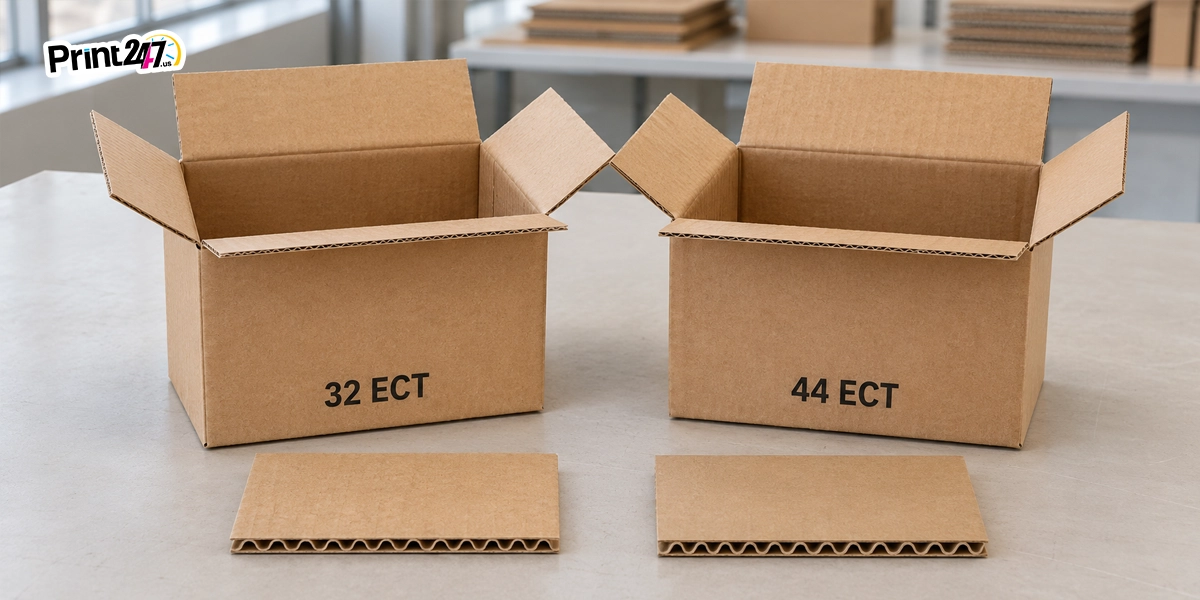 You cannot decide the strength of an RSC box with its style. You can only determine it with the material.
Consider corrugated material as two flat liners. They are glued to a wavy middle layer called the flute. B flute is thinner and resists crushing. It is good for smaller boxes and dense goods. C flute is taller and adds cushion and stacking strength, and is the most common pick for RSC corrugated boxes. E flute is thin and smooth and great for print. BC flute is a double wall for heavy loads.
Now let’s discuss the strength.
You can rate the strength in two ways. The Edge Crush Test also called ECT measures how much stress the board's edge can take before it buckles. It determines stacking strength. The Mullen burst test measures the force needed to punch through the wall, quoted as a figure such as 200#.
Single Wall vs Double Wall RSC Boxes
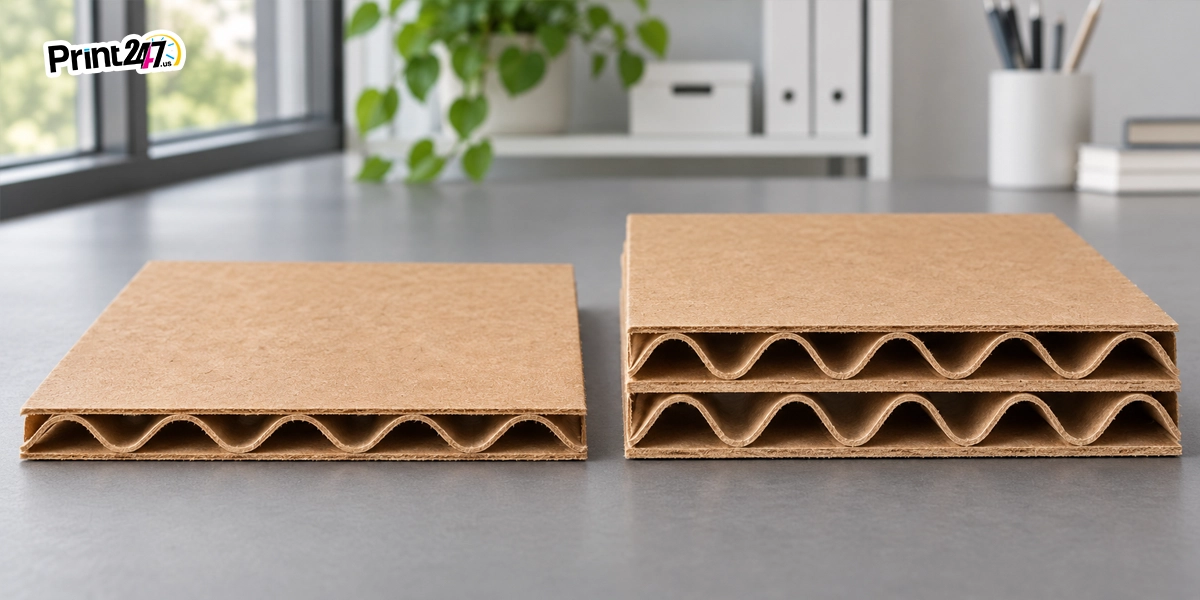 Single wall covers most shipments, and double wall steps in when weight or stacking goes up.
Board | Common ratings | Good for | Stacking use | Relative cost |
Single wall | 32 or 44 ECT (roughly 200# or 275# Mullen). | Most parcel orders, light to mid-weight goods | Short stacks, parcel handling | Lower |
Double wall | 48 ECT, 51 ECT and up | Heavy, dense or high-value goods | Tall pallet stacks, long storage | Higher |
A simple weight-to-board guide from our packaging floor:
• Light and sturdy products: start with 32 ECT single wall.
• Heavy for its size, or stacked in storage for weeks: move up to 44 ECT.
• Dense, fragile or palletized high: go double wall.
Check your supplier's final grade against the actual packed weight.
Where Regular Slotted Boxes Work Best
Regular slotted boxes or RSC are ideal for businesses that ship or stack product in volume and prioritize protection over shelf appeal.
• Ecommerce shipping: A plain or single color shipper box covers most parcels cheaply.
• Master cartons: An RSC box groups retail units or inner packs for wholesale.
• Wholesale distribution: Standard sizes keep case counts and pallet patterns consistent.
• Warehouse storage: Square corners stack neatly and take labels easily.
• Palletized freight: Straight walls carry top load well during palletizing.
• Moving and archiving: They reuse well and recycle easily.
You should start with a regular slotted box if you are shipping it more than you are showing it.
What Is a Die-Cut Box?
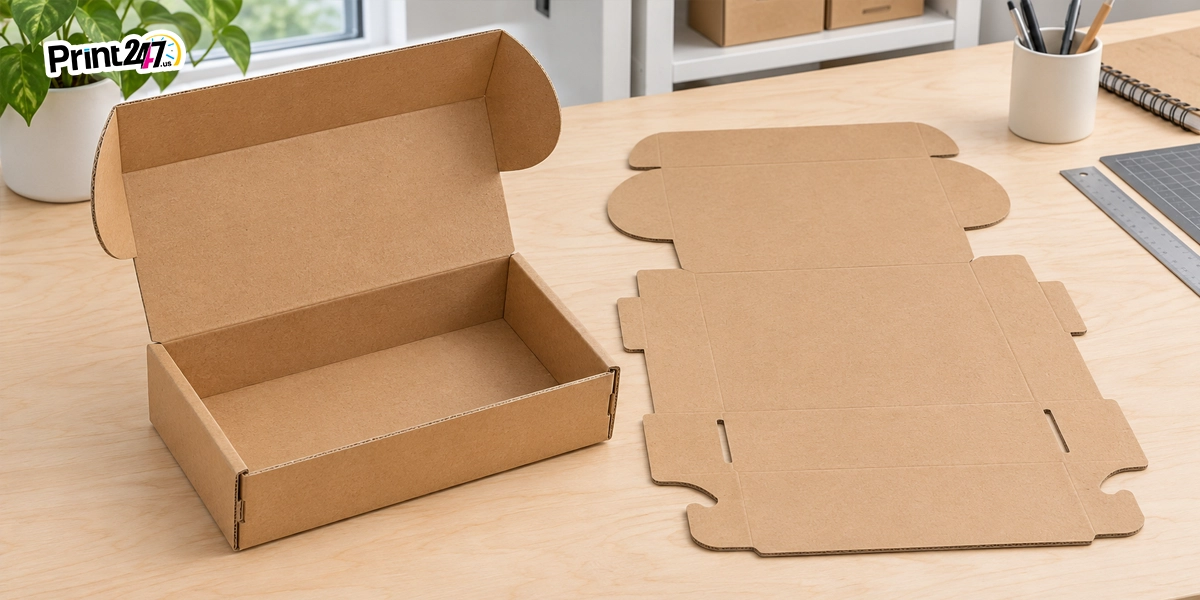 A die-cut box is a paperboard box cut to a custom shape by a cutting die. It is usually with tabs and slots that lock it together without tape. A die is a steel rule tool made from your dieline.
The style most buyers know is the roll end tuck top mailer box. A tuckable front lid and folding double walls on the sides make it easy to open. Die-cut box styles include auto-lock bottoms, display trays, and window boxes.
Buyers interact with die cut boxes through DTC brands, subscription kits, cosmetics and premium retail, where the box is part of the product. The catch is the up front die cost and longer setup.
RSC Boxes vs Die-Cut Boxes Compared
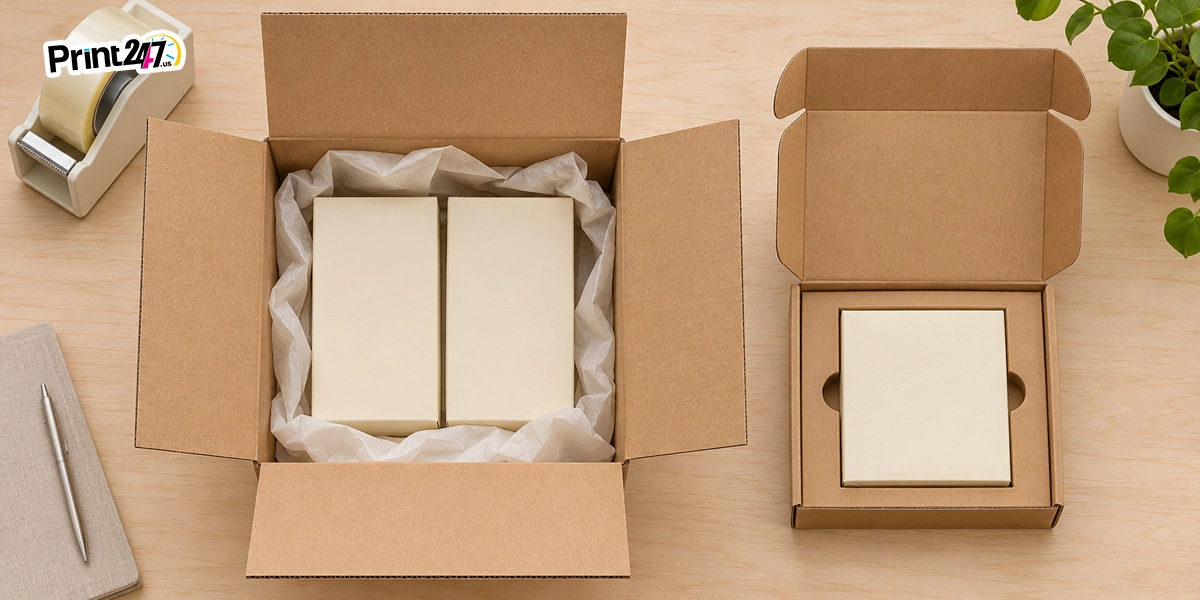 Choose RSC boxes when cost and protection in transit matter most. Choose die-cut boxes when presentation and the unboxing moment help sell the product.
Here’s the comparison table in RSC boxes vs die cut boxes.
Factor | RSC boxes | Die-cut boxes |
Structure | One-piece slotted blank, equal flaps meet at center | Custom-shaped blank with locking tabs and tuck flaps |
Tooling cost | No custom die needed | Needs a cutting die made from your dieline |
Tape needed | Yes, on the top and bottom seams | Little or none |
Assembly speed | Fast by hand and runs on case erectors | More folding steps by hand |
Product fit and protection | Standard fit, often needs void fill | Snug fit, inserts can be built in |
Branding space | Outside panels, usually 1 to 2 colors | Inside and outside, full color |
Unboxing experience | Functional | Branded and gift-like |
Best use | Shipping, storage, master cartons, freight | DTC mailers, subscription kits, premium products |
Pros and Cons of Each Box Style
Listed below are the pros and cons side by side of each box style.
RSC box
Pro: Cost effective compared to other corrugated styles.
Pro: Easy to set up by hand or on a packing line.
Pro: Large inventory and short lead times.
Con: It needs to be taped on both ends.
Con: Often needs void filling to keep products from shifting.
Die-cut boxes
Pro: Snug fit that cuts down on void fill.
Pro: Strong presentation on the shelf and at the doorstep.
Pro: Closes neatly without tape.
Con: The die adds up-front cost.
Con: It takes longer to set up and ship the first order.
What Drives the Cost of Custom RSC Boxes - From Our Packaging Specialists
Custom RSC boxes are affordable because there are no cutting dies to purchase, so your budget goes toward board and print instead of tooling.
Print247's packaging team sees one story with plenty of quotes. A brand orders a box an inch too big every way to accommodate. With this, the material costs more and void fill costs more. Additionally, the carrier increases the bills based on the increased dimensional weight. Trim the size and all three drop.
What moves the price:
Board grade: Higher ECT ratings and double wall use more fiber.
Size: Bigger blanks use more board per box.
Print colors and coverage: More colors and ink coverage add cost.
Order quantity: Setup spreads across more units. Per box cost falls.
DIM weight: Oversized boxes get billed on dimensional weight, shipment after shipment.
Die tooling is not always expensive. The one time die cost spreads thin over large repeat runs, and a snug mailer can minimize void fill and DIM costs.
How to Choose the Right Box Style and Next Steps
The decision of choosing the right box style comes down to six quick questions.
1. Product weight: Heavier goods need higher ECT or double wall.
2. Fragility: Fragile items need a snug die cut fit or an RSC box with inserts.
3. Shipping method: Parcels reward right sized boxes and pallets favor stackable slotted boxes.
4. Branding goals: If customers film the unboxing, die cut boxes earn their keep.
5. Budget: RSC boxes win on unit cost.
6. Order volume: Big repeat runs justify die tooling.
Before you request a quote, have five details ready: inside dimensions in L x W x D, packed product weight, quantity per size, print needs and your target delivery date. Please send them to Print247's packaging team for a quote on the packaging box you actually need.
If your product ships by truck and stacks on a pallet, start with an RSC.
FAQs
What does RSC stand for in packaging?
RSC stands for Regular Slotted Container. It is sometimes written as a regular slotted carton. It's a corrugated box made from one sheet of board with four equal length flaps on the top and bottom.
What is the difference between RSC and HSC boxes?
An RSC has flaps on both the top and the bottom, so it closes fully. An HSC, or half slotted container, has bottom flaps only and leaves the top open. The HSC boxes can be used as trays, totes or boxes with a separate lid.
Are RSC boxes cheaper than die cut boxes?
Yes, in most cases. RSC boxes need no custom cutting die, use board efficiently and run fast on standard equipment. Therefore their unit cost is lower. Die cut boxes can narrow the gap on large repeat orders, where the die cost is spread across many units.
Is an RSC box the same as a regular shipping box?
Yes in most cases. When people say shipping box or cardboard box, they usually think of an RSC.
Get a Quick Quote

More Articles
 Bill ‘Hogg’ Ryan
When a 3 Side Seal Pouch Beats a Stand Up Pouch on Cost and Display
 Bill ‘Hogg’ Ryan
How to Select the Best Packaging Features to Extend the Freshness of Pet Treats
 Bill ‘Hogg’ Ryan