

Carefully selected materials that deliver exceptional print quality, durability, and shelf presence.


 New
New












27+ Custom Box Styles Explained: The Ultimate Guide for Brands in 2026
.jpg)
Custom box styles are standard packaging shapes and closures that fit real products, print goals, and shipping needs. Instead of choosing a basic box, you can choose the exact shape, size, and opening style. Custom box styles range from rigid boxes to eco-friendly mailers to fit every type of product.
There is a great value of first impressions in the modern era. Buyers make decisions in 3 to 5 seconds to purchase a product. Therefore, they want packaging that looks sharp, ships safe, and stays on budget. It is the first physical interaction a customer has with your product and brand that influences perception. A well chosen custom box style ensures your product is beautifully presented.
In this detailed blog, we have listed 27+ custom box styles with plain definitions, core mechanics, and best uses for brands. It is easy to understand folding cartons, corrugated mailers, and rigid formats, with clear choices.
Key Takeaways
- Pick the style by closure strength first, print second, speed third.
- Use folding cartons for light items and retail sets.
- Use corrugated mailers for DTC and fragile kits.
- Use rigid for premium unboxing and weight.
- Keep tear strips for returns and sample kits.
- Add inserts when the product needs a stable seat.
- Match glue tabs to your gluing line to avoid hand work.
- Keep dielines inside standard sheet sizes to cut waste.
#1 - Straight Tuck End Box (STE)
.webp)
Straight Tuck End box is a folding carton characterized by top and bottom tuck flaps that fold in the same direction. Its primary function is to present retail products with clean fronts and easy assembly. It is a popular and easy-to-assemble packaging style with top and bottom flaps.
Core Mechanism & Structure
The key components of a straight tuck end box include front and back panels, top and bottom tuck flaps, dust flaps, and a side glue tab. It is helpful to fold along score lines to keep edges crisp. Having both ends tucked-in in one direction keeps the display panel free from raw edges during closure.
Ideal Use Cases & Material Compatibility
There are various types of industry that use these types of boxes including cosmetics, nutraceuticals, small devices, and food supplements. Material focus is 16 to 24 pt paperboard with AQ or UV. E-flute is possible but uncommon. Not recommended for rigid board. This format fits tuck end boxes within folding carton styles and pairs well with custom product boxes in retail.
#2 - Reverse Tuck End Box (RTE)
.webp)
Reverse Tuck End box is a folding carton characterized by a top tuck flap on the back panel and a bottom tuck flap on the front panel. Its primary function is to reduce board waste while keeping fast manual filling.
Core Mechanism & Structure
The core components of custom reverse tuck end boxes include opposing tuck flaps, dust flaps, a side glue tab, and clean score lines. The closure action flips direction at the ends, which can lower scrap from the nesting layout. Tuck friction holds the panel closed during shelf life.
Applications & Material Compatibility
The ideal use case of these tuck end boxes is in the personal care, OTC, and accessories industry. They are available in 14 - 22 pt SBS with gloss or soft touch. Not ideal for heavy items without an insert. This is one of the core packaging box types used in most box styles for brands that seek cost control.
#3 - Auto-Lock Bottom Box (ALB)
.webp)
Auto-Lock Bottom box is a folding carton characterized by a pre-glued crash-bottom that pops into place. Its primary function of these types of boxes is to hold weight while staying fast to erect.
Core Mechanism & Structure
The key components of auto-lock bottom boxes include a pre-glued bottom with interlocking panels, a top tuck flap, dust flaps, and a side glue tab. Score lines allow the base to square and lock when opened. Closure action is auto-form at the bottom and tuck at the top.
Ideal Use Cases & Material Compatibility
These boxes are convenient and utilized for a range of industries including food jars, beauty sets, cosmetics, wholesale, and small electronics. During their construction, you can use 18 - 24 pt SBS or micro-flute for more strength. These boxes eliminate line labor and fit types of custom boxes that require a bottom load.
#4 - Sleeve Box (Matchbox)
.webp)
Sleeve Box is a folding or rigid set characterized by an open-ended sleeve that slides over an inner tray. Its primary function is to create a premium unboxing experience with a compact footprint.
Mechanisms & Structures at the Core
Among its components are a paperboard sleeve with glue seams and an inner tray with dust flaps or folds. In order to keep edges sharp, score lines are used. There is friction between the sleeve and tray that causes the closure to occur. In the outer sleeve, there is no need to tuck it in.
Ideal Use Cases & Material Compatibility
Sleeve packaging boxes are cost-effective packaging solutions used for branding, product differentiation, and protection. These industries include grooming, chocolate, tech accessories, and sample kits. In order to make the sleeve, you can use 16-24 points of material and the tray can be made using 18-24 points or E-flute. It is common to find rigid wrapped sleeves in rigid box packaging and sleeve boxes for kits.
#5 - Two-Piece (Lid & Base)
.webp)
A Two-Piece box is a rigid or paperboard set characterized by a separate lid and base. Its primary function is to give a premium set with strong walls and easy opening.
Core Mechanism & Structure
Custom rigid two-piece boxes contain a base tray, a matching lid, rolled edges, and tight score wraps. There is friction between the lid and the base to close the container. The corners of the board can be held in place with glue tabs or board wrap. Stabilizers such as inserts or foam keep products in place.
Ideal Use Cases & Material Compatibility
The list of businesses that use two piece rigid boxes include influencer kits, small apparel, luxury beauty, and gifting are among the most popular. It is best to use a rigid cardboard with a thickness of 1.5 to 2.5 mm, wrapped in printed paper for these boxes. Corner supports are necessary for heavy cartons. This style exists in box styles for brands that want upscale custom product boxes.
#6 - Book-Style
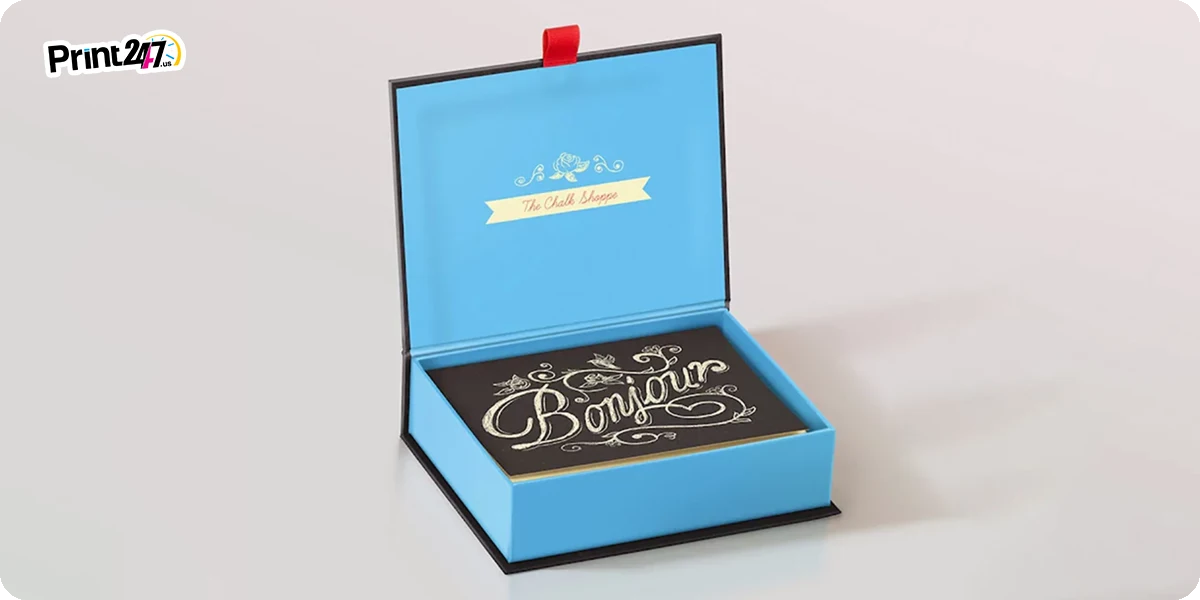
A Book-Style box is a rigid or heavy paperboard box characterized by a hinged spine and a cover that opens like a book. These rigid boxes are used to present sets with a story panel.
Core Mechanism & Structure
This box features a hinged lid, magnet or ribbon closure, a base tray, and wrapped edges. Score lines create the spine of these boxes. Closure action is magnet snap or elastic tie, with dust flaps on the tray to keep the lid flush.
Ideal Use Cases & Material Compatibility
Book-style packaging boxes are used to pack premium products including tech, PR kits, and collectibles. Use a rigid board with paper wrap and foam or molded pulp inserts for these boxes. With renowned packaging supplier Print247, you can order book-style boxes in any color you like, in any size, and with any branding you like.
#7 - Display Box (PDQ Tray)
.webp)
Display Box is a corrugated or paperboard tray characterized by a perforated hood that converts to a shelf display. Its primary function is fast retail presentation with easy tear-away.
Core Mechanism & Structure
The key components of custom display boxes include a tray base, a removable top via tear lines, front cutouts, and glue tabs. Score lines define fold points. Closure action uses perforations to remove the cover and reveal SKUs ready for POS.
Ideal Use Cases & Material Compatibility
The list of industries that use display boxes include snacks, impulse goods, and travel-size personal care. These boxes should be constructed from E-flute or 18- to 24-pt SBS with reinforced front walls. This is common in die cut boxes for POS and pairs with packaging box types that ship and display.
#8 - Dispenser Box

Typically, dispenser boxes are corrugated cartons with tear or slot openings designed to feed one unit at a time. Its primary function is controlled dispensing at the store shelf or counter.
Core Mechanism & Structure
The core mechanism of this box features a feed slot, perforated tears, dust flaps, and glue tabs. Score lines guide fold memory. Closure action uses tucks or adhesive to close the refill channel.
Ideal Use Cases & Material Compatibility
Custom dispenser packaging boxes are highly suitable for tea, CBD, pharmaceutical, tissues, gloves, wipes, and office supplies. Crush resistance can be improved by using 18-24 pt SBS or E-flute paper. This format perfectly fits the types of custom boxes used in healthcare and office environments.
#9 - Shoulder Box

Shoulder Box is a rigid format characterized by a base tray, a neck, and a lid that stops on the shoulder. Its primary function is to add premium reveal and tight alignment.
Core Mechanism & Structure
The mechanism of these boxes consists of a base, an inner neck, and an outer lid. The corners of the board are clean because they are wrapped. During closure, the lid is lowered until the shoulder stop is reached. No dust flaps are needed in these rigid boxes.
Ideal Use Cases & Material Compatibility
The ideal use case of shoulder and neck boxes include fragrance, jewelry, and limited drops. For construction of these boxes, always use 2 to 3 mm rigid cardboard with paper wrap and magnets if needed. This standout style leads custom box styles for brands seeking high-end custom product boxes.
#10 - Tuck Top Snap Lock Bottom
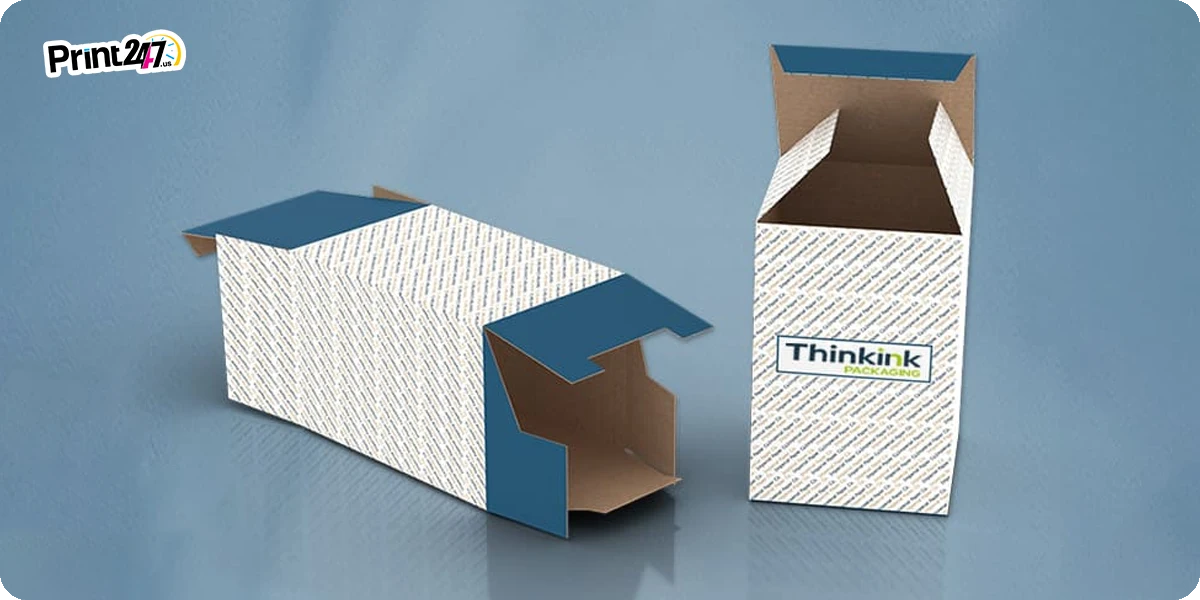
Tuck Top Snap Lock Bottom box is a folding carton characterized by a top tuck and a four-panel locking bottom. Its primary function is to hold mid-weight items without glue at the base.
Mechanisms & Structures
In this custom box style, there is a top tuck flap, dust flaps, and a snap bottom with interlocking tabs. A score line determines the lock's position. As a final step, the bottom is snapped in sequence and the top is tucked in.
Ideal Use Cases & Material Compatibility
Industries include food jars, candles, and supplements. Use 18–24 pt SBS or micro-flute. Not for very heavy glass without an insert. This sits within tuck end boxes and supports packaging box types that need strength.
#11 - Corrugated Mailer Box

There are two styles of corrugated mailer boxes: corrugated mailer boxes with rolling side walls and corrugated mailer boxes with front or top tucks. Its primary function is safe DTC shipping with a branded unboxing.
Core Mechanism & Structure
Features of mailer boxes include roll-over side panels, locking dust flaps, and either a front tab tuck (RETF) or top tuck (RETT). Score lines enable smooth rolling walls. Closure action engages locking tabs for crush resistance.
Applications & Material Compatibility
There is an enormous usage of mailer style boxes in e-commerce kits, apparel, and electronics industry. Use E-flute for print or B-flute for strength. This is core to mailer box designs, shipping boxes, and corrugated box styles for DTC.
#12 - Perforated Box (Tear Strip Box)
.webp) Perforated Box is a carton or corrugated style characterized by a built-in tear strip for fast opening. Its primary function is easy access and return-friendly packaging.
Perforated Box is a carton or corrugated style characterized by a built-in tear strip for fast opening. Its primary function is easy access and return-friendly packaging.
Core Mechanism & Structure
The box is constructed with a tear tape or perforated line, dust flaps, and a glue seam. The lines on the score sheet hold the shape. Closure action is adhesive or tucked until the tear strip is pulled.
Suitable Use Cases & Material Compatibility
Perforated boxes are used for easy dispensing, ventilation, and marketing. Industries include DTC returns, sample kits, and office supplies. Use E-flute or 18 to 24 pt SBS for construction of these boxes. Tear tapes suit mailer box designs and shipping boxes that aim for low damage on first open.
#13 - Slipcase Box

Slipcase Box is a sleeve-based packaging format characterized by an open-ended case that holds a book, binder, or tray. The primary function of this page is to protect the edges with a premium face.
Mechanisms & Structures
Components of the slipcase box include wrapped or carton sleeve panels, a glue seam, and tight score lines. Closure action is friction fit without tucks. Optional thumb notches ease removal.
Ideal Use Cases & Material Compatibility
There are a number of industries that deal with publishing sets, collector kits, and card games. Use rigid boards for luxury or 20–24 pt for lighter sets. Slipcases sit in sleeve box styles and premium rigid box packaging.
#14 - Clamshell Box

Clamshell Box is a hinged box style characterized by a single piece that folds over itself. Its primary function is fast open-close with strong product retention.
Core Mechanism & Structure
There are several components to these boxes, including a living hinge, front tab, dust flaps, and locking nubs. Score lines are responsible for creating hinge memory. There is a press-to-lock closure at the front with blister windows.
Ideal Use Cases & Material Compatibility
Typical industries include consumer electronics accessories and small hardware. Use E-flute or thick PVC blister with a paperboard card. Paperboard clamshells fit die cut boxes and packaging box types where theft resistance matters.
#15 - Hinged Lid Box

Hinged Lid Box is a carton or rigid format characterized by an attached lid that opens upward. Its primary function is quick access while keeping the lid captive.
Core Mechanism & Structure
Parts of hinged lid boxes include a back panel hinge, front tuck or magnet, dust flaps, and a side glue tab. Score lines set the hinge bend. Closure action is tuck-in or magnet snap at the front edge.
Suitable Use Cases & Material Compatibility
These boxes are ideal for the following products:
- Bakery
- Tea
- Kits
- Craft Supplies
- Electronics
- Jewelry
- Chocolates
- Medals
- Small Tools
Use 18 to 24 pt SBS or rigid board with wrap for these boxes. It supports box-styles for brands looking for a neat reveal without a loose lid.
#16 - Collapsible Rigid Box

Collapsible Rigid Box is a rigid format characterized by folded sidewalls with hidden magnets. Its primary function is to ship flat and assemble into a premium box.
Mechanisms & Structures at the Core
The key components of these rigid boxes include rigid panels with tape hinges, corner magnets, and a wrapped cover. A score wrap makes flat packing possible. Due to the fold-up action, the walls hold the closure in place magnetically.
Suitable Use Cases & Material Compatibility
Industries include premium apparel, gifts, and global rollouts. Use a 2 mm board. A flat ship lowers freight and storage. This sits in rigid box packaging and modern custom packaging trends for cost control.
#17 - Seal End Box

Seal End Box is a folding carton characterized by top and bottom flaps that are sealed with glue on the filling line. Its primary objective is high-speed filling and tamper clarity.
Basic Mechanism & Structure
The structure of custom seal end boxes include long seal flaps, dust flaps, and a side glue seam. The closing action of automated lines uses either hot melt or cold glue. The score lines guide the shape of the square.
Applications & Material Compatibility
These boxes are highly suitable for cereal, snacks, toys, electronics, e-commerce, and pharma industries. Make sure the paper is 16–24 pt SBS coated with food-safe coatings. The product is not suitable for rigid boards. The seal-end carton is a staple style of folding carton in high-volume production facilities.
#18 - Bookend Box

Bookend Box is a folding custom box style characterized by a front panel that wraps around like a book cover. Its primary function is more billboard space with a secure tuck.
Core Mechanism & Structure
The primary mechanism of these boxes is simple yet secure. There are four components: a wrap panel, a tuck flap, a dust flap, and a side glue tab. Wrap hinges are formed by score lines. It has a tuck-in closure action that keeps it clean on the front cover.
Ideal Use Cases & Material Compatibility
Bookend boxes are primarily used for items like personal care, toys, small electronics, actual books, and promo kits. If needed, use 16–22 pt SBS with windows for these boxes. This is a flexible choice in packaging box types for extra print area.
#19 - 123 Bottom Box

1-2-3 Bottom Box also known as snap-lock or interlock bottom box is a folding carton characterized by a three-step locking base. Its primary function is to support weight without glue or adhesive while keeping assembly simple.
Core Mechanism & Structure
Its core mechanism includes bottom panels labeled 1-2-3 that interlock, top tuck flap, dust flaps, and a side glue tab. All of its structure relies on a specific folding sequence that offers a balanced protection.
Ideal Use Cases & Material Compatibility
These boxes are versatile for retail and ecommerce industries. They are ideal for cosmetics, electronics, and food Industries including pantry, pet care, jars, candles, and light hardware. Use 18–24 pt SBS or micro-flute. This format sits among tuck end boxes that avoid glue in the bottom.
#20 - Flap Box

Flap Box is a simple carton or mailer characterized by a single flap that folds over the top. Its primary function is quick packing with minimal parts.
Core Mechanism & Structure
The core mechanism of a flap box relies on structural properties of its material. Components include a main flap, side dust flaps, a glue tab, and clean score lines. Closure action uses peel-and-seal, label, or tuck slot depending on the design.
Ideal Use Cases & Material Compatibility
Industries include literature kits, sample sets, and flat goods. Use 20–24 pt SBS or E-flute. This is common in mailer box designs and low-SKU packaging box types.
#21 - Drawer Box

In drawer boxes, the sliding tray is enclosed in a sleeve and then covered in an outer sleeve. A premium reveal with controlled opening is its primary function. These boxes are also known as slide or matchbox-style boxes.
Core Mechanism & Structure
There is an outer sleeve of these boxes with a thumb notch, an inner tray with dust flaps, as well as glue tabs. It is important to keep square edges with score lines. Closure action is friction slide, often with a ribbon pull.
Ideal Use Cases & Material Compatibility
Mostly these boxes are used for premium and luxury items due to their higher perceived value. These industries include jewelry, beauty, and CBD sets. Use rigid board for luxury or 18–24 pt SBS for light goods. Drawer sets belong to sleeve box styles and high-end custom product boxes.
#22 - Chip Scoop Box

Chip Scoop Box is a folded food carton characterized by a curved front and open top. Its primary function is on-the-go serving with brand print.
Core Mechanism & Structure
The structure of the chip scoop box relies on a single material paperboard or cardboard material. Components include front curve die cuts, side flaps, and glue tabs. Score lines form the scoop shape. There is no locking mechanism and the closure remains open.
Material compatibility and ideal use cases
The list of Industries that use these boxes include QSR, stadiums, and events. Use a grease-resistant 16–20 pt cardboard material. This box type falls within die cut boxes and food packaging box types.
#23 - Petal Top Box

Petal Top Box is a decorative packaging box style characterized by four curved flaps that meet at the top. Its primary function is gift-ready closure without extra parts.
Core Mechanism & Structure
A petal top box has four flaps, a dust flap at the base, and a glue tab attached to it. Score lines shape the petals. Closure action interlocks petals to form a flower-like top.
Ideal Use Cases & Material Compatibility
It's ideal for small items like jewelry or treats that need visual appeal. Industries include confections, favors, and boutique goods. Use 16–20 pt SBS with specialty finishes. This is a niche in types of custom boxes for event gifting.
#24 - Tulip Box

Tulip Box is a folding carton characterized by interlocking top panels shaped like a tulip. Its primary function is present-ready closure with secure hold.
Core Mechanism & Structure
There are four top panels with slots, dust flaps, and glue tabs on the sides. Score lines enable lock-in petals. Closure action interlocks the top panels to resist pop-open.
Ideal Use Cases & Material Compatibility
Industries that use style of packaging boxes include bakery, cosmetics, minis, and gift cards. Use 16–20 pt SBS. This decorative option fits packaging box types aimed at retail gift sets.
#25 - 5 Panel Hanger Box

5 Panel Hanger Box is a folding carton distinguished by an extended panel with a hang hole. Its primary function is peg display for small items.
Core Mechanism & Structure
The core mechanism of these boxes include an integrated, extended panel that features a die-cut hole. Components include a fifth panel, tuck or seal ends, dust flaps, and a side glue tab. The hanger panel is folded over at the score lines. The closure action tucks or seals the bag after it has been filled.
Applications & Material Compatibility
Hanger boxes are ideal for the products that need shelf appeal and visibility. Industries include accessories, cables, and trial sizes. Using 16-22 pt SBS with reinforced hang holes is recommended for these boxes. This style aligns with box styles for brands that sell in peg-heavy aisles.
#26 - Bottle Carrier Box

Bottle Carrier Box is a corrugated or heavy carton style characterized by a handle and partition set. Its primary function is safe carry of bottles.
Core Mechanism & Structure
The core mechanism of these boxes relies on rigid structure. The key components include a die cut handle, inner dividers, glue tabs, and strong score lines. Closure action uses tuck or lock tabs at the base, with partitions protecting glass-to-glass contact.
Ideal Use Cases & Material Compatibility
Bottle carrier boxes are used across various industries including laboratories, craft beverages, sauces, and gift sets. Use B-flute or heavy SBS with reinforced handles. This is one of the best choices in corrugated boxes and durable custom shipping boxes.
#27 - Corner Box

Corner Box is a rigid or corrugated box style characterized by reinforced corners for high crush strength. Its primary function is to protect heavy or fragile products in transit.
Core Mechanism & Structure
Components of corner packaging boxes include double walls at corners, corner stays, glue tabs, and deep score lines. Closure action is lid or flaps depending on design. Dust flaps can be added for debris control.
Ideal Use Cases & Material Compatibility
The list of industries that use these styles of custom boxes include glassware, lab gear, and specialty devices. Use rigid board or heavy B-flute with corner posts. Corner builds fit custom shipping boxes and safety-first packaging box types.
Final Thoughts
To summarize, we recommend you choose a custom box style which fits your load, a board which fits your transit, and then lock your artwork and inserts. Be sure to keep the dieline clean and the glue path as simple as possible. If you need a trusted partner, choose Print247 for smooth and affordable buying. Print247 is the leading US packaging supplier with free design support, eco-friendly materials, fast shipping, and physical samples. Your teams get clear proofs, steady lead times, and help with all types of customized packaging.
Get a Quick Quote

More Articles
 Bill ‘Hogg’ Ryan
How to Choose Sock Packaging for Peg Display vs Shelf Presentation
 Bill ‘Hogg’ Ryan
Why Triangle Mailing Tubes Are a Cost-Effective Alternative to Custom Boxes
 Bill ‘Hogg’ Ryan