

Carefully selected materials that deliver exceptional print quality, durability, and shelf presence.


 New
New



















Standard Envelope Sizes Chart: Finding the Right Fit for Every Project
.jpg)
Standard envelope sizes vary by purpose. The most ubiquitous size in the business world is the #10 envelope, which measures 4.125 x 9.5 inches. Another commercial variant is #9 envelopes, which measure 3.875 x 8.875 inches. You should choose the accurate envelope size for maintaining a professional corporate image.
Envelope sizes affect how your mail looks, how it runs through sorting machines, and how much it costs to send. If you pick the wrong size, your letter might arrive wrinkled, your insert may slide away from the window, or your piece could get flagged as non-machinable.
Knowing the standard sizes makes the tasks much easier and ensures that documents fit perfectly. For b2b mail, the envelope should fit the document neatly. It keeps it protected and meets mailing rules without surprises. A standard envelope size chart can help purchasing teams, marketers, and operations managers save time.
We have written this blog in which you will see the envelope dimensions in inches and millimeters, the most used mailing sizes, and how to match inserts like invoices, checks and marketing one-sheets. Furthermore, you will learn how different envelope styles, such as booklets, catalogs, windows, and remittances, affect what "right size" means.
Key Takeaways:
Match the insert size first, then choose the envelope size.
Use #10 for most business letters and invoices.
Use 9" × 12" when you cannot fold a letter-size sheet.
Window placement must line up with your insert layout.
Square envelopes can trigger non-machinable handling.
Paper weight and seams matter for automation.
What Are Different Types of Envelopes & Sizes?
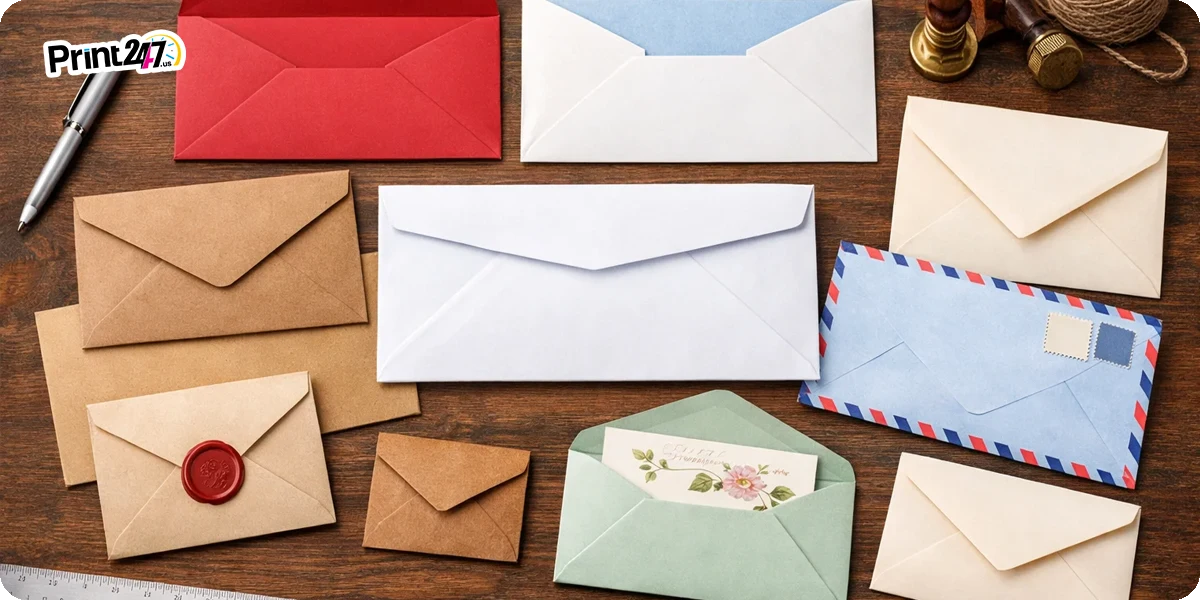
Envelope types are categories based on how the envelope opens, how it is built, and what it is meant to carry. These envelopes are classified by their construction and flap placement to serve specific functional needs. The type of printing you choose determines the speed of stuffing, the compatibility of the machines, the alignment of the windows, and even the layout.
Listed below are the most commonly used options, along with when to use each for invoices, statements, marketing kits, and donations.
Business Envelopes
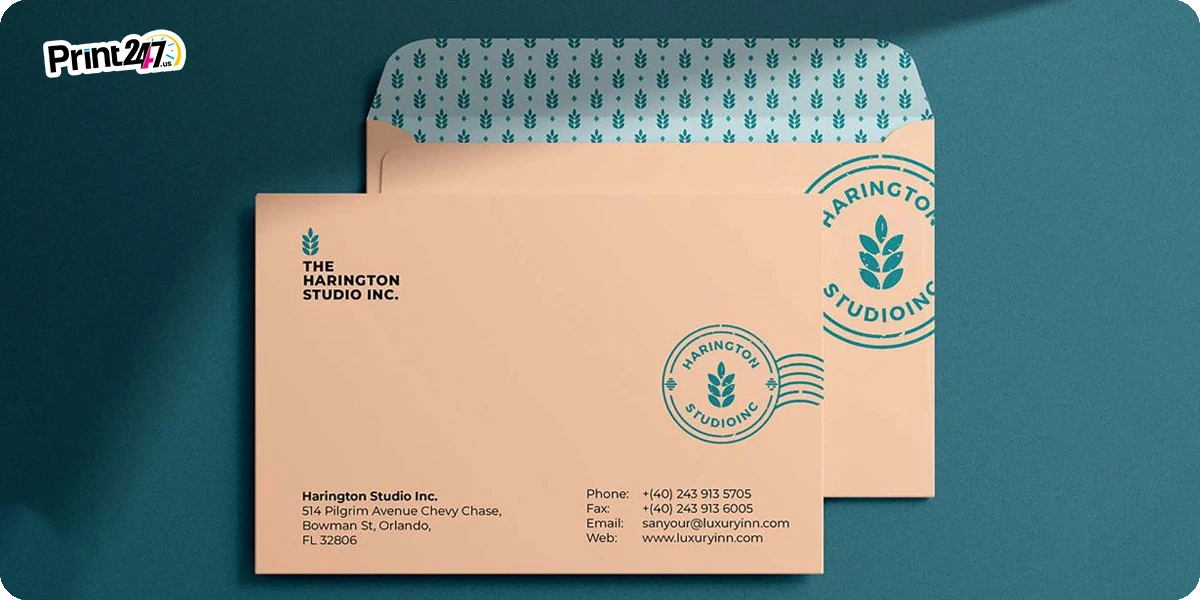
Business envelopes are commercial envelopes that are mainly used for routine company mail like invoices, letters, statements, and notices. A business sized envelope is often a #10 because it fits a tri-fold letter and runs well in most inserting systems. Many brands treat the #10 envelope as the default for daily outbound mail.
Common Business Envelope Sizes:
#10 Envelope: 4 1/8" × 9 1/2" (105 × 241 mm)
#9 Envelope: 3 7/8" × 8 7/8" (98 × 225 mm)
Speciality Envelopes
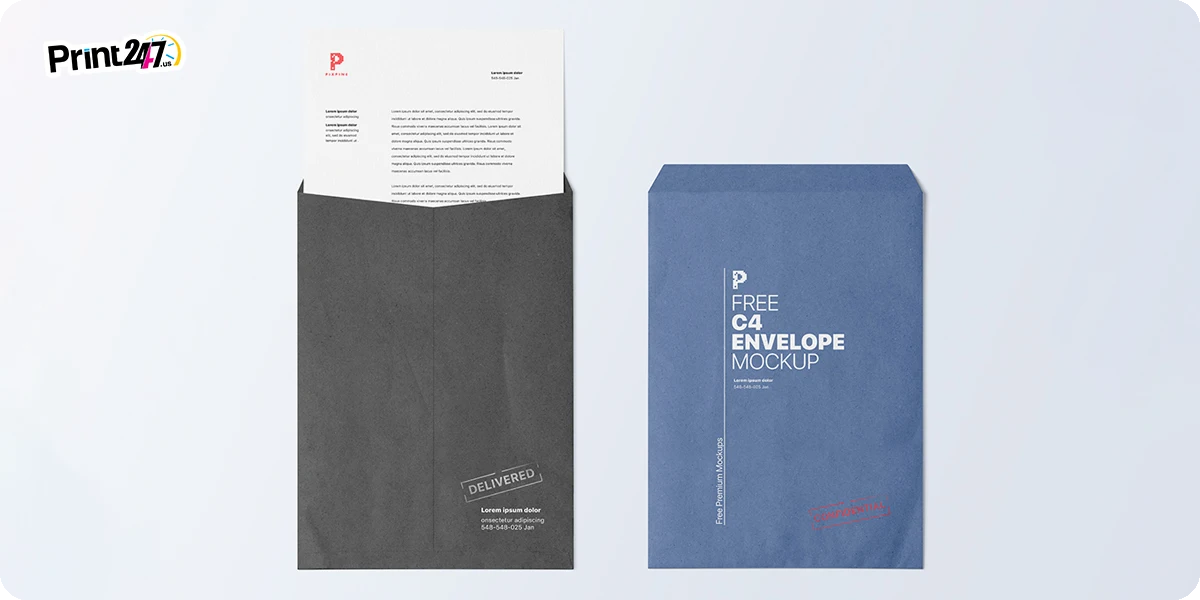
Specialty envelopes are non-standard formats used for protection, presentation, or thick inserts. These include expansion envelopes, clasp envelopes, policy envelopes, and larger catalog mailers. They are common for contracts, HR packets, product sheets, and multi-page reports, where folds look unprofessional.
Common Specialty Envelope Sizes
6" × 9" (152 × 229 mm)
9" × 12" (229 × 305 mm)
Invitation Envelopes
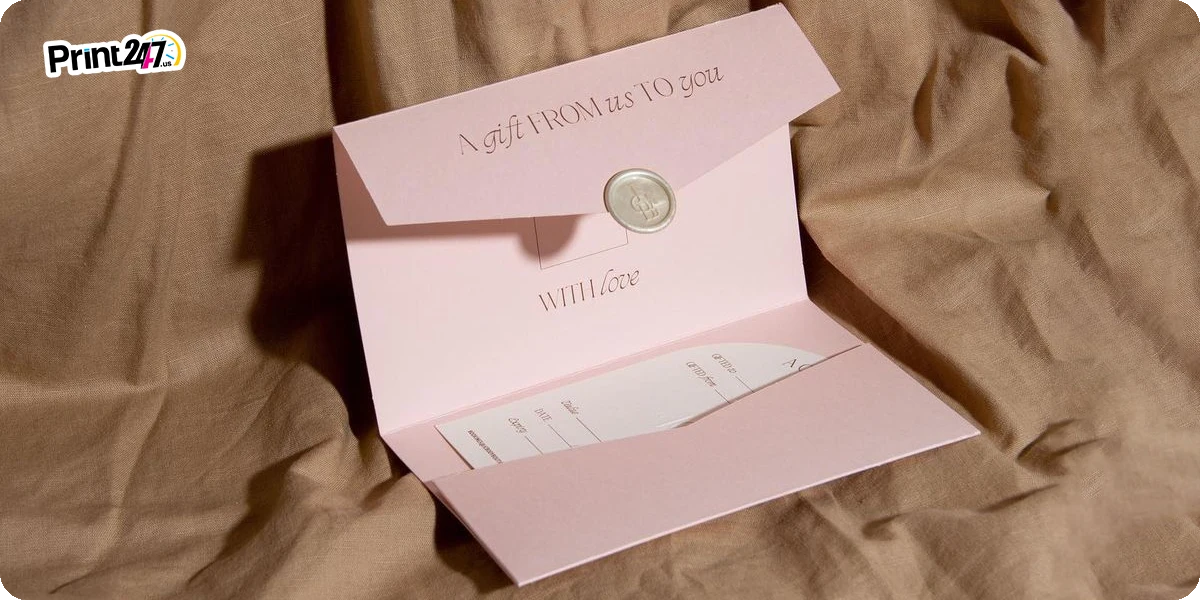
Invitation envelopes are announcement-style envelopes. Businesses use them for formal invites, events, and premium brand mailers. In the corporate world, they show up for VIP events, partner dinners, store openings, and high-end direct mail. They often use heavier cardstock and cleaner flap shapes, including Baronial Envelopes.
Common Invitation Envelope Sizes
A7: 5 1/4" × 7 1/4" (133 × 184 mm)
A6: 4 3/4" × 6 1/2" (121 × 165 mm
Announcement Envelopes
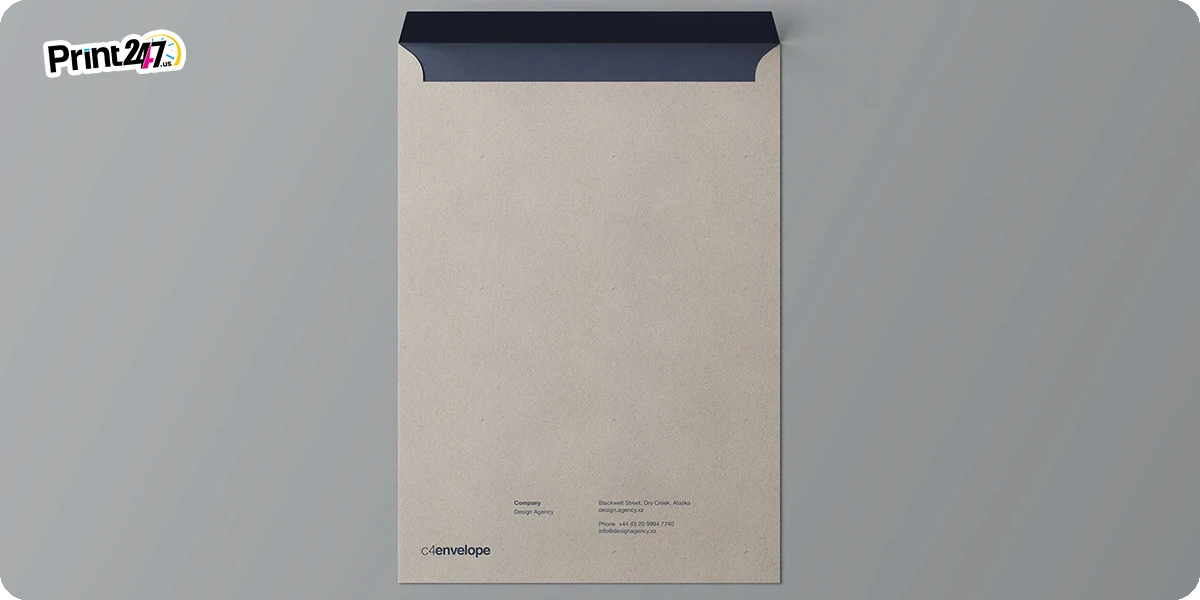
Announcement envelopes are A-Series envelopes designed to match standard card sizes and brand mail pieces. This collection is useful when you want a consistent look across campaigns, especially for multi-location brands. They also help when you need reliable standard letter-size dimensions for inserts that fold cleanly.
Common Announcement Envelope Sizes
A2: 4 3/8" × 5 3/4" (111 × 146 mm)
A7: 5 1/4" × 7 1/4" (133 × 184 mm)
Window Envelopes
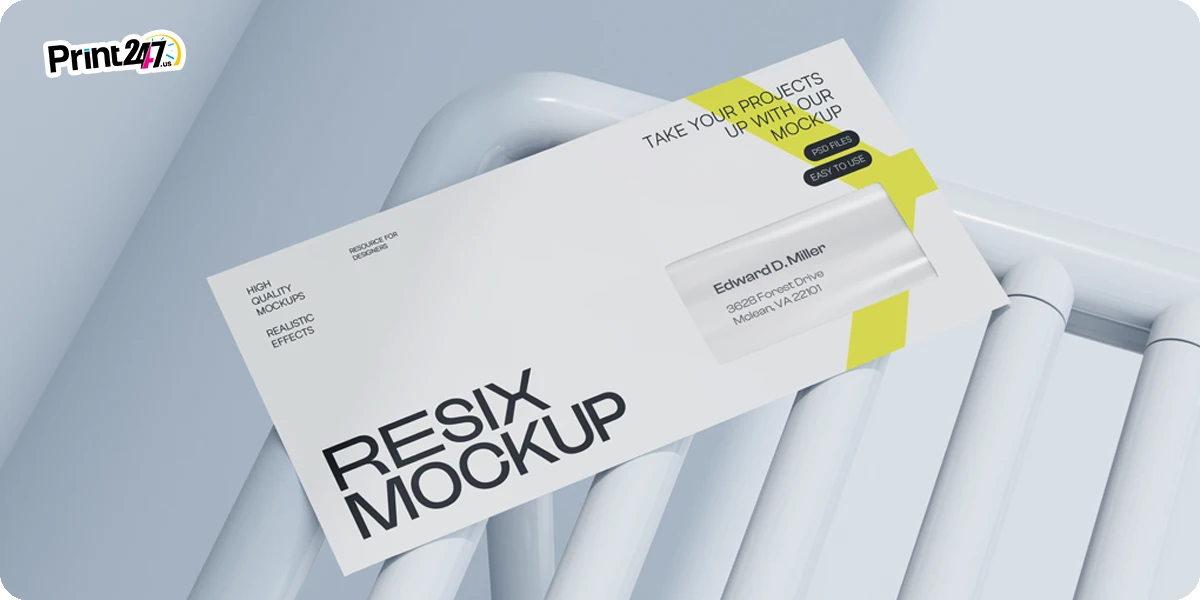
Window envelopes come with a clear film opening so the address prints on the insert instead of the envelope. This format helps high-volume billing and statement mail because it reduces print steps. Window placement matters, especially when you use a standard letterhead envelope size insert or a remittance slip.
Common Window Envelope Sizes
#10 Window: 4 1/8" × 9 1/2" (105 × 241 mm)
Typical window: 1 1/8" × 4 1/2"
Offering Envelopes
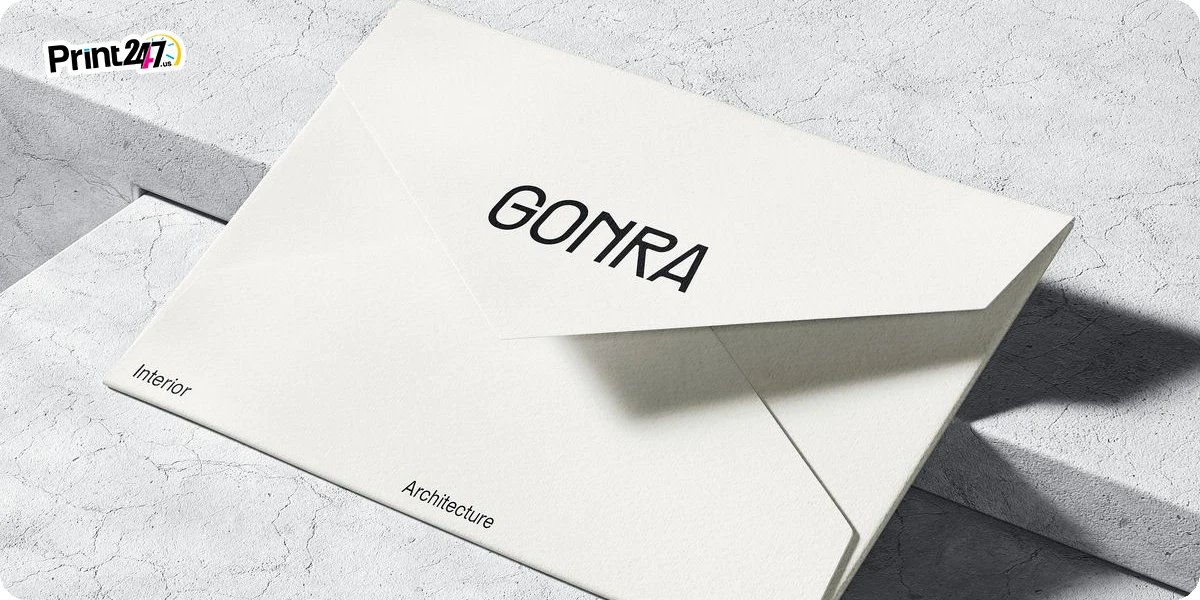
Offering envelopes are small envelopes used by nonprofits, churches, and member-based groups for giving and pledge programs. Many brands also use them for “return this form” campaigns. They typically run on lighter paper but can be upgraded with security tint and Peel and Seal Closure for faster handling.
Common Offering Envelope Sizes:
#6 3/4: 3 5/8" × 6 1/2" (92 × 165 mm)
A2: 4 3/8" × 5 3/4" (111 × 146 mm)
Detailed Envelope Size Chart By Region And Standard
Envelope size standards vary by region. It matters when you order printed envelopes for multi-country shipping or global brands. In the U.S., commercial numbers like #10 and #9 dominate business mail. Internationally, ISO sizes like DL and the C-series are common for A4 to help b2b teams avoid reprints, insert mismatches, and postal issues.
United States (ANSI/ASME) Common Envelope Sizes
_Common_Envelope_Sizes.webp?alt=media&token=1f26f99d-524a-4491-aed2-b3e8811debab "united-states-common-envelope-sizes")
U.S. commercial envelopes are the most used mailing envelope sizes for invoices, letters, and statement mail. A business sized envelope, like #10, is the go-to for most companies because it fits a tri-fold letter and works well with inserting equipment.
Commercial / Business Envelope Sizes
Envelope | Size (inches) | Size (mm) | Size (cm) | Typical use |
#6 1/4 | 3 1/2 × 6 | 89 × 152 | 8.9 × 15.2 | Small notices, compact reply mail |
#6 3/4 | 3 5/8 × 6 1/2 | 92 × 165 | 9.2 × 16.5 | Remittance inserts, small forms, donation returns |
#7 | 3 3/4 × 6 3/4 | 95 × 171 | 9.5 × 17.1 | Short letters, enclosure mail |
#7 3/4 (Monarch) | 3 7/8 × 7 1/2 | 98 × 191 | 9.8 × 19.1 | Executive letterhead, personal business mail |
#8 5/8 | 3 5/8 × 8 5/8 | 92 × 219 | 9.2 × 21.9 | Business checks, payroll, check runs |
#9 | 3 7/8 × 8 7/8 | 98 × 225 | 9.8 × 22.5 | Reply envelopes, return slips, BRE formats |
#10 | 4 1/8 × 9 1/2 | 105 × 241 | 10.5 × 24.1 | Invoices, statements, letters, direct mail |
#11 | 4 1/2 × 10 3/8 | 114 × 264 | 11.4 × 26.4 | Longer letters, multi-page folds, notices |
#12 | 4 3/4 × 11 | 121 × 279 | 12.1 × 27.9 | Large folded mail, statements with extra space |
#14 | 5 × 11 1/2 | 127 × 292 | 12.7 × 29.2 | Legal documents, 8.5 × 14 tri-fold |
A-Series (Announcement) Envelope Sizes
Envelope | Size (inches) | Size (mm) | Size (cm) | Typical use |
A1 | 3 5/8 × 5 1/8 | 92 × 130 | 9.2 × 13.0 | Small notes, mini event cards |
A2 | 4 3/8 × 5 3/4 | 111 × 146 | 11.1 × 14.6 | RSVP cards, short announcements |
A4 | 4 1/4 × 6 1/4 | 108 × 159 | 10.8 × 15.9 | 4 × 6 photo cards, compact invites |
A6 | 4 3/4 × 6 1/2 | 121 × 165 | 12.1 × 16.5 | Invitations, photos, small promos |
A7 | 5 1/4 × 7 1/4 | 133 × 184 | 13.3 × 18.4 | Most common invite size, brand announcements |
A8 | 5 1/2 × 8 1/8 | 140 × 206 | 14.0 × 20.6 | Greeting cards, premium mail pieces |
A9 | 5 3/4 × 8 3/4 | 146 × 222 | 14.6 × 22.2 | Large greeting cards, 5.5 × 8.5 inserts |
A10 | 6 × 9 1/2 | 152 × 241 | 15.2 × 24.1 | Oversized announcements, program mailers |
Baronial Envelope Sizes
Envelope | Size (inches) | Size (mm) | Size (cm) | Typical use |
4-bar (A1) | 3 5/8 × 5 1/8 | 92 × 130 | 9.2 × 13.0 | Place cards, thank-you notes, RSVP |
5-bar | 4 1/8 × 5 5/8 | 105 × 143 | 10.5 × 14.3 | Small formal invites, enclosure cards |
5 1/2-bar | 4 3/8 × 5 3/4 | 111 × 146 | 11.1 × 14.6 | Reply cards, formal RSVP |
6-bar | 4 3/4 × 6 1/2 | 121 × 165 | 12.1 × 16.5 | Wedding invites, premium announcements |
Note: Baronial envelopes share dimensions with some A-series sizes but use a deep pointed flap instead of a square flap. 4-bar matches A1; 5½-bar matches A2; 6-bar matches A6.
International / ISO (C & DL Series)
.webp?alt=media&token=825fd99f-2dea-46a4-a3d8-7f7432e981d2 "International-/-iso-envelop-size-by-print247")
ISO envelopes follow ISO 269 sizing and pair neatly with A-series paper like A4. The C-series keeps a consistent shape ratio, which makes folding predictable across campaigns.
Envelope | Size (inches) | Size (mm) | Flap orientation | Typical use |
DL | 4.33 × 8.66 | 110 × 220 | Long-side flap | A4 tri-fold letters, international business mail |
C6 | 4.49 × 6.38 | 114 × 162 | Long-side flap | A4 folded twice, small correspondence |
C5 | 6.38 × 9.02 | 162 × 229 | Long-side flap | A4 folded once, brochures |
C4 | 9.02 × 12.76 | 229 × 324 | Short-side flap | A4 flat, presentations, Presentation Folders inserts |
C3 | 12.76 × 18.03 | 324 × 458 | Short-side flap | Large sheets, posters, document kits |
Square and Specialty Envelope Sizes
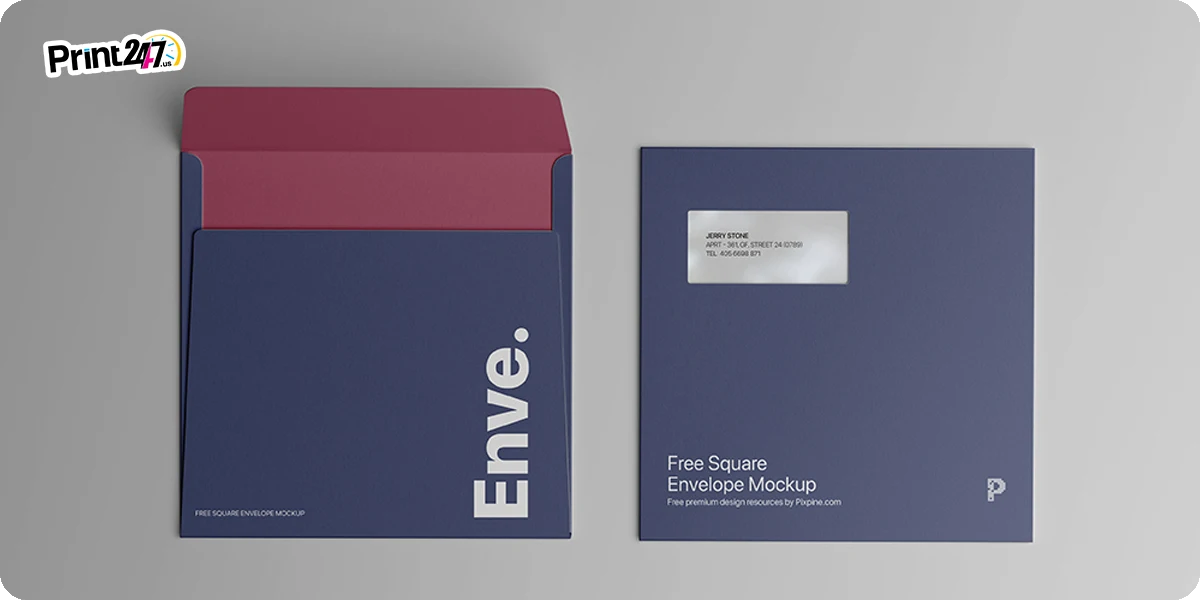
Square envelopes are equal-height-and-width formats used for premium promos and high-visibility mail. They look great, but they can be harder for machines to process because the aspect ratio is 1.0, not the USPS machinable range.
Square size | Size (mm) | Best for | Mailing considerations |
5" × 5" | 127 × 127 | Small announcements, boutique inserts | Often treated as non-machinable due to its shape |
6" × 6" | 152 × 152 | Premium promos, event invites | May require extra postage handling |
7" × 7" | 178 × 178 | Brand campaigns, high-impact mailers | Consider rigidity and thickness limits |
Commercial and Catalog Envelope Sizes
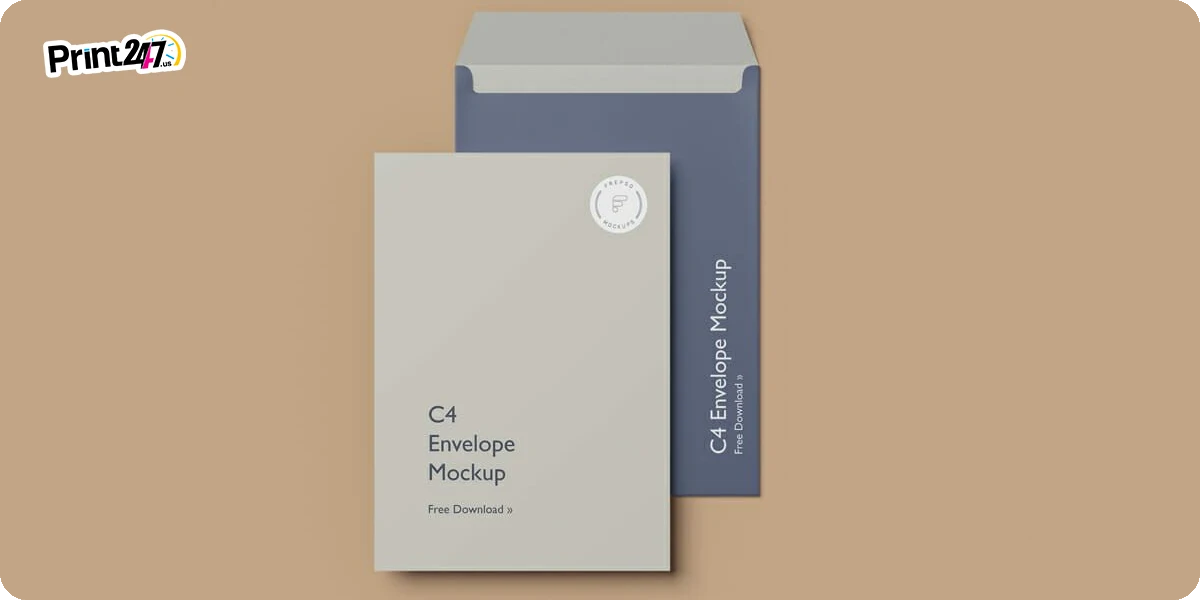
Catalog and booklet envelopes are larger formats made to carry documents flat or with minimal folding. A key build detail is Side Seam vs. Center Seam. Side seams are common on commercial envelopes, while center seams often show up on catalog formats for strength and flat storage.
Envelope | Size (inches) | Size (mm) | Typical use | Notes |
Booklet 6" × 9" | 6 × 9 | 152 × 229 | Brochures, small catalogs | Great for folded inserts, lighter kits |
Booklet 9" × 12" | 9 × 12 | 229 × 305 | Letter-size sheets flat | Good for proposals, HR packets |
Booklet 10" × 13" | 10 × 13 | 254 × 330 | 9" × 12" document sets | Better for thick packets |
The Dimensional Weight is important when oversized envelopes are transported as packages through carriers or when your mail piece is a flat or package due to its thickness. If you are packaging a heavy kit, match the envelope size to the thickness of the insert stack and use an expansion envelope to avoid separating the seams.
Invitation and Greeting Card Sizes
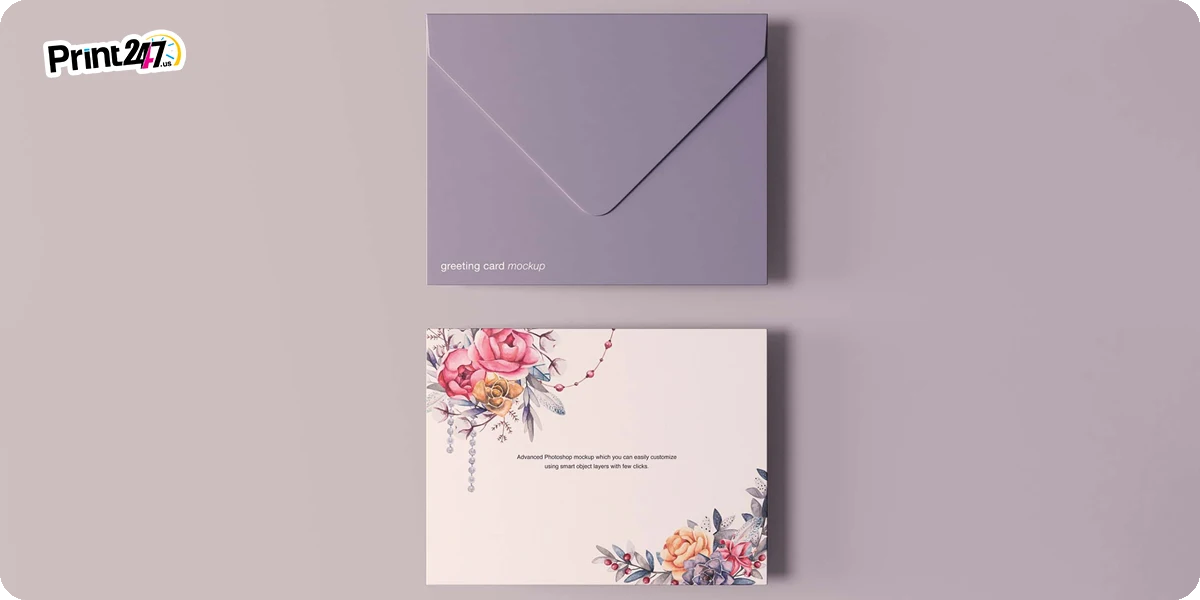
Invitation sizes often follow A-series naming because it makes print planning easier across campaigns. This is helpful when you want consistent standard letter-size dimensions for folds, plus clean sizing for cards and inserts.
Card size (common) | Matching envelope | Envelope size (inches) | Example use |
4.25" × 5.5" | A2 | 4 3/8 × 5 3/4 | RSVP cards, thank-you notes |
4.5" × 6.25" | A6 | 4 3/4 × 6 1/2 | Event invites, partner mail |
5" × 7" | A7 | 5 1/4 × 7 1/4 | Most invites, announcements |
5.5" × 8.5" | A8 | 5 1/2 × 8 1/8 | Large greeting cards |
Final Thoughts
An envelope's size is an important purchasing decision that affects print costs, mail speed, and the way your brand appears in the mailbox. It keeps postage planning predictable when your envelopes match your inserts, because you reduce returns and avoid jams in inserting equipment.
If you send routine business mail, start with the basics: #10 for outbound letters, #9 or #6 3/4 for replies, and 9" × 12" when a document must stay flat. From there, refine by use case. Window formats are great for statements and invoices. Kits with thick materials work better with booklets and catalogs. Presentation is essential when it comes to announcements and invitations.
When you are ready to order custom envelopes for your business, Print247 can support you as a B2B print partner. Print247 is a leading packaging supplier in the U.S. and offers free design support, FREE SHIPPING, fast shipping, and physical samples so you can test fit and print before full production.
FAQs
What is the most common envelope size for business mail?
The most common business envelope size is the #10, because it fits a tri-fold 8.5” x 11” letter and works well with automated inserting. Many billing teams also use #19 window versions for invoices and statements to reduce address printing.
Can square envelopes be mailed at standard rates?
An envelope should be slightly larger than the insert so the paper slides in without curling or catching at the seams. A good rule is to allow about ¼” clearance on the height and width after folding, plus more if you include multiple pages or reply envelopes.
Can square envelopes be mailed at standard rates?
Square envelopes are often mailed as non-machinable pieces. The reason is that their aspect ratio is 1.0, and USPS machinable letters need an aspect ratio between 1.3 and 2.5. That does not mean you cannot mail them, but you should plan for added handling requirements.
Do window envelopes have one standard window position?
Window envelopes use standard window sizes. However, the window placement can vary by template. A popular #10 window is 1 1/8" × 4 1/2", and many templates place it around 7/8" from the left and 1/2" from the bottom, but you should confirm the exact dieline before printing.
What size envelope do I need for an 8.5 × 11 letter?
A tri-folded 8.5 × 11 letter fits a #10 envelopes which is the standard for business mail. Use a 6" × 9" booklet envelope if you fold the sheet in half. Use a 9" × 12" booklet if the document must stay flat and unfolded.
What is a check-size envelope?
A check-size envelope is the #8 5/8, measuring 3 5/8" × 8 5/8". It holds a standard 8.5" × 3.5" business check flat with no fold, which is why payroll and accounts payable teams use it instead of a #10.
What is a legal size envelope?
A legal size envelope is the #14, measuring 5" × 11 1/2". It fits an 8.5" × 14" legal sheet folded in thirds. A tri-folded legal document is too tall for a #10, so the #14 is the correct commercial choice.
What is the standard envelope size in cm?
The standard US business envelope, the #10, measures 10.5 × 24.1 cm. Other common sizes are the #9 at 9.8 × 22.5 cm, the A7 invitation at 13.3 × 18.4 cm, and the international DL at 11 × 22 cm.
Get a Quick Quote

More Articles
 Bill ‘Hogg’ Ryan
How to Choose Box Thickness for Durable Puzzle Packaging
 Bill ‘Hogg’ Ryan
Is a Protein Powder Pouch Cheaper Than a Tub? Cost and Shelf Life Compared
 Bill ‘Hogg’ Ryan