

Carefully selected materials that deliver exceptional print quality, durability, and shelf presence.


 New


What Is Die Cutting? Process, Types & Uses in Packaging and Stickers
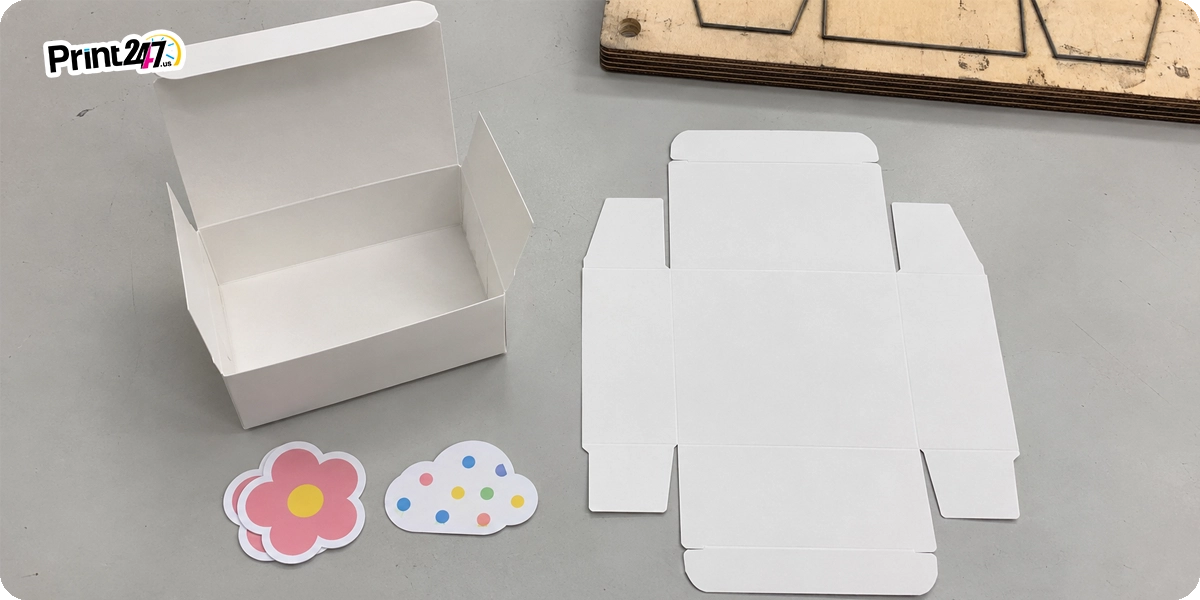
Die cutting is a printing and packaging process through which materials are cut into custom shapes. In this process, a shaped tool known as a “die” is used to cut paper, cardboard, vinyl, label, and other packaging materials.
This cut material is then used to create custom boxes, product labels, stickers, hang tags, window cutouts, and more. In this guide, we’ll take a look at what is die cutting in detail, how the die cutting process in packaging works, and when to use it for custom packaging and stickers.
What Is a Die Cut?
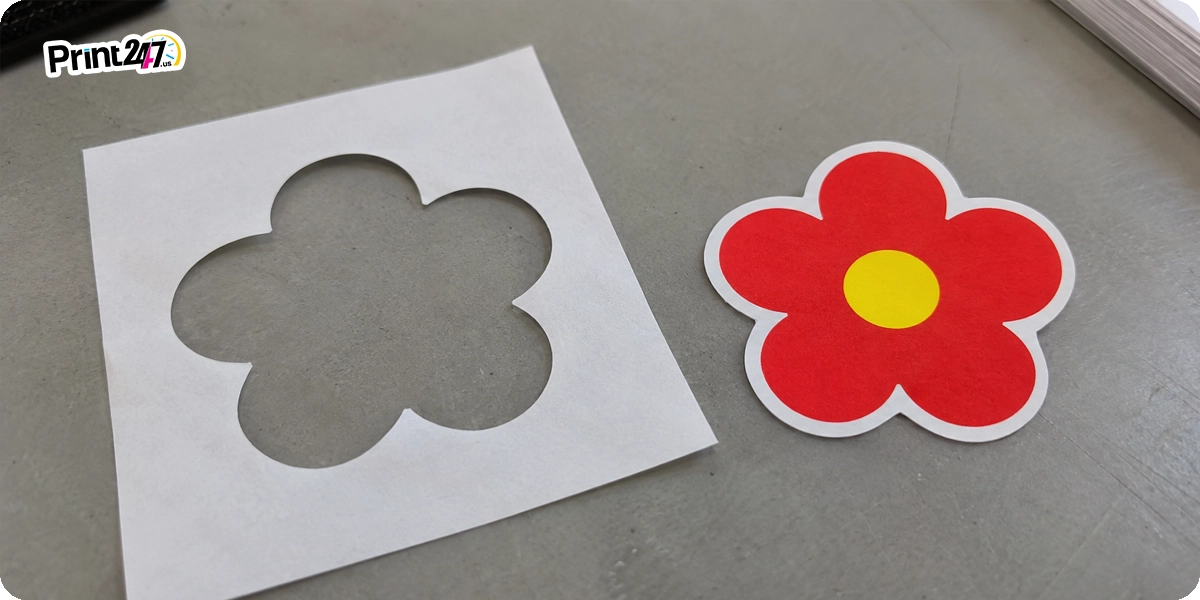 A die cut is a shape that comes as a result after a material sheet is passed through the die cutting process using a die. This die is a custom-made tool with sharp blades that press into the material and cut it into the desired shape.
Die Cut vs Dye Cut
The correct spelling is die cut, not “dye cut.”
Die means the metal cutting tool used to cut the shape on packaging material.
Dye means a coloring substance such as a fabric dye.
Often, people confuse “die” with “dye” when searching for “die cut”. The correct term in printing and packaging is die cut.
What Is a Dieline?
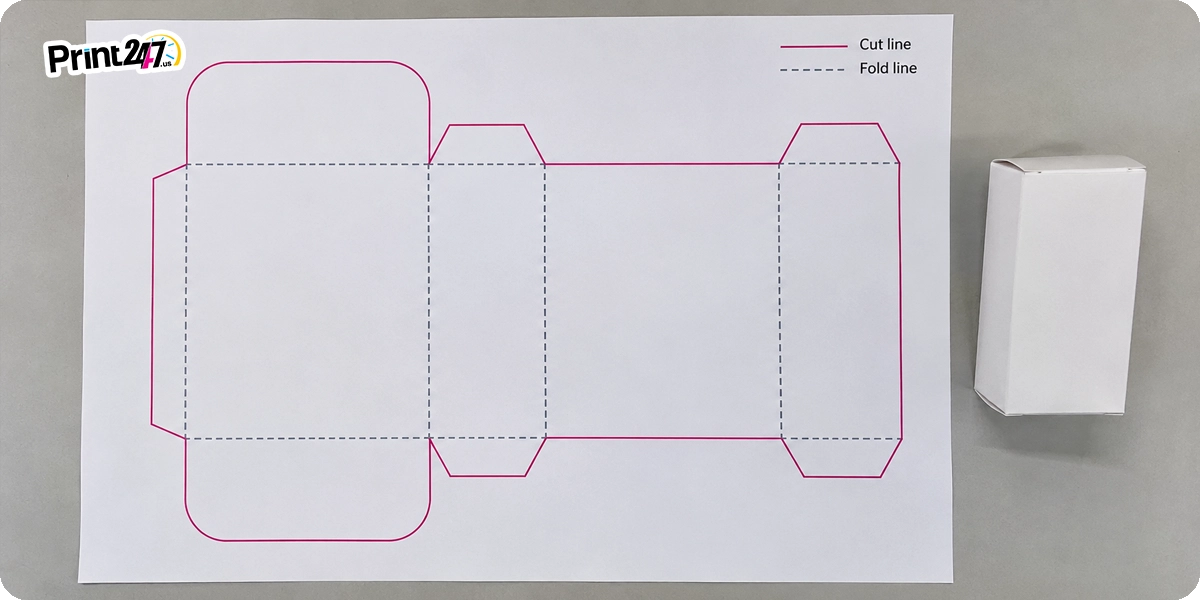 A dieline is an unfolded, flat layout of the packaging or a sticker before it is die cut. A dieline shows:
Cut lines
Fold lines
Glue tabs
Bleed areas
Safe zones
Window cutouts
Business card slits
A good dieline helps prevent mistakes before the job goes to print.
How the Die Cutting Process Works
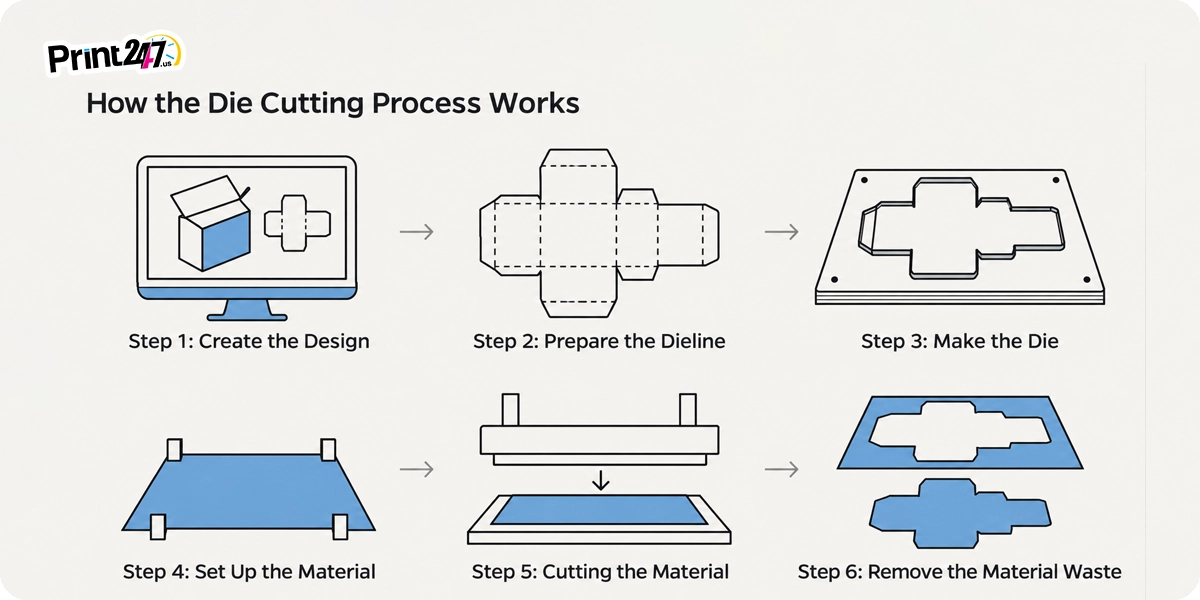 In this process, the packaging is transformed from a flat sheet of material into a custom shape or box. It is more than just cutting. It includes design, tooling, cutting, and finishing.
Step 1: Create the Design
First of all, you have to decide upon what you want to create. Is it a custom box, a sticker or label, a hang tag, or a mailer?
Don’t forget to consider:
Product size
Material type
Shape
Number of colors
Where the folds will go
Whether the package needs a window or tear strip
Step 2: Prepare the Dieline
After determining the points mentioned above, create a dieline fit for your packaging or sticker.
The dieline of both of these vary a lot. For boxes, it highlights panels, flaps, glue tabs, and fold lines. And for stickers, it shows the boundary of the sticker.
Step 3: Make the Die
The printer creates a custom die based on your packaging dieline. The die might include:
Cutting rules for the outside shape
Creasing rules for folds
Perforating rules for tear lines
Cutting rules for windows or holes
Step 4: Set Up the Material
The material is then precisely put into the die cutting machine. This is done to make sure the die is in the ideal position to make the cut on the printed material.
Step 5: Cutting the Material
The die then presses into the material and cuts it into the shape. After cutting, the extra material that is left around the die cut part is waste.
Step 6: Remove the Material Waste
The finished pieces are separated from the waste material. Then they usually go through the final steps such as folding & gluing and packing. Lamination, foil stamping and embossing happen earlier, on the printed sheet before it's cut.
For boxes, the die-cut blanks are folded and glued into finished cartons. For stickers and labels, the finished pieces are removed from the backing paper or liner.
Die Cutting Has Many More Uses
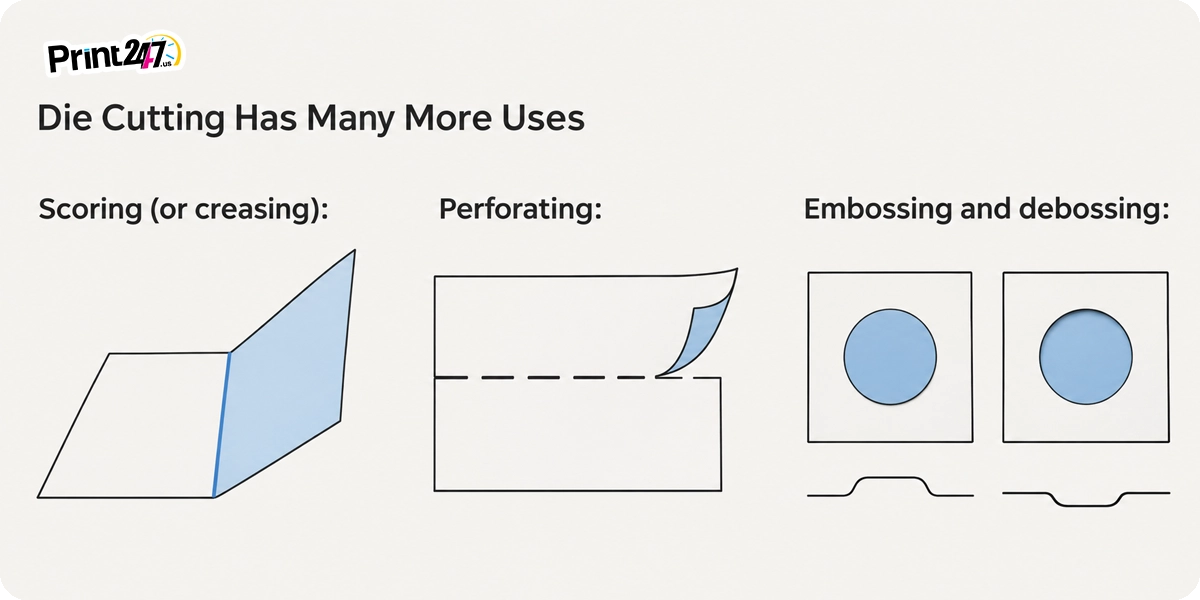 Die cutting can also help to create folds, tear lines, windows, and raised designs on the dieline template.
Scoring (or creasing): The die creates a shallow line that allows the packaging to be folded or bent easily.
Perforating: It makes tiny micro-cuts in the dieline, making it easy to tear a specific part of the packaging.
Embossing and debossing: Embossing raises the design elements, while debossing recesses them to make logos and brand names stand out.
Types of Die Cutting
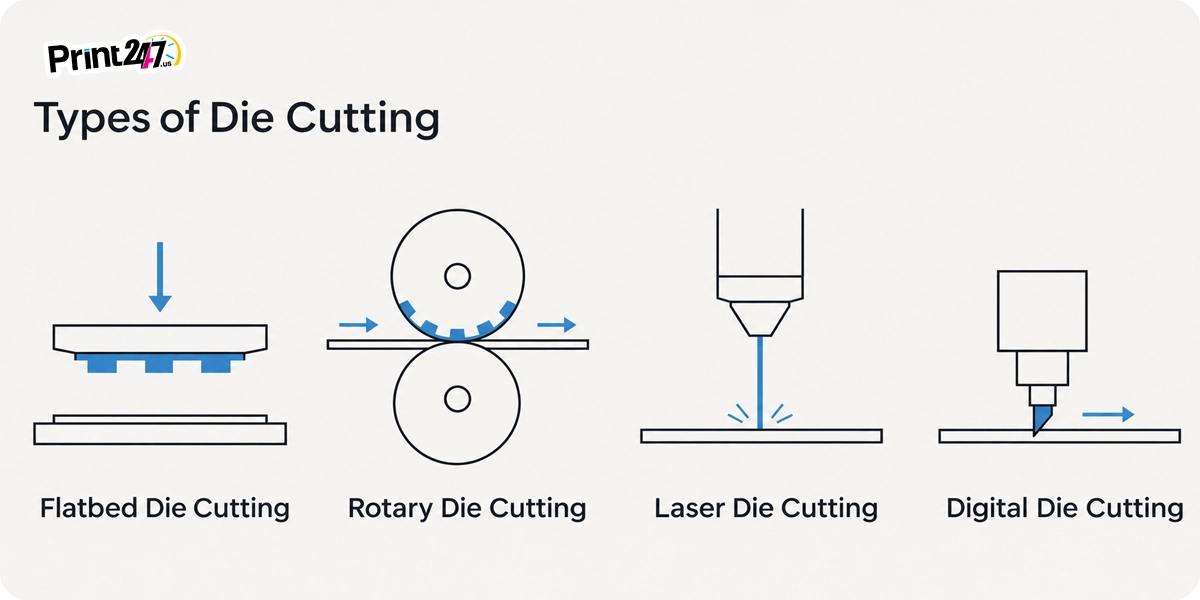 Below are the classifications of die cutting that are the norm in the packaging industry.
Flatbed Die Cutting
This die cutting process uses a flat press and a steel rule die. The material is placed on a flat surface, and the die presses into it to cut it into shape.
This method is ideal for die cutting:
Rigid paperboard
Thicker materials
Rotary Die Cutting
The rotary die cutting process uses a cylinder-shaped die. In this process, the material moves through the machine and die rolls over it to cut it into shape.
This method is ideal for cutting:
Labels
Stickers
Films
Tapes
Long rolls of material
Laser Die Cutting
The laser die cutting process is done by using a laser to cut the material. It doesn’t require a physical steel rule die. This makes it useful for prototypes, detailed designs, and short runs.
This method is ideal for:
Custom stickers
Detailed paper designs
Short runs
Prototypes
Complex shapes
Digital Die Cutting
The digital die cutting process is done through a small blade which is controlled by a computer. Just like the laser cutting process, this one also doesn’t require a custom steel rule die.
Die Cutting Process in Packaging
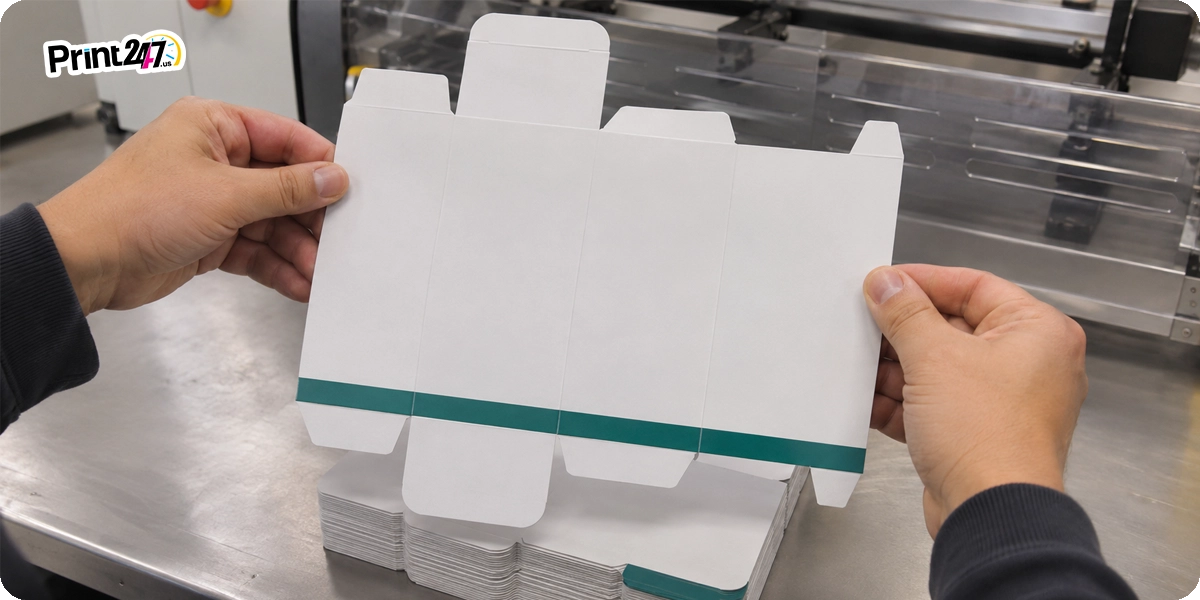 Die cutting is one of the foundational steps in creating custom packaging. It cuts and creases the flat printed sheet to transform it into a box layout ready for assembly.
Custom Product Boxes
Die cutting helps create custom product boxes in many shapes and sizes. It can cut the box outline, fold lines, tuck flaps, and glue tabs in one press stroke.
Custom boxes can include:
Tuck-end boxes
Folding cartons
Product boxes with inserts
Mailer Boxes
Mailer boxes are a popular option for e-commerce brands. The die cutting process helps to create the box shape, fold lines, tabs, and closures.
A custom mailer box includes:
Custom inserts
Tear strips
Window cutouts
Unique closures
Window Cutouts
It is a hole that is die cut in the box structure that lets customers see the product inside.
Window cutouts are common for:
Food packaging
Cosmetic boxes
Toy packaging
Gift boxes
Retail packaging
Hang Tags and Product Tags
The die cutting process has the potential to create custom hang tags in any shape.
A custom tag can include:
Brand logo
Product details
Price
QR code
Social media handle
Care instructions
Custom Inserts
Another use of die cutting is that it can be employed for cutting the inserts in exact product shapes to hold them inside the boxes.
Pouches & Flexible Packaging
The die cut process is ideal to create flexible packaging in custom shapes. This includes pouches, sachets, and labels.
Die Cutting Process for Stickers and Labels
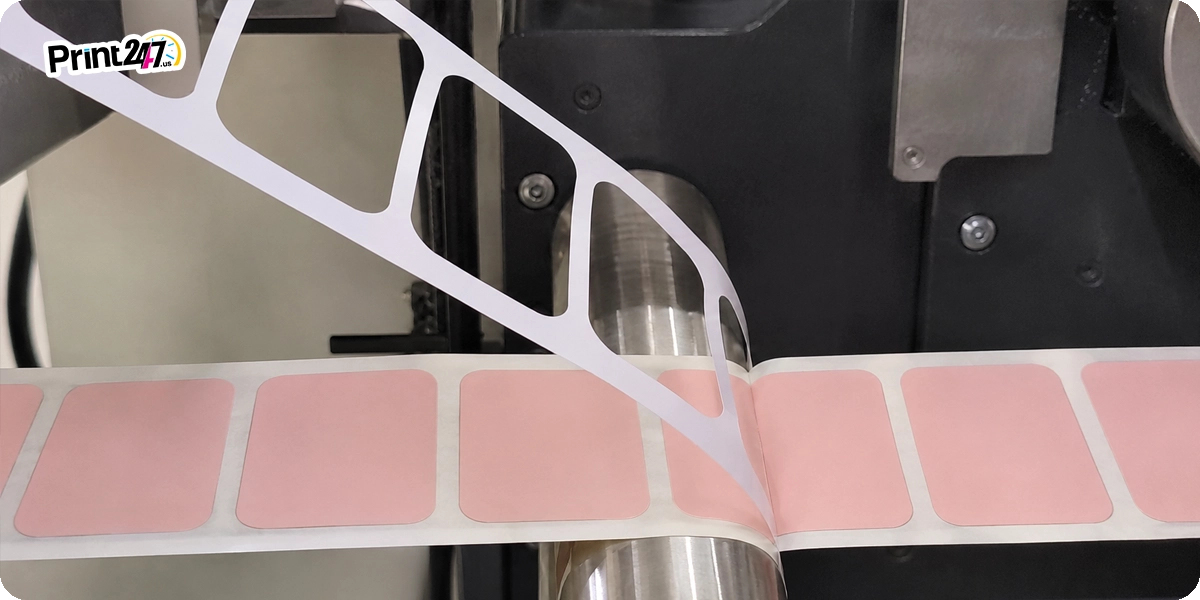 Die cutting is the important process for stickers & labels. It helps brands create shapes that match their logo and product.
Custom Die Cut Stickers
A custom die cut sticker is cut to the exact shape of the design. It could be a sticker shaped like a coffee cup, animal, flower, or logo cut with a custom die.
Custom die cut stickers are great for:
Product packaging
Event giveaways
Brand promotions
Laptop and water bottle decals
Retail displays
Product Labels
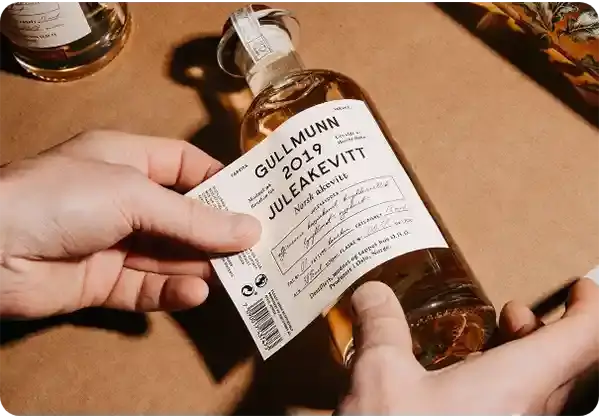
Die cutting helps labels fit the product better. A product label can be shaped to follow the bottle, jar, can, or tube curve.
Bottle & Jar Labels
These labels need to be made in custom shapes to fit around curved surfaces. The die cutting process can help to create labels that fit on bottles and jars.
Sticker Sheets & Kiss Cut Stickers
A kiss cut sticker is cut through the sticker material but the backing paper stays intact. This lets customers peel the sticker off easily.
Sticker sheets can include several shapes on one sheet.
How to Create Die Cut Ready Artwork
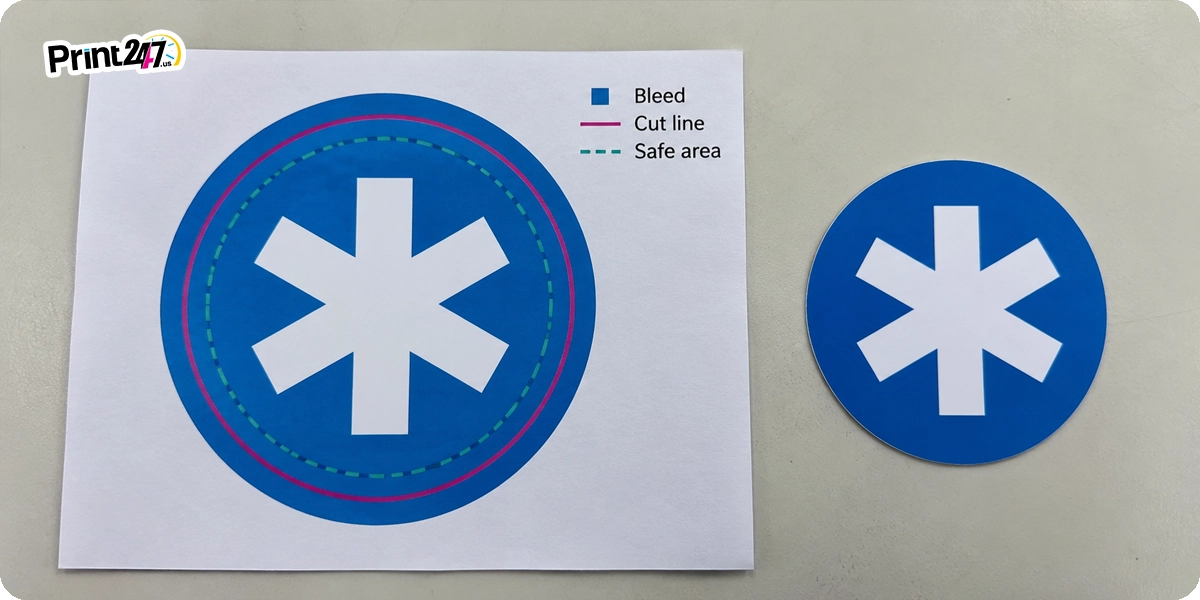 A good artwork can help to prevent costly mistakes that usually occur due to die cutting. Follow the steps below to make your dieline perfect for die cutting.
Use a Printer-Provided Dieline
Print247 experts are here to provide you with a dieline template that highlights the cut, fold, bleed, and safe zone.
Add Bleed
Think of the bleed area as the extra that doesn’t affect the significant design elements. Add at least 0.125 inch of bleed on all sides.
Keep Text Inside the Safe Zone
Make sure the significant details on your artwork like text, logos, and product info stays away from the cut line by 0.25 inches.
Conclusion – Get Custom Die Cut Packaging and Stickers from Print247
The die cutting process helps plenty of brands to create packaging, custom pouches, labels, and stickers that match their brand vision. From custom boxes to cardboard mailers, labels to bottle stickers, hang tags to backing cards, die cutting transforms a simple material sheet into custom branded packaging and printing materials.
At Print247, we help businesses to create custom die cut boxes, custom die cut stickers, custom labels, hang tags, mailer boxes, and product boxes according to their brand requirements. Discuss your packaging and sticker customization needs with our experts and they are sure to help you create unique designs for your packaging. If you have a design of your own, then upload it to our order form and we’ll show you how it looks.
We’ll send you the online design proof and only after your approval we will begin the production. Our MOQ of custom printed die cut packaging and stickers is 1,000 pieces. Our customer support is just a phone call away if you want to personalize boxes according to your industry needs. We offer free shipping in the USA for all custom die cut packaging and sticker orders.
Give us a call now at +1 (832) 807-3429 or send an email to support@print247.us.
FAQs
What is die cutting?
Die cutting is a process that uses a die to cut materials into custom shapes.
Is it “die cut” or “dye cut”?
The correct spelling is die cut. “Dye cut” is a common misspelling because “dye” and “die” sound the same.
What is the difference between die cutting and laser cutting?
Die cutting uses a physical die to cut the material. Laser cutting uses a laser to cut.
What is the difference between die cutting and scoring?
Die cutting cuts through the material. Scoring makes a shallow line that helps the material fold cleanly.
Get a Quick Quote

More Articles
 Bill ‘Hogg’ Ryan
When a 3 Side Seal Pouch Beats a Stand Up Pouch on Cost and Display
 Bill ‘Hogg’ Ryan
How Minimum Order Quantity Packaging Works for Small and Growing Brands
 Bill ‘Hogg’ Ryan