














Standard Baseball Card Sizes: All Dimensions in Inches, CM, & MM
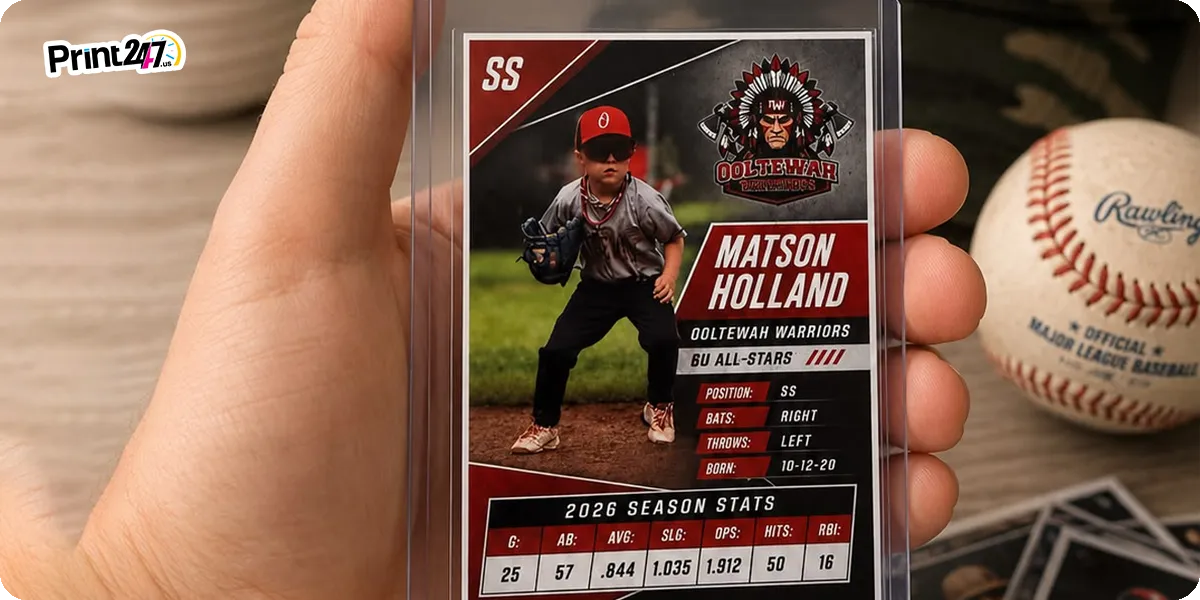
Baseball cards hold immense value in American sports culture. They are like miniature treasures that preserve special memories and faces of heroes. Each card is a tiny piece of history that every card collector cherishes as it immortalizes their legendary players.
One important detail that we all often miss is the baseball card size. Determining the dimension of baseball cards helps you store and display them in perfect condition. Odd sizes can get damaged in the normal storage boxes. Even minor dimensional errors can cause bending and grading problems.
The standard baseball card dimensions are 2.5 inches × 3.5 inches (63.5mm × 88.9mm). This detailed guide is for collectors, manufacturers, and packaging companies who are struggling to find the ideal dimensions for baseball cards.
The Brief History of Baseball Cards
Before explaining sports cards dimensions, we want you to know that these cards have changed a lot over the decades before settling on the modern standard size. Let’s take a look at the history of baseball cards:
Early 1900s: These cards were first produced by tobacco companies. They introduced the famous T206 cards. They were small in sizes about 1.5 × 2.5 inches. They came packed inside the cigarette packs. The size was perfect to fit in a pack.
1930s: They were then introduced by a candy and gum company named Goudey. They also started including these cards with each stick of their chewing gum.
1871: This was the time when the first baseball card was printed. It features the renowned pitcher and baseball manager Albert Spalding. The card was known as the Boston Red Stockings Card.
1888: Chromolithography was used to print colorful images of famous players on these baseball cards.
1952: This year was important because it's when Topps released the now iconic size for the baseball cards. It became the benchmark in the industry and is still followed by many.
Ever since 1952, this card size is considered ideal for printing, storing, collecting, and sleeving. Now let’s discuss the standard baseball card dimensions in detail.
What is the Standard Baseball Card Size?

Sports cards hold immense value for many.
“According to research, the global sports trading card market size was valued at USD 13.5 billion in 2025, which is projected to reach USD 24.7 billion by 2033, with a CAGR of 7.9.”
This shows how much value they still hold today and why understanding their dimensions matters more than ever.
2.5 inches × 3.5 inches (63.5mm × 88.9mm) is the exact dimensions of a baseball card. This baseball card size has remained industry standard. This size has been followed by many collectors, grading companies, and manufacturing companies.
These cards are also manufactured in small to large sizes for different promotional purposes. But the above mentioned baseball card size became the industry norm because of Topp's influence.
Standard Pokémon cards, basketball, and football cards also share the exact same size as the baseball card. This size fits perfectly in standard card sleeves and top loaders. It fits the standard layout and offers perfect space for printing.
The standard sports card size is usually written as width × height. That means:
Width: 2.5 inches
Height: 3.5 inches
Measurement Unit | Card Dimensions |
Baseball card size in inches | 2.5 inches × 3.5 inches |
Baseball card size in millimeters | 63.5mm × 88.9mm |
Baseball card size in centimeters | 6.35 × 8.89 cm |
Pixels (300DPI) | 750 px × 1050 px |
What is the Aspect Ratio of Baseball Cards?
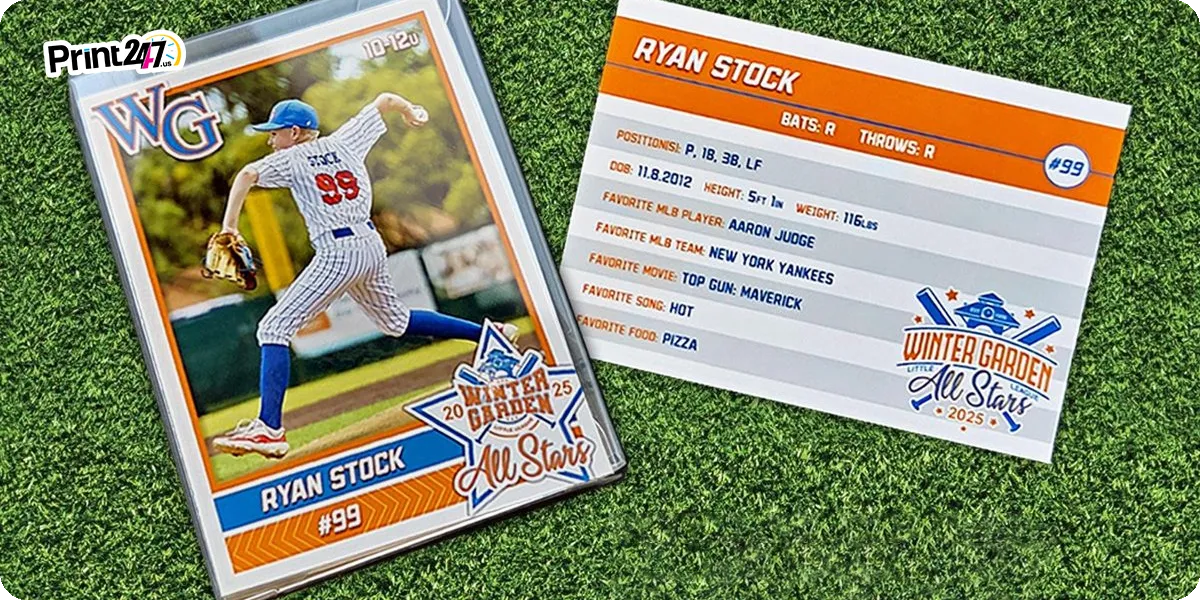
It is important to understand the aspect ratio of standard baseball cards to maintain uniform physical and digital layouts. The aspect ratio of a baseball card is defined as the proportional relationship between its width and height.
Aspect ratio = 2.5 ÷ 3.5
Multiply the dimension with 2 to find the aspect ratios quickly:
Width: 2.5 × 2 = 5
Height: 3.5 × 2 = 7
So the final baseball card aspect ratio is 5:7
Baseball Card Size Chart
If you are still asking what are the dimensions of a baseball card, take a look at the chart below. This chart will help you choose the right size across different card variations to choose the correct sleeves, holders, and storage options:
Take a look at the baseball card size comparison table to understand different dimensions easily:
Card Type | Size in Inches | Common Era & Uses |
Standard size of a baseball card | 2.5 × 3.5 | 1952 to present, all major brands |
Tobacco card (T206) | 1.5 x 2.5 | Early 1900s (1909 to 1911) |
Mini Cards | 2.25 × 3.125 | Various promo or insert sets |
Jumbo or oversized cards | 5 × 7 | Modern insert and specialty sets |
Photo card | 4 × 6 | Oversized photo style inserts, autograph or relic cards |
Vintage baseball cards | 1.5 × 2.625 | 1950s to 1970s, sizes shifted before standardization fully settled |
PSA graded slab | .2 × 5.3 × 0.25 | Graded cards, all eras |
Cabinet card | Approx. 4.25 x 6.5 | Late 1800s to early 1900s, display use |
Trading cards | 2.5 × 3.5 | Used as a hobby, collecting, and financial investment |
Understanding Graded Baseball Card Dimensions (PSA, Beckett, & SGS Slab)
These baseball cards are sealed inside a hard plastic case, also known as a “slab” by professional grading companies. They are meant to protect the cards from damage.
PSA slabs: This grading company measures cards. The dimensions are roughly 3.2 × 5.3 × 0.25 inches thick.
BGS (Beckett) slabs: It is slightly different and is usually thicker. It measures around 3.5 × 5.0 × 0.36 inches thicker.
SGC slabs: They are slightly wider, taller, and thicker than PSA slabs.
Understanding these small differences between the slab sizes matters more than you think. A storage box built for PSA slabs will not be able to fit BGS cases. Understanding these measurements helps avoid customer complaints and returns.
The Ideal Storage Solutions for Standard Baseball Cards
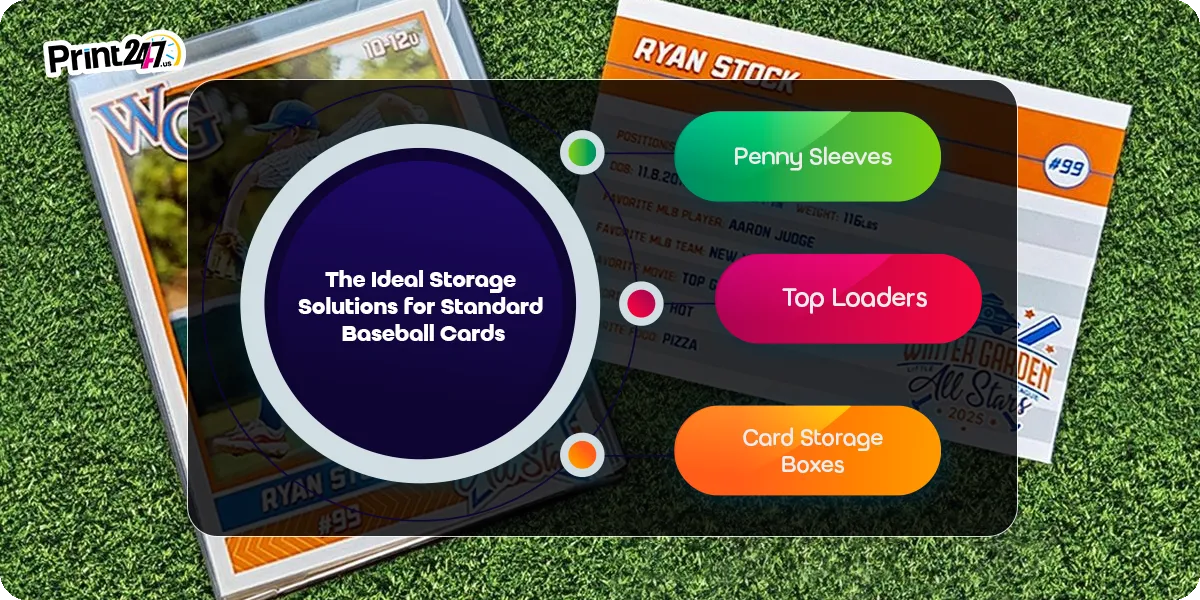
The standard card sizes fit perfectly well in the standard storage systems. To preserve their condition, collectors often use the following storage solutions:
Penny Sleeves: These boxes feature soft polypropylene sleeves. This helps prevent surface scratches.
Top Loaders: These are rigid plastic card holders. These are used to hold valuable baseball cards.
Card Storage Boxes: These storage solutions are specially designed to hold standard baseball cards size.
Understanding the exact dimensions for baseball cards helps ensure they fit properly in these storage solutions.
Why Size of Baseball Cards Matter for Designers?

Understanding how big is a baseball card is very important. Getting the size right helps ensure the safety and presentation of cards. It is especially important for collectors and designers to use the accurate size of baseball cards to avoid any problems. Here’s why understanding what size is a baseball card matters:
Design accuracy: Designers rely heavily on the average size of a card. This standard size requires a canvas of 750 × 1050 pixels at 300 DPI for high resolution printing. These dimensions of trading cards help prevent text from getting cut off.
Storage fit: Standard baseball card measurements fit perfectly well in protective sleeves and prevent bending or corner damage.
Proof of authenticity: The ideal baseball card size dimensions help confirm that the card has not been altered. This helps ensure that the card is original.
High trading & resale value: Standard trading card size helps build trust among buyers as the right size indicates authenticity. The size of standard playing cards helps increase their demand and resale prices.
Final Verdicts
Understanding the standard baseball card size matters, and it can significantly shape the entire card collection experience. The baseball card standard size 2.5 inches × 3.5 inches has become an industry favorite. This size makes them compatible with most storage systems.
Collectors, manufacturers, retailers, and packaging designers should understand these measurements to ensure proper product and professional card presentation. Print247 offers baseball card dimensions tailored to meet your brand needs. Get in touch to start creating customized baseball cards at affordable prices.
FAQs
What is the standard size of a baseball card?
The standard size of a baseball card is 2.5 inches × 3.5 inches. This size is the industry standard size for storage and presentation.
How much does a standard baseball card weigh?
A standard baseball card weighs about 1.5 to 2.5 grams depending on the thickness of the card stock.
Why do the accurate dimensions of baseball cards matter in grading?
Grading companies like PSA and SGS set the standard dimensions of a baseball card. If the card does not follow the accurate sizes or is cut incorrectly, they receive low grading. This ultimately reduces their trading value.
Are all baseball cards the exact same size?
No. Not all baseball cards follow the exact same sizes. Many cards come in mini, jumbo, vintage, and custom sizes. Each size card requires a custom sleeve or a storage box.
Get a Quick Quote

More Articles
 Bill ‘Hogg’ Ryan
How to Choose the Right Custom Toy Packaging Boxes for Your Brand
 Bill ‘Hogg’ Ryan
Paper Bags vs Plastic Bags: A Guide to Choosing the Right One for Your Business
 Bill ‘Hogg’ Ryan