




Materials That Match Your Product
Carefully selected materials that deliver exceptional print quality, durability, and shelf presence.


 New
New








How to Choose the Right Custom Toy Packaging Boxes for Your Brand
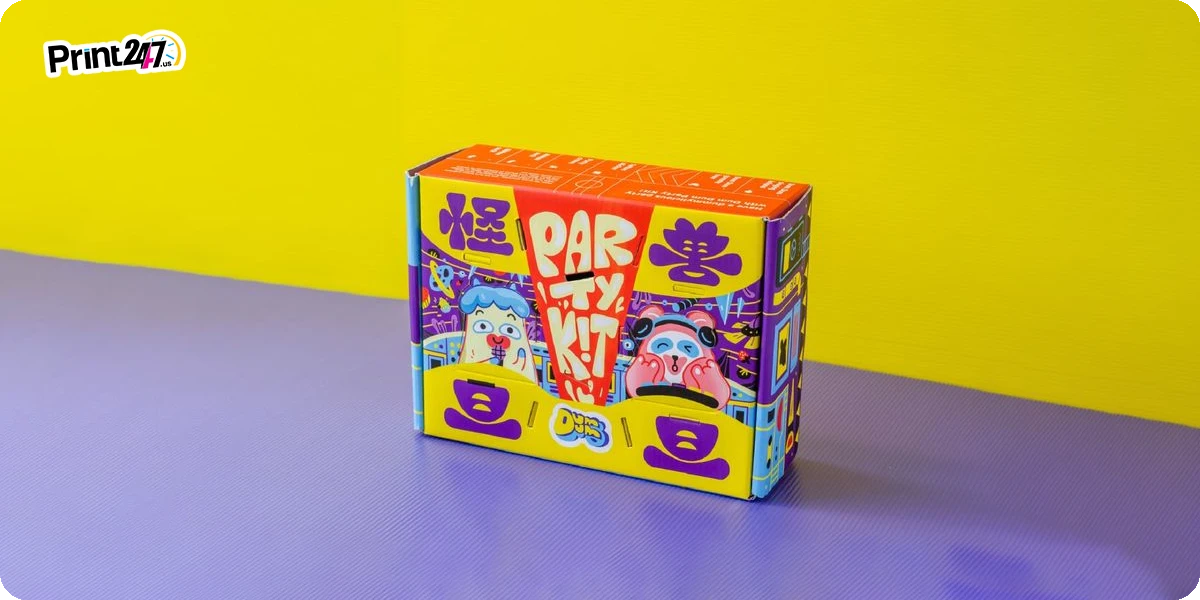
Choosing the right custom toy packaging boxes for your brand involves a few strategic processes. First match the box material and style to your exact product size and sales channel. Ensure your toy boxes meet all US safety rules. Finally, balance your budget by selecting the right minimum order quantity from a trusted supplier.
The toy industry is valued at approximately 138 billion dollars in 2026. Most new toy businesses fail because they don’t focus on the most important element of this business. When they choose the wrong packaging for their toys, they are unable to achieve the desired results and their business collapses.
Creating custom toy packaging boxes that fit your product, budget, and sales channel is beneficial to your business in a variety of ways. The damage to your product is just the first domino to fall when you select the wrong box. Those hidden costs and operational nightmares can lead to a toy company's quiet death.
Our leading packaging engineers contributed to writing this blog with an aim to help businesses choose the right toy packaging so they can survive in this competitive world. We cover everything from picking the right material and box style to getting the perfect size. We also explain strict safety rules and how to manage your costs effectively.
Let’s start.
What Are Custom Toy Packaging Boxes?
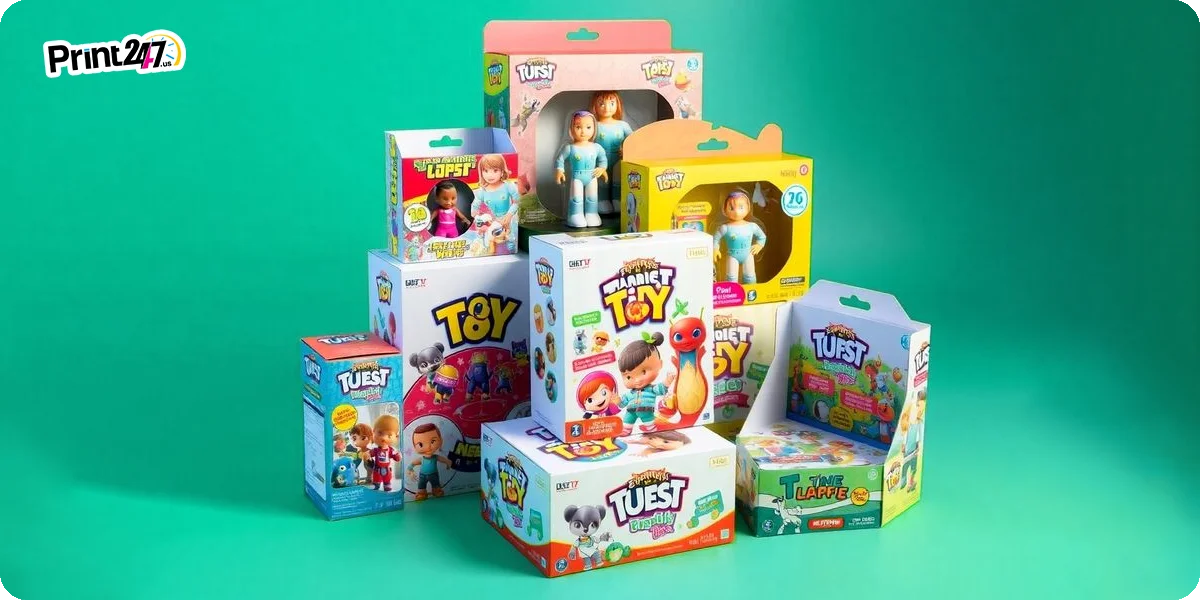
Custom toy packaging boxes are printed boxes made to fit your brand's exact product size and visual design. They protect toys during shipping and present them beautifully on retail shelves. A custom shaped game box differs heavily from a generic stock box. A generic or standard box comes in a set size and a blank color. All you have to do is put your toy inside and tape it shut.
Custom boxes are created exclusively for your product. You choose the right measurements so the toy does not rattle around. You print your logo and brand colors directly on the cardboard. You also choose special finishes like shiny foil or clear plastic windows. This special approach makes your toy products more trustworthy and keeps them safe.
Why Does the Right Toy Packaging Choice Matter?
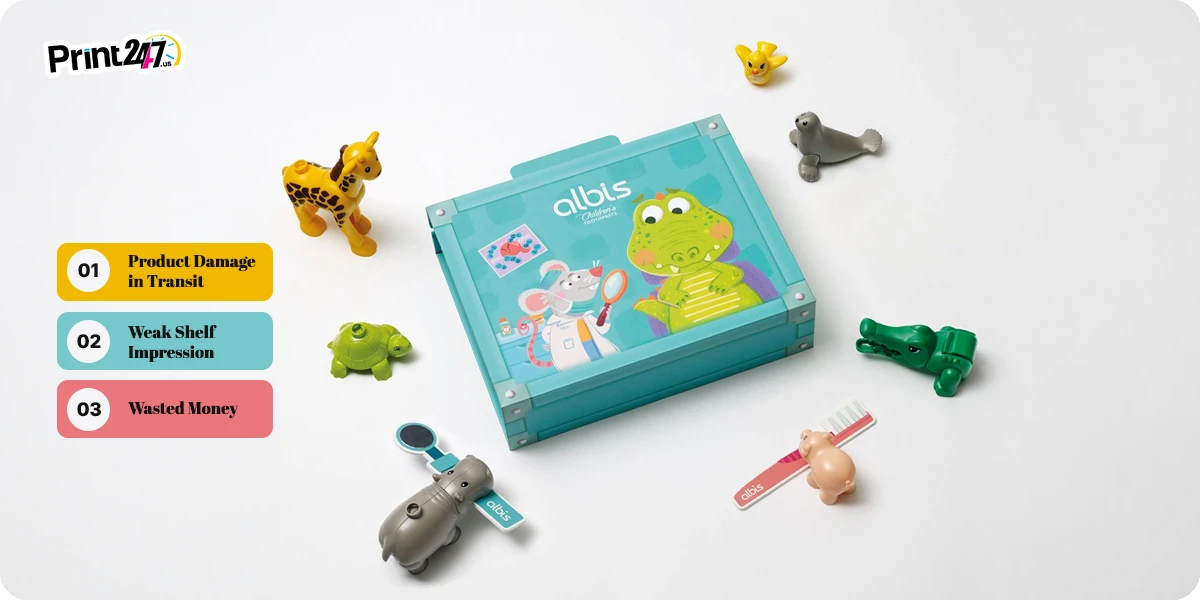
Picking the wrong box ultimately hurts your brand and your bank account. There is much more to toy packaging boxes than simply holding a product. They play a critical role in branding your business and making your toy distinguished on retail shelves. A fragile collectible box without proper padding can easily crush and impact your brand’s reputation.
Here are the three biggest consequences of choosing the wrong packaging for your toy brand:
Product Damage in Transit
Fragile toys placed in weak or oversized boxes will break during shipping. A heavy action figure needs strong corrugated cardboard, not thin paper. Broken toys lead to angry customers and expensive returns.
Weak Shelf Impression
Toys sell based on visual appeal on retail shelves. A dull or flimsy box fades into the background on a busy retail shelf. Poor unboxing experiences also ruin repeat sales. Toy boxes should be designed so that kids and parents can see them at first glance.
Wasted Money
Shipping companies charge based on size and weight of the product. If you ship a small doll in an oversized box, it will cost you extra money in shipping fees. You pay a premium for empty space.
How to Choose the Right Custom Toy Packaging Boxes - 5 Key Factors
There is a simple system you need to follow in order to pick the best packaging for your beautiful toys. Guessing leads to expensive mistakes in the packaging world. If you want to know how to choose toy packaging without the stress, follow this specific process. The process of buying toy boxes boils down to five basic choices.
Choose the Right Material
Pick a Box Style for Your Sales Channel
Get the Sizing and Fit Right
Check US Safety and Labeling Requirements
Factor in Wholesale Pricing and MOQ
Choose the Right Material
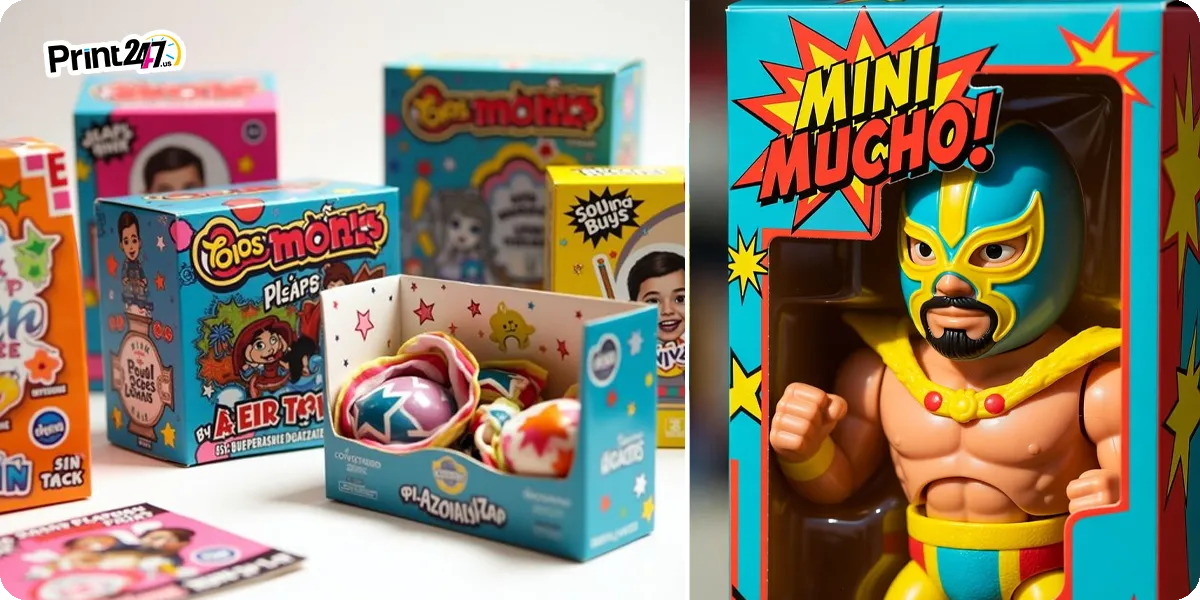
Your first task is to pick the right material that is highly suitable for your toy product. The material you choose dictates how safe your toy is. A heavy toy needs thick walls. A light toy can use thinner paper.
Here is a concise breakdown of your main material options:
Material Type | Durability | Best Use Case |
Low to Medium | Light toys, small figures, card games | |
Kraft Board | Medium | Eco-friendly toys, natural wooden toys |
Corrugated | Very High | Heavy items, shipping directly to buyers |
A kids product packaging box made of corrugated board easily holds heavy action figures or building blocks. Thin cardstock works great for small card games. Match the material thickness to your product weight to prevent damages. Print247 helps you evaluate different materials to find the perfect match for your product.
Pick a Box Style for Your Sales Channel
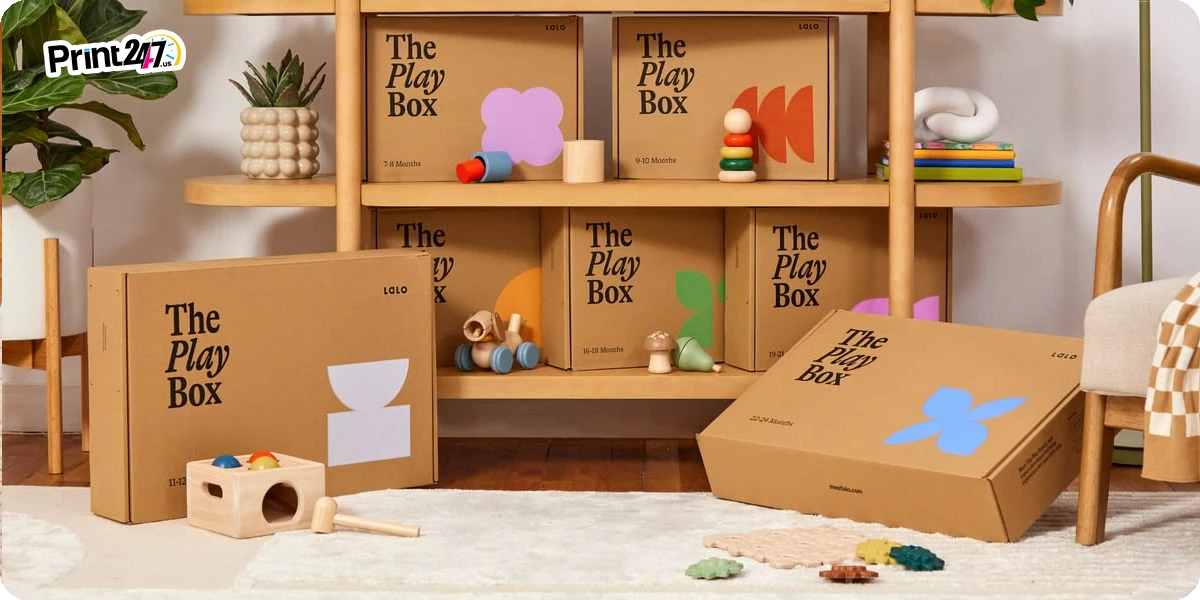
Where you sell your toys determines the box style you need. A box sitting on a store shelf needs different features than a box traveling through the mail system.
Consider these popular custom box styles for your product packaging:
Window Boxes: Window toy boxes feature a clear plastic cutout. They are most effective on retail shelves since buyers can clearly see the doll or figure inside.
Mailer Boxes: These are sturdy and self-locking. They are perfect for direct shipping because they survive the mail without extra outer boxes.
Rigid Boxes: Rigid toy boxes are thick and premium. Don't use these for anything but expensive collectibles or limited-edition toy items.
Display Boxes: These sit open on store counters. Display toy boxes hold multiple small toys or blind bags to trigger fast purchases.
Consider what style makes the most sense for your customers when purchasing from a packaging supplier
Get the Sizing and Fit Right
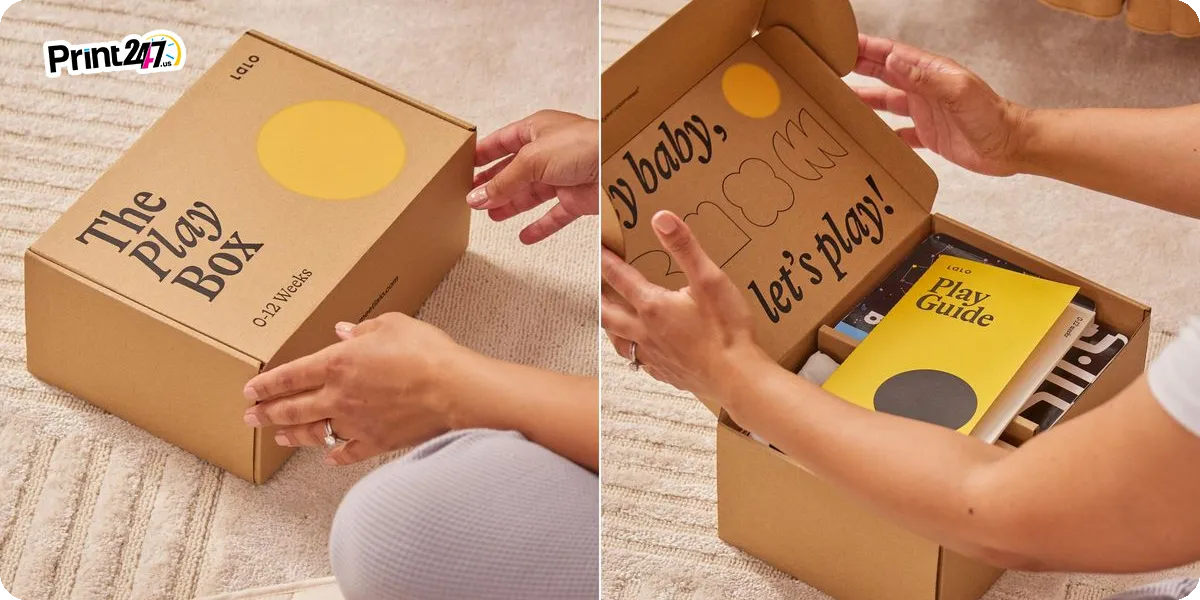
Size is the most critical part of a custom toy box. A snug box stops the toy from moving during shipping. Standard boxes usually leave empty gaps. Toys get smashed against the walls as a result of those gaps. At the end, they break due to these gaps.
Custom box dimensions reduce shipping damage and save you money. Shipping companies charge you based on the size of the box, not just on the weight. This is called dimensional weight pricing. Picking a standard box that is two inches bigger than your actual product can increase shipping charges. So it's better to measure the toy dimensions accurately to make them fit in the box and avoid shipping charges.
Check US Safety and Labeling Requirements
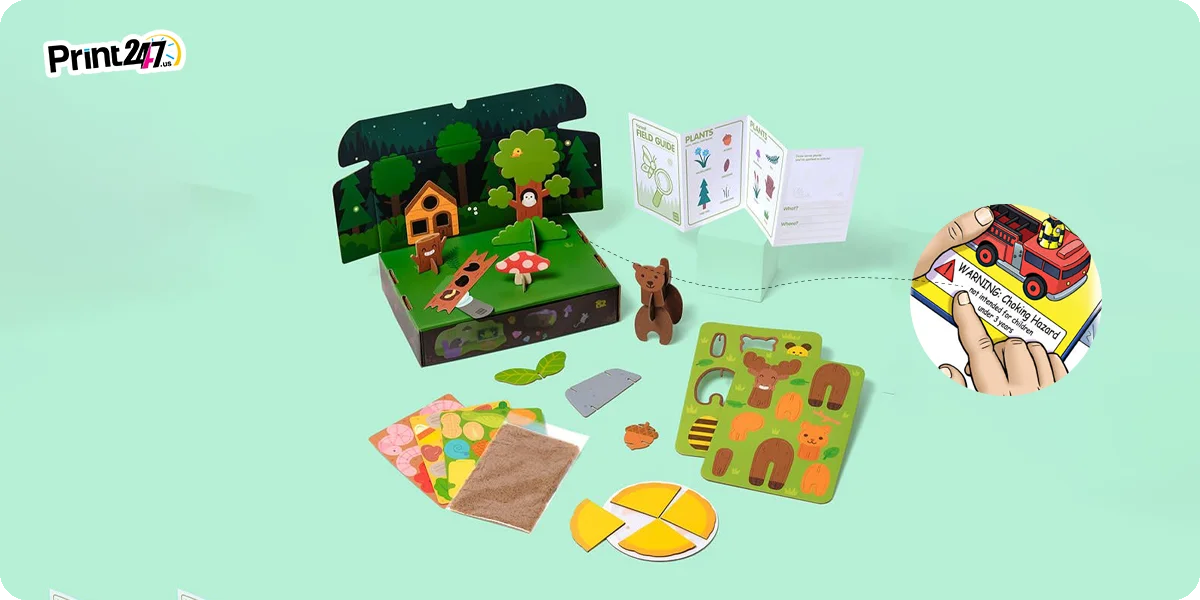
Selling toys in the US means following strict laws. You cannot skip these rules. The Consumer Product Safety Improvement Act requires specific labels on all toy packaging boxes.
The following details must be included in your design:
Choking Hazard Warnings: These warnings must appear clearly on toys with small parts on the front panel.
Age Grading: You should clearly specify the safe age range of the toy.
Tracking Labels: You need a batch number and manufacturer date printed directly on the box for easy tracking.
It is a legal requirement. If you leave these off your box, your products may be recalled or banned. Always double-check your artwork files with a compliance expert before printing.
Factor in Wholesale Pricing and MOQ
Budget is a massive factor in this whole journey. The cost of packaging goes down as you purchase more of it. Your minimum order quantity dictates your upfront cost.
Here is how order size changes your price:
Order Size | Per-Unit Cost | Best For |
100 to 250 units | High | New brands, testing a new toy design |
500 to 1,000 units | Medium | Growing businesses, regional stores |
5,000+ units | Very Low | Established brands, mass retail |
Wholesale toy packaging drops your cost per box significantly. A box that costs three dollars at low volumes might drop to eighty cents at high volumes. Print247 offers flexible minimums to help you scale your business safely and keep cash flow positive.
Custom vs. Stock Toy Packaging: Which Is Right for You?
Indeed it is a big decision to decide whether to use custom packaging or stock packaging. Both options have a valid place in business. Let us analyze how they directly compare.
Feature | Custom Toy Packaging Boxes | Stock Generic Boxes |
Cost | Higher upfront cost | Very cheap |
Branding | High brand impact | Zero brand impact |
Lead Time | Takes a few weeks | Ships immediately |
Fit | Perfect exact fit | Loose and sloppy fit |
Stock packaging works fine if you are running a tiny test run in your garage. If you want real shelf presence, you need custom boxes. Buyers judge a toy by its outer elements. Well personalized packaging establishes trust in your product and makes it appear as a luxury product.
Common Mistakes Toy Brands Make When Ordering Packaging
Many new sellers make expensive errors when buying custom toy packaging. The biggest mistake is choosing a box style before finalizing the toy dimensions. It is not uncommon for clients to design a beautiful window box only to discover the toy does not fit inside.
Another huge error is ignoring safety labels until the last minute. There will be no warnings about choking hazards on brands' artwork for printing. The printed boxes end up being thrown away in thousands.
Finally, many brands underestimate minimum order costs. They plan their budget around the cheapest bulk price but only want to order fifty boxes. Always ask Print247’s experienced team for a real quote depending on your exact quantity. This prevents budget shocks later and keeps your launch on track.
Final Checklist: Choosing the Right Toy Packaging for Your Brand
You are now ready to proceed with an informed decision. Keep this quick checklist handy when you buy your custom toy packaging boxes.
Select a material that will hold your toy's exact weight.
Match your retail or shipping needs with a box style.
Don't pay for empty space by measuring precisely.
Make sure all legal safety warnings are printed outside.
Balance your budget by buying the right quantity.
You have to weigh protection, presentation, compliance, and cost when choosing toy packaging boxes. When you work with a reliable expert supplier like Print247 - you can be assured of getting nothing less than the best results each and every time.
Get a Quick Quote

More Articles
 Bill ‘Hogg’ Ryan
The Ultimate Guide to Peptide Box Inserts (Foam vs. Cardboard vs. Molded Pulp)
 Bill ‘Hogg’ Ryan
How to Design Pen Boxes with Logo That Reflect Your Brand
 Bill ‘Hogg’ Ryan