


Carefully selected materials that deliver exceptional print quality, durability, and shelf presence.


 New

















How Packaging Tariffs Change the Real Cost of Imported vs. US-Made Packaging
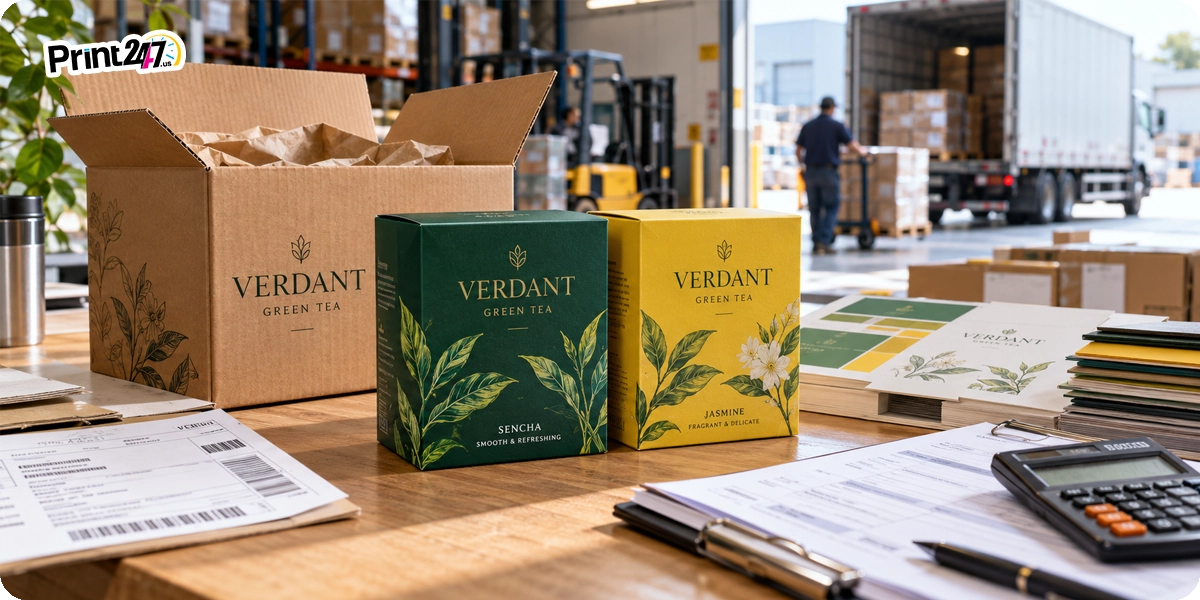
Tariffs have raised packaging costs, and that’s because the industry relies on imported materials; however, companies can adapt sourcing, materials, and pricing.
Think about the time you asked for a quote on custom boxes because the overseas price looked great. Then the invoice came, and it was higher than planned. That gap is the real story behind packaging tariffs. The packaging industry needs to brace itself for:
Higher costs
Tighter margins
Supply chain pressure
Packaging suppliers know that global trade policies are out of their control; however, sourcing decisions aren’t. With tariffs, it’s not just the finished products that get more expensive; it's also the raw materials and logistics.
The packaging industry feels the pressure more than most other industries, as it depends heavily on imported raw materials and overseas manufacturing, much of it located in China.
In this article, we discuss the impact of tariffs on packaging and how they change the cost of imported vs. US-made packaging.
What Are Tariffs?
A tariff, in simple terms, is a tax on imported goods. A broad set of new tariffs was introduced during the US president’s second term. The importer is obliged to pay these taxes, not the factory overseas. That means sourcing packaging products or raw materials from overseas requires paying the duty, plus freight and storage for extra stock.
The primary purpose of tariffs is to promote domestic manufacturing, reduce trade deficits, and address national security concerns. They help domestic industries by making foreign products more expensive. This gives buyers a stronger reason to choose US-made packaging.
Who Pays a Tariff?
Let’s clear up a common misconception about who actually pays. It's not the foreign exporters who pay that tax; it's the importer bringing products into the country. The importer is responsible for paying the duty directly to customs.
Importers rarely absorb the cost. They pass it down the supply chain, so the consumer usually pays in the end.
What Changed in Packaging Tariffs in 2026
Packaging tariffs in 2026 have shifted as the Supreme Court ruled against the earlier emergency tariffs. The government employed Section 122 of the Trade Act to add a temporary 10% tariff on most imports. This section expired this year on July 24.
The new Section 301 duties began on July 24. They cover imports from 60 economies. Imports from countries that ban forced-labor goods, or have committed to doing so, are charged 10%. Most other origins are charged 12.5%. This information is important for packaging buyers. These duties depend on the country of origin, meaning where your packaging is made decides what rate you pay. The key takeaway is that the prices can change faster than your production run.
Check the table below to see the tariffs timeline for imported packaging:
Date (Year 2026) | What happened | What it means for box buyers |
February 20 | Supreme Court rules against the IEEPA surcharges | Earlier emergency tariff rates no longer apply |
After the ruling | Section 122 adds a temporary 10% tariff | This is a short-term surcharge on most imports |
July 24 | Section 122 tariff expires | The temporary surcharge ends |
July 24 | New Section 301 duties of 10% or 12.5% start on 60 economies | A new duty layer on most imported boxes; Section 232 goods are exempt |
Ongoing | Section 301 excess-capacity investigations of 16 partners | More duties are possible, so budgets can change |
How Are Tariffs Affecting Packaging Cost?
The direct answer to this is that packaging costs are most likely to go up. Tariffs lift packaging expenses by raising the price of imported raw materials. Companies that import their packaging, such as custom boxes, paper bags, Mylar bags, and paper mailers, should prepare themselves for higher packaging costs.
Then come the extra costs, such as:
Freight
Customs brokerage
Port delays
Overseas suppliers require large minimum orders. This forces businesses to buy more stock and pay to store it. Even US packaging suppliers can see prices rise if they rely on imported materials, resin, or inks.
The real issue is the uncertainty. Rules have changed many times this year, and more investigations are underway. A quote that looked fair last month might not hold today. So you need to be prepared for further changes.
Protect your budget by comparing total landed cost, not unit price. Ask your suppliers where the materials come from. Check if they will hold pricing. Select a smart packaging design, as right-sizing helps reduce costs.
Cost Comparison Between Imported and US-Made Packaging
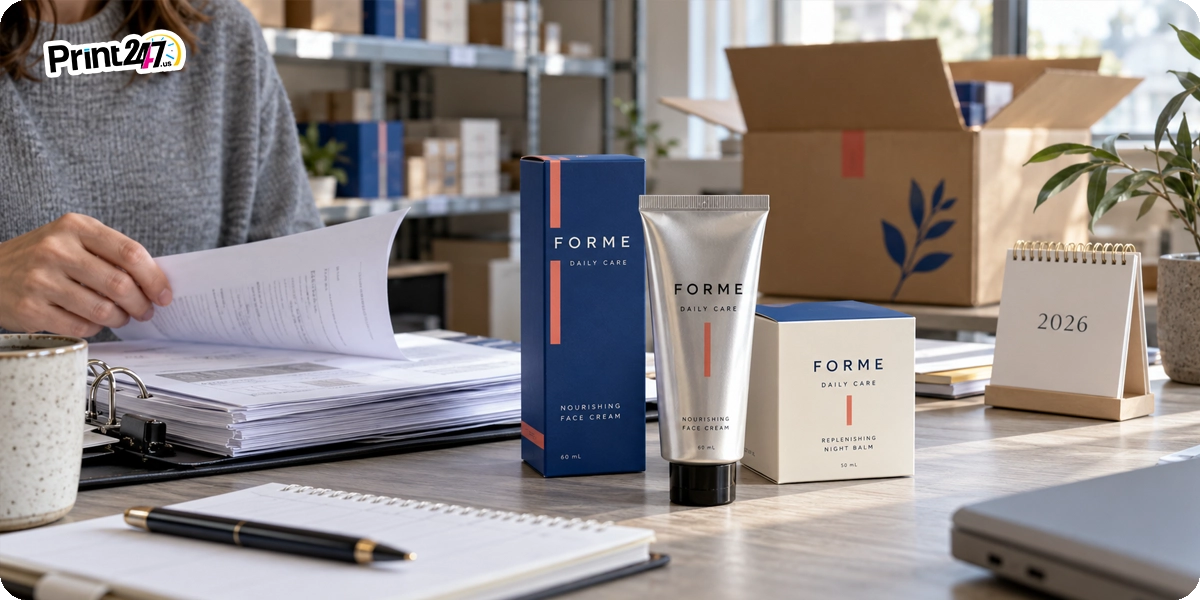
A package’s price tag and its real cost are two different numbers. The real number is the landed cost: the total you pay to get the packaging onto your warehouse shelf.
Compare imported packaging with made in USA packaging. Look at a few key factors, such as unit prices, duty exposure, freight and customs, lead time, minimum order quantity (MOQ), sampling, reorder flexibility, color and print control, and price stability.
Here is what three of these factors mean:
Unit price is the price you pay per box before duty, freight, and other charges. Imported packaging is often lower on paper, while US-made packaging often costs more per box.
Duty is the tariff on imports. US-made finished packaging has no import duty, though imported materials can still carry it.
Freight on imported packaging includes ocean freight, brokerage, and port delays, while US-made packaging has domestic freight only.
Factor | Imported Packaging | US-Made Packaging |
Unit price | Often lower on paper | Often higher per unit |
Duty exposure | Base duty plus Section 301 layer | No import duty on finished packaging |
Freight and customs | Ocean freight, brokerage, port delays | Domestic freight only |
Lead time | Longer, with transit and customs steps | Shorter and easier to track |
MOQ | Often higher | Often more flexible on short runs |
Sampling and prototypes | Slower rounds of revision | Faster turnaround |
Reorder flexibility | Plan far ahead and hold stock | Smaller, more frequent reorders |
Color and print control | Harder to approve in person | Easier to check on press |
Price stability | Exposed to tariff changes | Less exposed to trade rules |
How Packaging Design Reduces Price Under Tariffs

An efficient structural design cuts material waste and tightens shipping dimensions, which lowers both landed and duty costs. Switching to lightweight packaging materials can also reduce costs under tariffs.
Light weighting reduces material thickness while keeping the product protected. This lowers per-unit material input costs. Shipping fees are often calculated based on weight and volume, while duties are charged on the value of the goods. Lighter packaging lowers freight costs directly. It lowers duty only where the lighter spec also lowers the declared value of the goods.
Another smart step is to right-size your packaging to reduce void space inside the box or any other packaging format. It also helps shrink the overall footprint of each package. The reduced physical dimensions of each package mean more units can easily fit onto a single shipping pallet. This helps lower freight and logistics costs for the importer.
Structural redesign helps companies lower packaging costs. There are far better alternatives than buying expensive and heavily textured imported substrates. Brands can just choose domestically sourced alternatives that carry less duty exposure.
What to Ask Any Packaging Supplier About Tariff Exposure
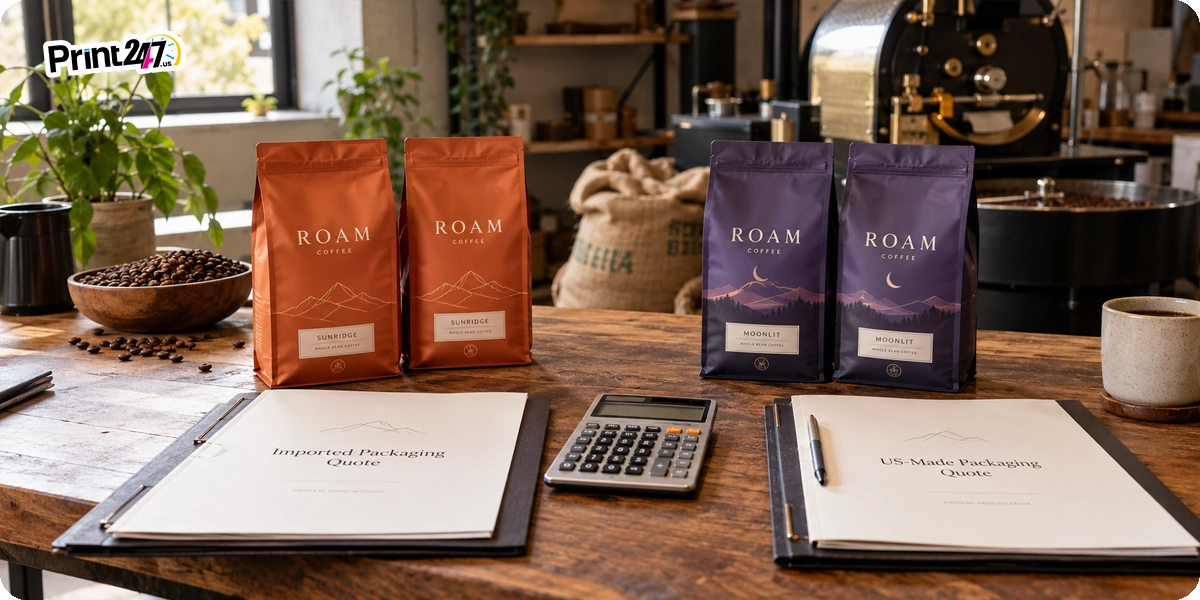
Ask these questions to your suppliers before importing packaging from overseas. It helps you find any hidden tariff exposure. Confirm pricing and transparency to protect your margins.
The following are the questions you should ask:
Where do you source the materials and convert them into flexible packaging or custom boxes?
Can you provide country-of-origin documentation?
Does your quote include freight and duties?
Do you provide warehousing or planned releases?
What is the lead time for samples and production?
Source Smarter with Print247
Tariffs are shaking up custom packaging costs in the USA. The trade war shows no signs of easing, and it is important that the packaging industry remain flexible and prepared. Print247 helps businesses of every size manage this. We run our own manufacturing facility in Rosenberg, TX, and provide cost-effective, US-made packaging solutions that align with your business requirements.
Reach out to Print247 packaging experts today to find the right strategy for your business.
FAQs
How are tariffs increasing the cost of custom packaging in the USA?
Tariffs increase the cost of custom packaging in the USA by applying import taxes on raw materials and finished products. US companies pay these taxes at the border and pass them down through the supply chain.
Do paper tariffs raise packaging prices?
Yes. Paper tariffs raise packaging costs. Tariffs on imported raw paper, pulp, coated paperboard, corrugated cardboard, or finished paper products increase the final cost.
Why is sourcing packaging within the US beneficial?
Packaging sourced within the US is beneficial. Brands can reduce exposure to international tariffs and trade barriers. That way, the lead time is shortened. It also improves supply chain reliability. It is also a better choice for inventory planning and forecasting.
Are flexible pouches more cost-effective than custom boxes?
Yes, flexible pouches are generally more budget-friendly on the market right now. Unlike custom boxes, pouches use less material and have low weight, which helps lower freight costs. Some brands are swapping to pouches to push back against increasing tariff costs.
Get a Quick Quote

More Articles
 Bill ‘Hogg’ Ryan
Is a Protein Powder Pouch Cheaper Than a Tub? Cost and Shelf Life Compared
 Bill ‘Hogg’ Ryan
How Packaging Tariffs Change the Real Cost of Imported vs. US-Made Packaging
 Bill ‘Hogg’ Ryan