












Custom Christmas Boxes vs Generic: The Real Cost Difference
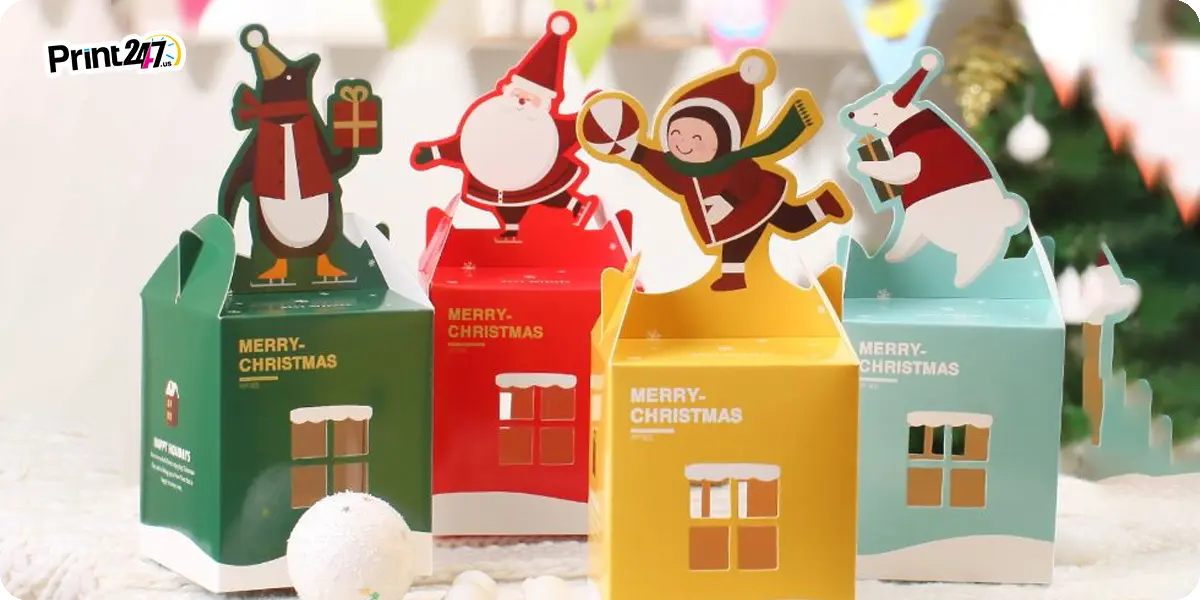
Have you ever thought peak season is short and merciless? Yes, it can be costlier if you make one badly chosen package that can wreck a carefully built brand promise, while a well‑designed carton becomes the quiet hero of your holiday campaign. Procurement teams who calculate higher volume Christmas box orders with rigor control margin, preserve delivery windows, and ensure the unboxing feels like a gift, not an afterthought.
A custom Christmas box is a branded carton produced to exact dieline, print, and finishing specs; a generic holiday box is an off‑the‑shelf unit with limited print or structural choice. Unit landed cost bundles materials, finishing, assembly, and freight. Volume break point is the order quantity where setup and tooling are amortized enough that per‑unit price drops materially.
Why Does Run Size Flips the Math for Christmas Cartons?
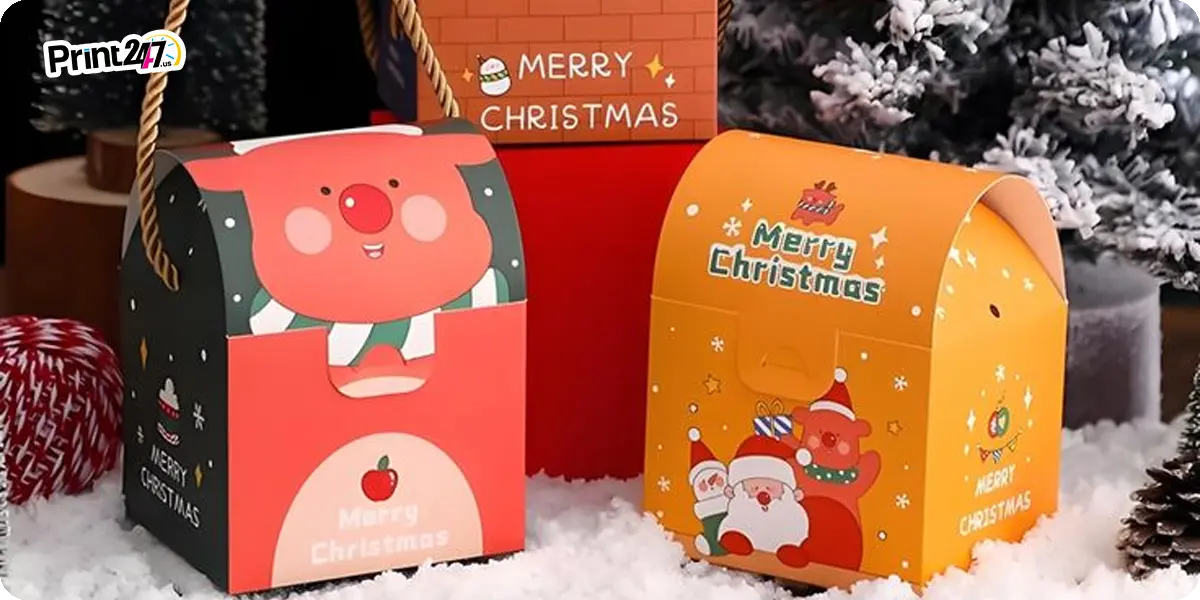
When you calculate higher volume Christmas box orders, tooling and setup costs are the big levers. Tooling for dies and plate setup is fixed, so spreading those costs across tens of thousands of units makes custom runs much cheaper per unit than small bespoke lots. Generic stock removes tooling, but if you need custom printing or wraparound artwork on each carton, the per‑unit cost can climb back up especially when competitors hide setup or finishing fees from headline quotes.
How do Competitors Price Holiday Boxes? What to Watch?
Competitor bids often differ because of base board choice, print complexity, finishing steps, insert complexity, and logistics. Some suppliers advertise low piece prices but exclude die setup, proofing, or finishing in the headline. Others absorb tooling into MOQ thresholds. When benchmarking, require full landed costing: effective board caliper after finishing, finishing steps (in‑line vs off‑line), tooling amortization, assembly labor, palletization density, and estimated freight at destination.
Sizing and Structure: How Dimensions Change Freight and Cost?
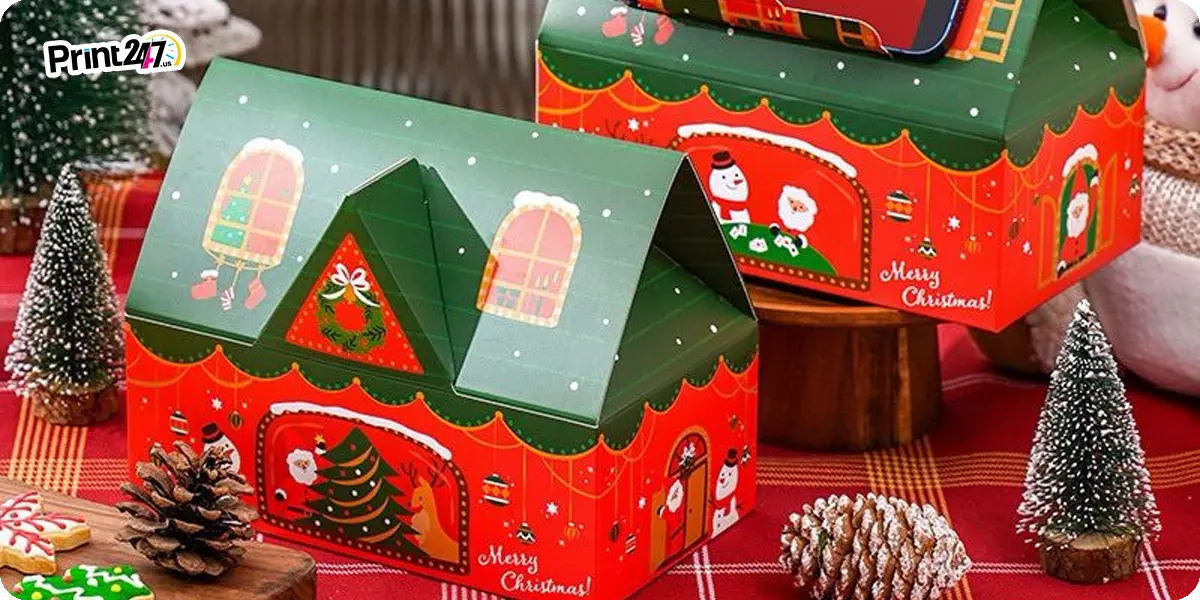
Over specified internal volume for elaborate inserts or thicker board increases volumetric weight and pallet tiers; that single millimeter in height multiplies across thousands of boxes. When you compare dimensions of cardboard tissue box logic to Christmas cartons, keep palletization in mind: better structural design that optimizes internal protection with lower external footprint saves freight and raises profitability.
Soft Touch Coating Versus Lamination
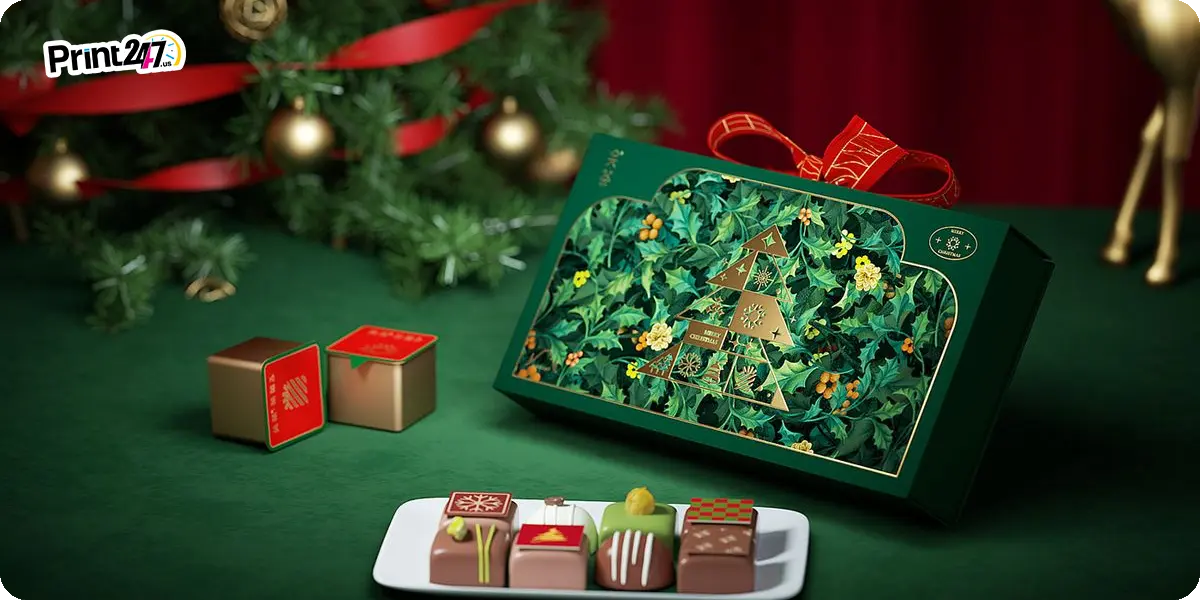
Soft‑touch coating often delivers a premium feel with lower incremental cost than full‑film lamination because it’s applied in‑line and adds minimal effective thickness.
Soft touch preserves internal usable volume and avoids the extra process and film waste lamination creates. By contrast, heavy film lamination and thick coatings add setup, potential off‑line steps, and increased pallet height each raising per‑unit landed cost.
Array of Customization Options
Added cost drivers include rigid board callipers for a luxury feel, die‑cut inserts, embossing, metallic foil stamping, multi‑color or CMYK prints with tight registration, and small run sizes. Expedited production windows and split shipments during the holiday surge also attract rush premiums. Every additional finishing or structural enhancement compounds tooling, press time, and assembly labor costs.
Controlling The Cost While Preserving Christmas Box Unique Presentation

Modular inserts a one‑tray solution used across multiple SKUsreduce tooling and per‑unit assembly. One‑piece printed inserts lower complexity versus nested multi‑part systems and pack flat for cheaper freight. By standardizing insert geometry across product families, you capture presentation consistency without multiplying die and tool costs.
What Sets The Benchmark?
Typical break points vary, but custom runs generally become favorable in the 10,000–25,000 unit range depending on finish complexity. At these volumes, tooling costs dilute and in‑line finishing like soft‑touch becomes highly efficient. Below those quantities, generic stock or limited customization may be cheaper, but expect weaker brand expression and possible hidden costs if you require later add-ons.
Finish option | Incremental cost-per-unit (USD) vs uncoated base | Operational notes |
Soft-touch aqueous coating (in-line) | +$0.10–$0.40 | Applied in-line, low effective thickness, preserves internal volume |
Spot UV (selective) | +$0.05–$0.60 | Low to moderate cost depending on coverage; high perceived contrast |
Film matte lamination (off-line) | +$0.40–$1.50 | Adds process step, film waste, increases effective caliper and freight |
Full cold foil stamping (spot) | +$0.60–$2.50 | Die and foil setup; strong visual premium, higher setup amortization |
Deboss/emboss (selective) | +$0.20–$1.20 | Tooling for dies; tactile premium, moderate cost spread |
Seasonality and lead time don’t let rush pricing erase savings Holiday programs require planning. A comfortable production window of five to eight weeks for custom Christmas boxes avoids rush surcharges and airfreight, while compressed timelines often force suppliers into expensive shortcuts. The true landed cost should model rush premiums and seasonal carrier constraints.
Why Custom Christmas Boxes Amplify Brand Value Than Generic Boxes?
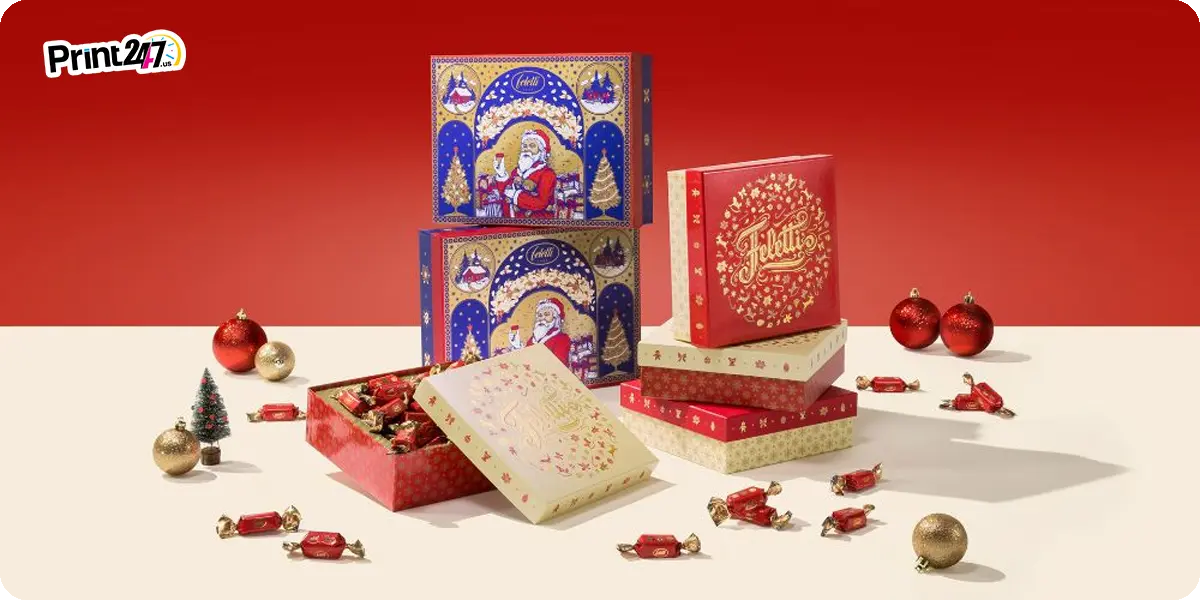
When you pick up generic holiday cartons they will be looking cheaper in the first view but have hidden costs that compound quickly. You can calculate higher volume Christmas box orders for branding needs. A standard stock carton can save you on initial tooling, yet the lack of bespoke dimensions forces compromises. The oversized internal cavities can fit multiple products.
With extra internal fillers that provide a more premium feel. There can be issues like off‑the‑shelf graphics that fail to align with the campaign narrative. Especially when you think to make a compromise you will increase volumetric freight as it adds assembly labor for inserts. As it disconnects in between the product to make the intended unboxing emotions. It translates to lower perceived value and weaker repeat purchase intent too.
When procurement teams run numbers across channels, they see another hidden cost: generic boxes frequently drive higher returns and customer service contacts because the box does not protect or present the product as intended. Retail shelf presence suffers because stock cartons rarely match optimal facings and shelf depths, forcing brands into awkward facings or additional merchandising costs. In hospitality or event contexts, the tactile disappointment of a flimsy stock carton can erode the emotional uplift of a seasonal gift, costing more in brand equity than the saved cents per unit.
By contrast, custom designed Christmas boxes let brands align dimensions, structure, and finishing to a single goal: a memorable unboxing that reinforces brand perception. A custom dieline removes wasted internal volume, which lowers volumetric weight and freight per pallet. Tailored inserts reduce assembly time and provide consistent protection without bulky filler. Strategic finishing choices such as soft‑touch aqueous coating deliver a premium tactile cue that creates emotional impact at a lower incremental cost than heavy film lamination or full-coverage cold foil. The result is higher perceived value, fewer logistics surprises, and a stronger seasonal lift that positively affects lifetime customer value.
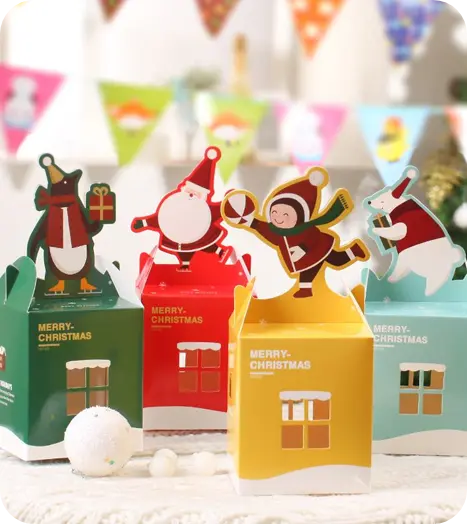
For instance, 10,000 christmas party favor boxes are illustrative; they are non benchmarking lines which help model budgets for 10,000 unit programs. When non-binding benchmarking lines help in modeling budgets. When christmas packaging all amounts are per unit landed to estimates assuming standard domestic freight, adjust for destination rush fees or duties.
Generic stock, unprinted, simple tuck top, basic kraft board: Benchmark per‑unit landed cost range low estimate $0.80 to $1.50. Character: low design control, higher assembly for branded sleeves, potentially higher returns due to inconsistent fit.
Generic stock with custom wrap print (small run wrapper, manual application): Benchmark per‑unit landed cost range $1.50 to $3.50. Character: avoids tooling but adds labor, can look inconsistent on shelf, increases assembly and storage handling costs.
Custom carton, basic print (two‑color), no inserts, standard board, soft‑touch aqueous coating in‑line: Benchmark per‑unit landed cost range $2.50 to $4.50. Character: tailored dimensions reduce void volume and freight; soft‑touch gives premium perception with moderate finishing cost.
Custom carton, full‑color CMYK wrap, one‑piece printed insert, soft‑touch coating, basic emboss: Benchmark per‑unit landed cost range $4.50 to $7.50. Character: strong brand lift, reduced assembly with printed inserts, moderate tooling amortization across 10,000 units.
Custom premium, heavy board (rigid feel), cold foil accent, emboss/deboss, multi‑part insert: Benchmark per‑unit landed cost range $9.00 to $18.00. Character: high emotional impact and gifting value, significant tooling and finishing costs; volumetric freight likely higher due to board caliper.
Emotional ROI and Strength
Beyond the hard numbers, quantify softer returns: expected lift in average order value from a premium unboxing, reduced customer complaints, shortened in‑store shelf rejection rates, and improved event attendee satisfaction scores. These benefits are harder to line‑item but often outweigh a small per‑unit premium by increasing conversion and lifetime value.
Practical cost guidance
As generic advice for modeling, small unprinted stock cartons at low volumes often sit at low single‑digit per‑unit landed costs. Custom printed runs within‑line soft‑touch and simple one‑piece inserts at scale commonly fall into mid single‑digit to low double‑digit per‑unit ranges. High‑end finishes, heavy lamination, or small runs can push costs into higher double digits. Run size, finish complexity, rigid board, insert sophistication, and logistics remain the primary variance drivers.
Reduce Per Unit Costs
Design the box to minimize dead air and pallet height, choose in‑line soft‑touch coating over off‑line film lamination where possible, consolidate inserts into modular trays, and standardize aperture and closure templates across SKUs. These levers reduce press cycles, assembly time, and freight volume while preserving a premium unboxing emotion.
Print247 Approach At Scale
Print247 has in-house production dielines, in‑house soft‑touch finishing, and modular insert systems so brands can scale custom holiday cartons with predictable unit landed costs. We run pilot comparisons, simulate volumetric freight, and compare competitor benchmarks so decision makers see the precise break point where custom becomes cheaper and more effective.
Get a Quick Quote

More Articles
 Bill ‘Hogg’ Ryan
Custom Christmas Boxes vs Generic: The Real Cost Difference
 Bill ‘Hogg’ Ryan
What Is Roll Stock? Explore Flexible Packaging Solutions
 Bill ‘Hogg’ Ryan