





Carefully selected materials that deliver exceptional print quality, durability, and shelf presence.


 New
New





















Do Not Enter Sign Explained: Colors, Symbols & Legal Requirements
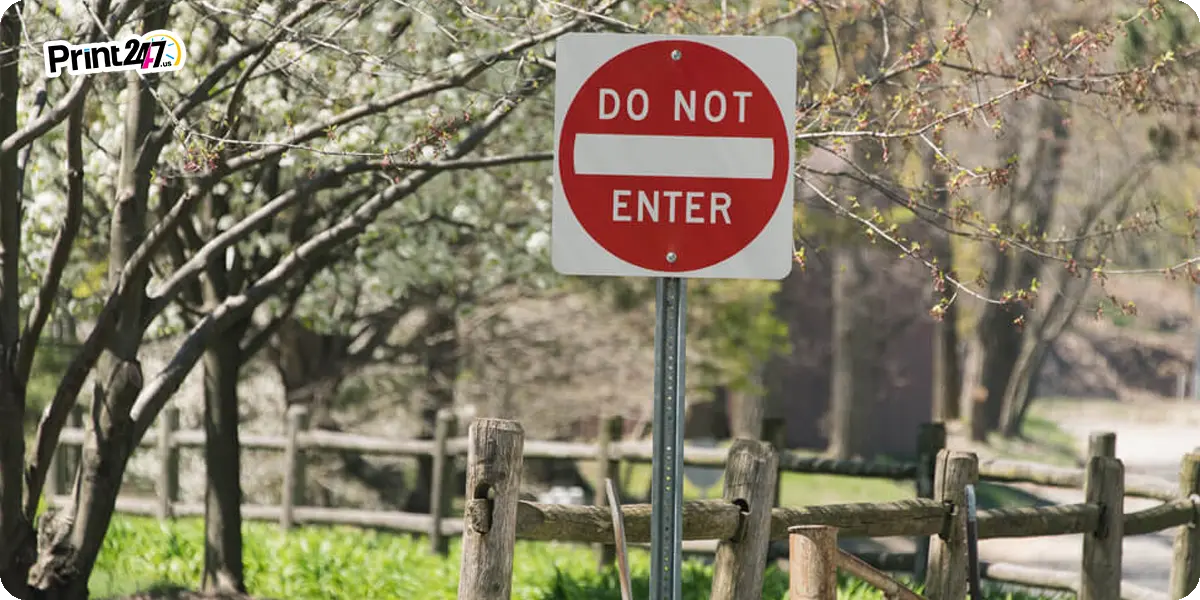
A do not enter sign is a regulatory sign with a white horizontal rectangle in the center. The sign warns drivers that entry is not permitted in that direction. These are used at one-way streets, freeway ramps, and restricted zones, following MUTCD standards and required in all U.S. states.
If you're a brand that manages physical locations, a business owner, facility manager, or brand manager, you know how important it is to control who enters where. A well-placed sign can prevent accidents and reduce liability, whether it is on loading docks in warehouses, hospital wings, or exit lanes in parking garages.
However, here is where many businesses make a mistake. Either they pick the wrong size, make the wrong color selection, or they ignore all legal requirements. It can land you in fines, safety problems, or worse, an accident on your property.
This blog is part of a series of blogs on signs and banners for different businesses. Its purpose is to look at everything you need to know about the do not enter sign - from what it legally needs to look like to where it must be placed and what sizes are required by law. Before you place your order for signs for your business space or facility, read this guide.
Key Takeaways:
A do not enter road sign is always red and white. There is no option here, it is federally standardized.
Standard sign sizes range from 18x18 to 30x30 inches depending on road type and speed limits.
The MUTCD (Manual on Uniform Traffic Control Devices) sets the legal rules for all do not enter traffic signs in the U.S.
These signs are different from Wrong Way signs. It is common to use both of them simultaneously, as they fulfill distinct purposes.
Do not enter signs are required at highway exit ramps, one-way streets, divided crossovers, and restricted property access points.
Businesses can legally use do not enter door signs and do not enter printable signs on private property without MUTCD restrictions.
What Does “Do Not Enter Sign” Mean?
Whenever someone asks what a do not enter sign means, the answer is straightforward. They are signs that warn drivers and pedestrians to avoid that direction. There are no exceptions unless authorized.
Do not enter sign meaning goes beyond just traffic control. Many businesses, warehouses, organizations, and industries use these signs to designate restricted areas where safety, security, or privacy concerns exist. They are all about controlling traffic, protecting restricted zones, and reducing liability. This message is always posted at parking garage exits and also at warehouse entryways, saying "this way is off limits".
Understanding the Visual Language of Do Not Enter Signs (Colors & Symbols)
There are different types of signs that are used to communicate without words most of the time. There is no way a driver can read every sign character by character. The recognition of shape, color, and symbol takes only a fraction of a second. That is exactly why do not enter signs follow a very specific visual system.
Here is what that system looks like and why it works.
Which Colors Are Best For Do Not Enter Signs?
Color is the first thing the human eye picks up, even before the shape. For do not enter traffic signs, the color combination is not just a design choice. It is a federal requirement.
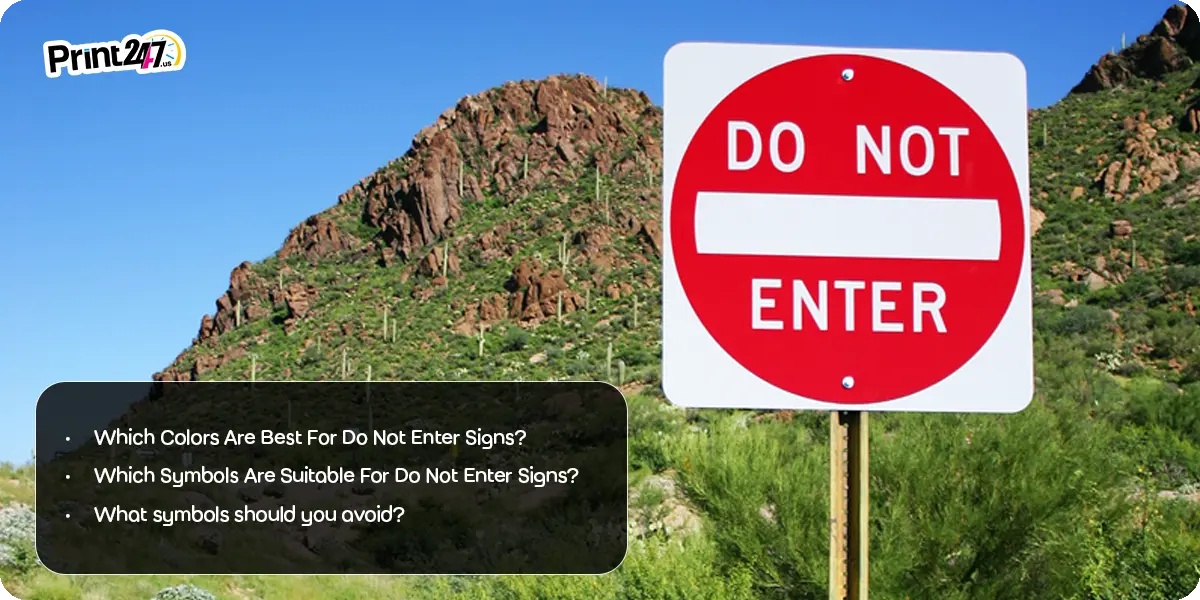
A standard do not enter sign has a red background and a white horizontal bar across the middle. Red is a symbol of danger and prohibition in almost every culture. Its high contrast adds to the sign's readability from a distance. Even at highway speeds, you can see it.
According to MUTCD standards, no other color combination is acceptable for regulatory traffic signs of this type. In some businesses, red and white do not enter door signs are used for interior facilities even if they are not required by law. There are many fields where high contrast is useful, including warehouses, hospitals, and large facilities where quick identification is crucial.
It is always a good idea for businesses to order outdoor and road-adjacent signs in MUTCD-compliant colors. It is still smart to match this visual standard when using indoors or on private property.
Which Symbols Are Suitable For Do Not Enter Signs?
The symbol on a do not enter sign is a thick white horizontal rectangle centered on a red circle. There are no arrows, no text, no additional graphics required. The shape alone communicates the restriction.
However, the word "DO NOT ENTER" is placed below the red circle as a supplementary text panel in most versions. This text reinforces the symbol for anyone unfamiliar with the visual. For do not enter door signs used on private property, some businesses add custom text like "Authorized Personnel Only" or "Staff Only" below the standard symbol.
What symbols should you avoid?
Anything that creates confusion. Adding arrows, question marks, or unrelated graphics around the core symbol defeats the entire purpose. Keep it clean. Keep it clear. The simpler the visual, the faster it communicates, and in traffic or facility management, speed of communication is everything.
Federal and State Legal Requirements For Do Not Enter Signs
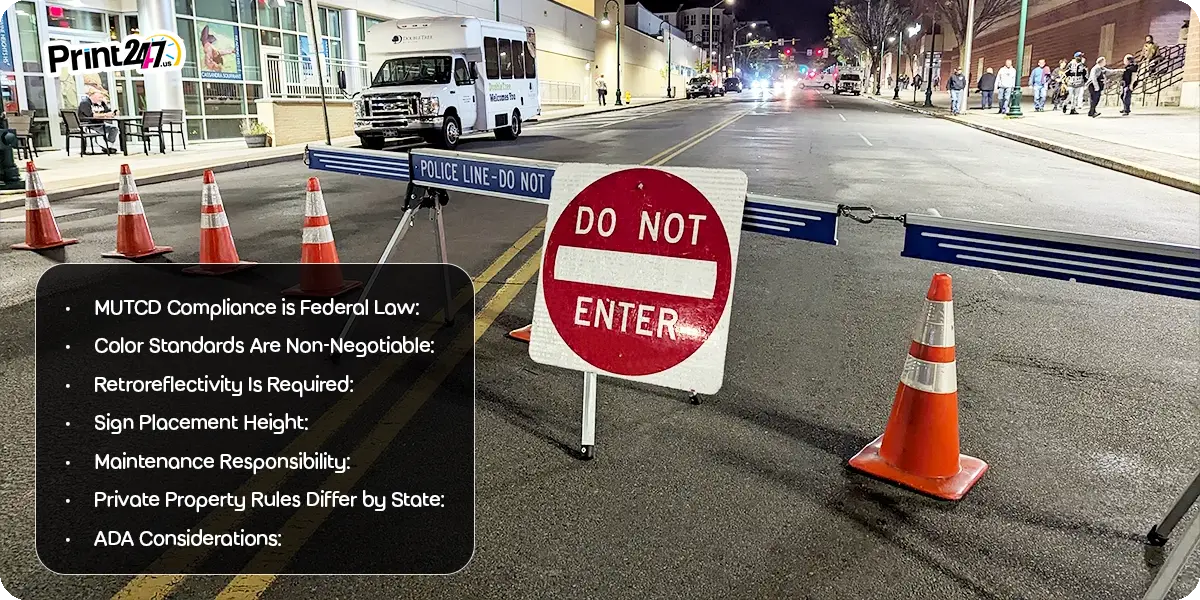
Do not enter signs play a major part in guaranteeing safety on roads and facilities. They have become a critical component of our transportation and navigation system. Like all other things, there are some federal and state legal requirements that must be fulfilled.
Therefore, understanding these requirements is essential so let's take a look at a few of them here.
MUTCD Compliance is Federal Law: All do not enter road signs placed on public roads must meet MUTCD (Manual on Uniform Traffic Control Devices) standards. It applies to all 50 U.S. states.
Color Standards Are Non-Negotiable: It is only acceptable to use a red background with a white horizontal bar on public roads. Exceptions are not allowed.
Retroreflectivity Is Required: Highway signs must be retroreflective, which means they reflect light at night and in low visibility conditions. There is no alternative to this safety requirement.
Sign Placement Height: Signs must be positioned at least five feet above the road surface in most urban areas and seven feet or higher in areas with pedestrian traffic.
Maintenance Responsibility: Property owners adjacent to public roads can be held liable if a sign becomes faded, damaged, or unreadable. Signs must be replaced when retroreflectivity is reduced.
Private Property Rules Differ by State: MUTCD regulations do not apply to do not enter signs on private property, although many states recommend following the same standards for safety purposes.
ADA Considerations: Some facilities require signage to meet ADA (Americans with Disabilities Act) requirements for height, contrast, and font size.
Compliance with standards like MUTCD ensures that “Don Not Enter” signs are universally recognizable and effective.
Do Not Enter Sign vs. Wrong Way Sign: Key Difference
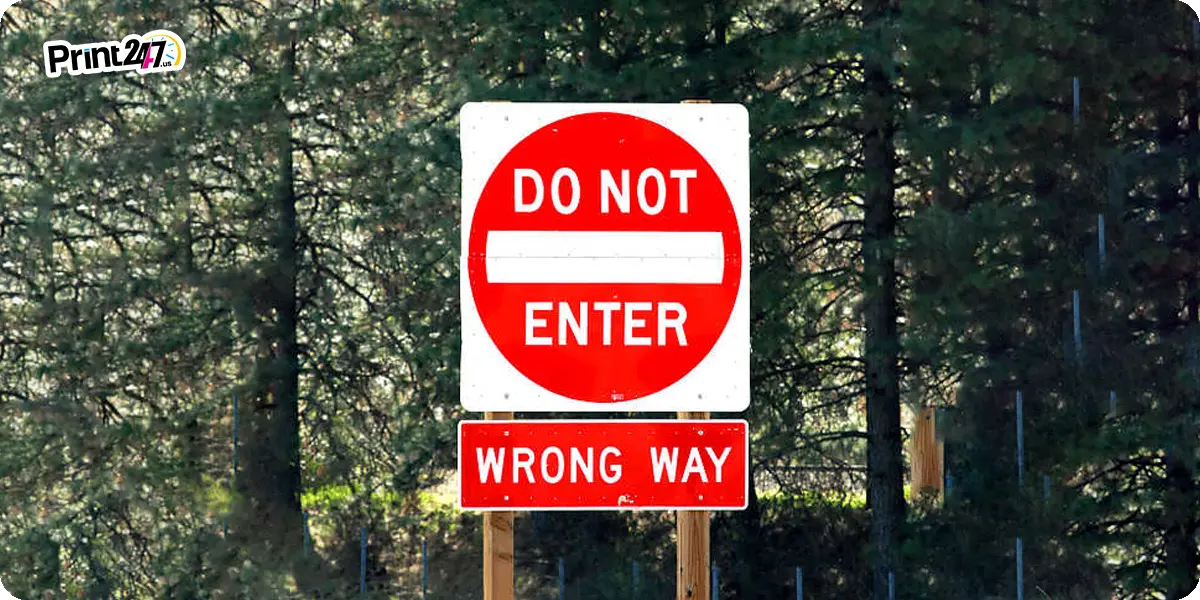
There is a tendency to confuse these two signs, but they are different things. These both signs used together to prevent head-on collisions. Do not enter signs are the first line of defense. Wong way sign is the supplemental warning that is typically placed further down the road or ramp.
Here’s the table of difference between both these signs.
Feature | Do Not Enter Sign | Wrong Way Sign |
Shape | Circle | Rectangle |
Background Color | Red | Red |
Text | "DO NOT ENTER" | "WRONG WAY" |
Symbol | White horizontal bar | None |
Primary Message | Entry is prohibited | You are going the wrong direction |
Placement | At the entry point | Further down the road |
Driver Stage | Before entry | After entry |
Do not enter wrong way sign pairings are systems rather than single signs. The do not enter sign is posted at the entry point to stop the driver before they go in. Drivers who ignore the Wrong Way sign will be warned further down the ramp or road that they are already going the wrong way. They both function on highway exit ramps as well as on one-way streets. It's only permitted to use the do not enter sign on smaller one-way streets without a Wrong Way sign companion.
Conclusion
The do not enter sign is one of the most important regulatory signs in traffic and facility management. Its red and white design, strict size requirements, and precise placement rules are not just suggestions, they are safety standards that protect people and keep businesses compliant.
When it comes to parking signs, real-estate signs, yard signs, or office signs, knowing the details at the beginning will save you time, money, and legal trouble down the road.
If you're ready to place an order, Print247 makes it easy. As a leading U.S. print supplier, we offer free design support, free shipping, eco-friendly materials, fast turnaround, and physical samples before bulk orders. Therefore, you know exactly what you are getting before committing. Apart from do not enter signs, you can shop all types of outdoor and rigid signs easily at Print247.
Get a Quick Quote

More Articles
.webp?alt=media&token=44aab0e6-697f-4750-8207-5f71c33e2958 "Pharmaceutical Packaging Requirements") Bill ‘Hogg’ Ryan
Bill ‘Hogg’ RyanWhat Are Pharmaceutical Packaging Requirements?
 Bill ‘Hogg’ Ryan
7 Modern Sustainable Pet Food Packaging Trends Shaping the Industry
 Bill ‘Hogg’ Ryan