











Business Card Sizes & Dimensions Guide (Inches, mm, cm)
 May 1, 2026
Even in a digital world, business cards are still a quick, human way to share your brand. Business cards are small, but they still do a big job. They help people remember your name, your brand, and how to contact you. When you plan business cards printing, the first technical question is simple: what size is a business card supposed to be? If you get the business card size wrong, your card may not fit in wallets, may look odd in holders, and text can be cut off during trimming.
Knowing the standard business card dimensions in inches, mm, and cm can help you to design correctly the very first time. Once your business card measurements are right, you can focus on design, finishes, and paper material selection. Print247 is great choice for all of these elements of a visiting card to make it feel premium.
Standard Business Card Size (US & Canada)
.webp?alt=media&token=8e36208b-89cb-45e5-a0bd-1d006d9b9f39 "US Canada Business Card Dimensions")
In the US and Canada, the most common standard business card size is:
3.5" × 2" in inches
88.9 × 50.8 mm (usually rounded to 89 × 51 mm)
Or 8.9 × 5.1 cm
This size of a business card is the final one after trimming the extra bleed surface.
One reason this size became standard is that it is close to many credit card dimensions, so it slips neatly into wallets and card slots. Standard credit cards are about 3.37" × 2.125" (85.6 × 54.0 mm), very close to a business card.
So if your main market is the US or Canada and you want a classic choice, this 3.5" × 2" inches size (or 89 × 51 mm) is the safest starting point.
Standard Business Card Sizes in Other Regions
The sizes of business cards are not the same around the world. Different regions have different requirements.
The answer to your question of what sizes are business cards in different parts of the world is below:
UK / EU standard business card size
About 85 × 55 mm
≈ 3.35" × 2.17" inches
Or ≈ 8.5 × 5.5 cm
This UK/EU size is slightly shorter and taller than the US size, but the difference is small. It is designed to fit common European wallets and sleeves.
Japan
Around 91 × 55 mm ≈ 3.58" × 2.17".
China / Hong Kong / Singapore
Around 90 × 54 mm ≈ 3.54" × 2.13".
In South Asian markets, many people use the term “visiting card” instead of business card. The typical size of a visiting card there is also based on the same 3.5" × 2" idea, depending on the printer.
All of these sizes are close in feel. If your brand works in more than one region, it is good to know what local “standard” size people expect. At Print247, we can help you match or suggest the best standard for your target market.
Quick Measurement Reference Table for Business Cards (Inches, mm & cm)
Here is a simple reference table with some of the most used business card sizes.
Card type / region | Inches (W × H) | Millimeters (W × H) | Centimeters (W × H) |
US / Canada standard | 3.5" × 2.0" | 88.9 × 50.8 mm | 8.9 × 5.1 cm |
UK / EU standard | 3.35" × 2.17" | 85 × 55 mm | 8.5 × 5.5 cm |
90 × 55 mm style | 3.54" × 2.17" | 90 × 55 mm | 9.0 × 5.5 cm |
Square card (example) | 2.5" × 2.5" | 63.5 × 63.5 mm | 6.35 × 6.35 cm |
You do not need to use all of these. For most projects, picking one standard that matches your region and sticking to it is enough.
Bleed, Trim, Safe Zone, and Format of Business Cards
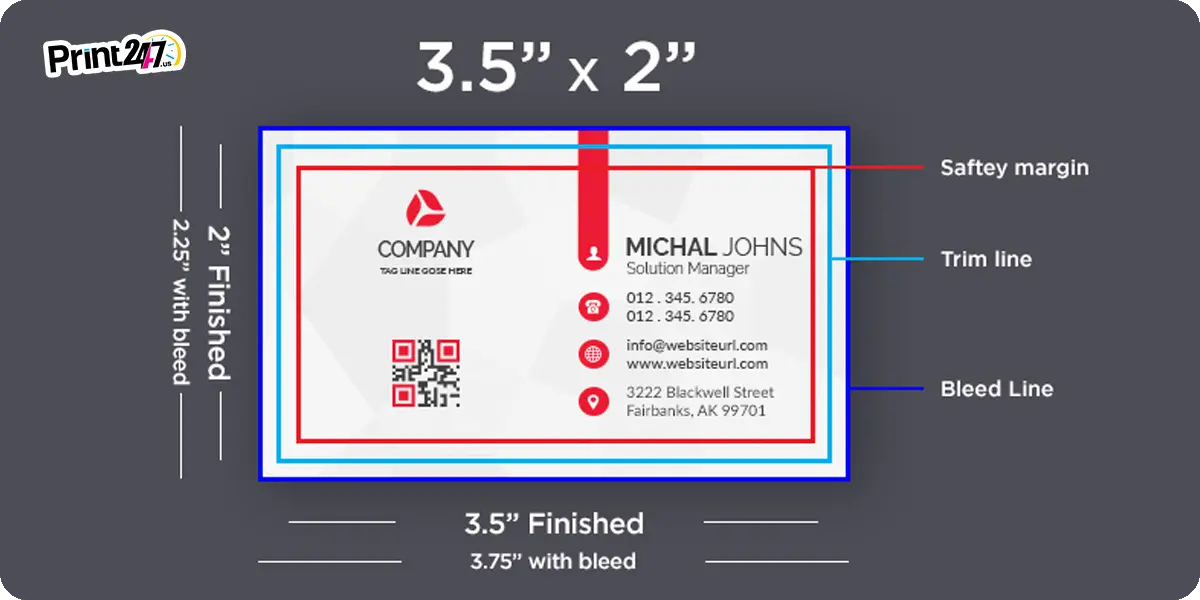
When people ask a simple question like, “what are the dimensions of a business card?” they usually forget the surface area that has bleeds and margins.
When you design for print, the finished card size is not the only number that matters. You also need to know:
Trim size
This is the final size after cutting. For example, 3.5" × 2" or 85 × 55 mm.
Bleed
Bleed is the extra print that goes past the final cut line. It makes sure color or background goes right to the edge with no white lines.
For a 3.5" × 2" card, many printers suggest 0.125" (3 mm) bleed on each side.
For a US card, this means your layout size becomes 3.75" × 2.25" (about 95.3 × 57.2 mm) including bleed.
Safe zone
This is an inner margin where you keep all important text and logos away from the edges.
On a US card, a common safe area is around 3.25" × 1.75" (about 82.5 × 44.5 mm), centered.
If your artwork respects the bleed and safe zone, your business cards will look clean and balanced after trimming.
If you put text too close to the edge, small cutting shifts can make it look off‑center or cut it off. Bleed and safe zones help your business cards to look clean and balanced.
Common Business Card Shapes and Sizes beyond Standard
Standard rectangles are the default, but you can play with the format of business cards to stand out while still respecting practical sizes.
Popular options include:
Standard rectangle business cards
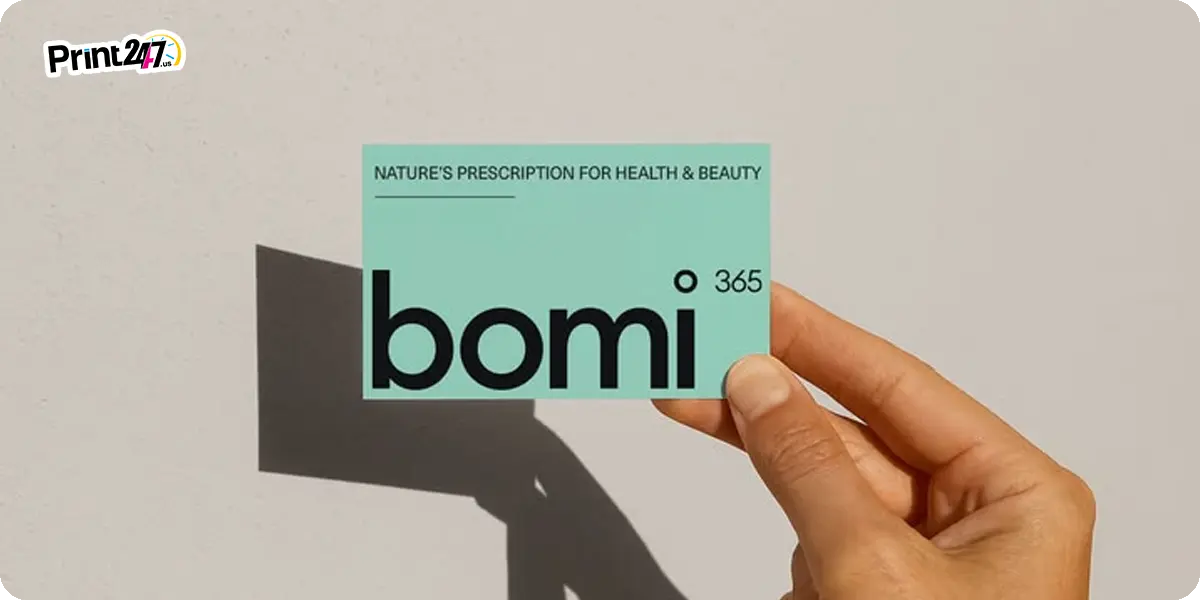
US/Canada: 3.5" × 2.0" inches.
UK/EU: 85 × 55 mm.
This shape fits almost all card holders and wallets.
Square business cards / square visiting card size
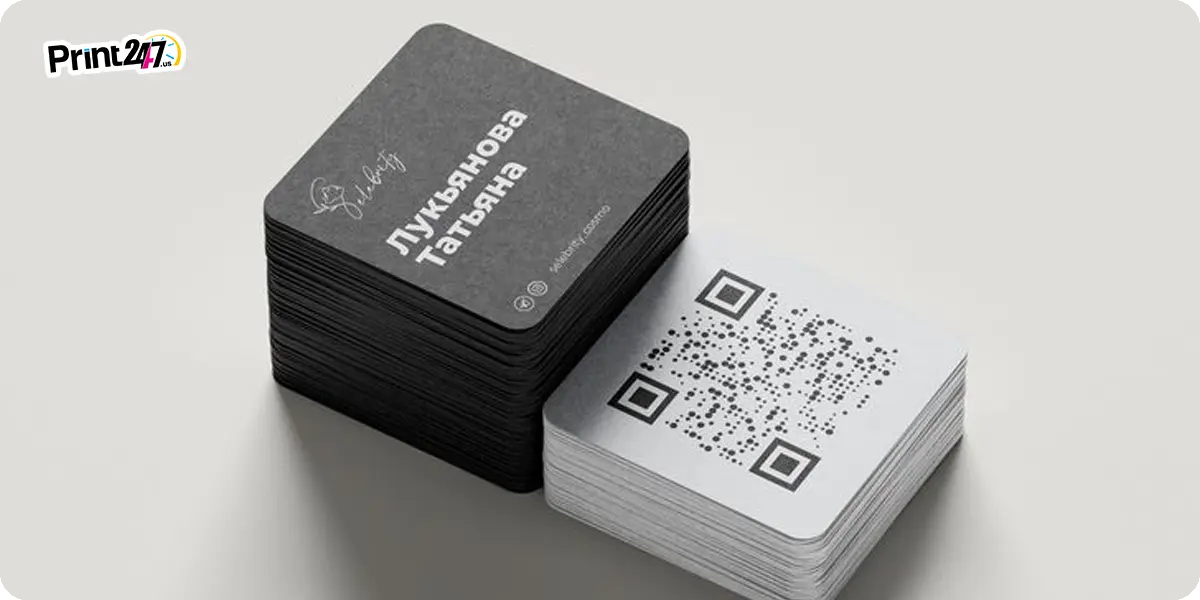
A popular choice is 2.5" × 2.5" (about 6.35 × 6.35 cm). Square cards stand out visually and can work well for minimal designs or logos.
Rounded corner business cards
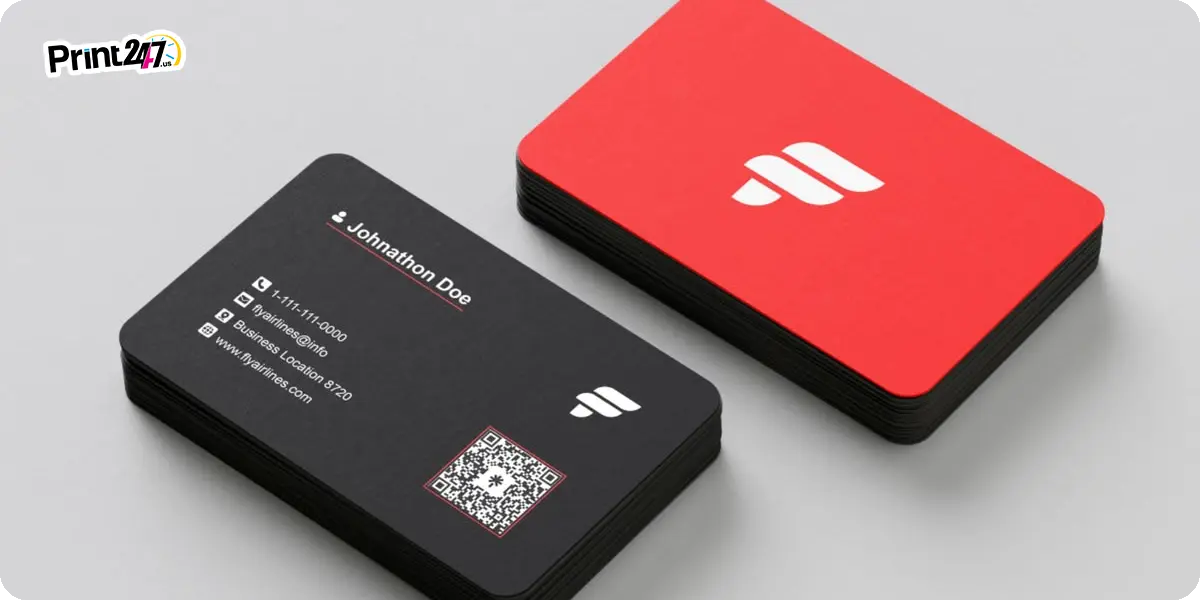
Round corner business cards have the same dimensions 3.5" x 2" inches (89mm x 51mm) in the US and Canada. The only difference is the round die cut corner instead of traditional pointy or edgy ones.
Mini / slim business cards
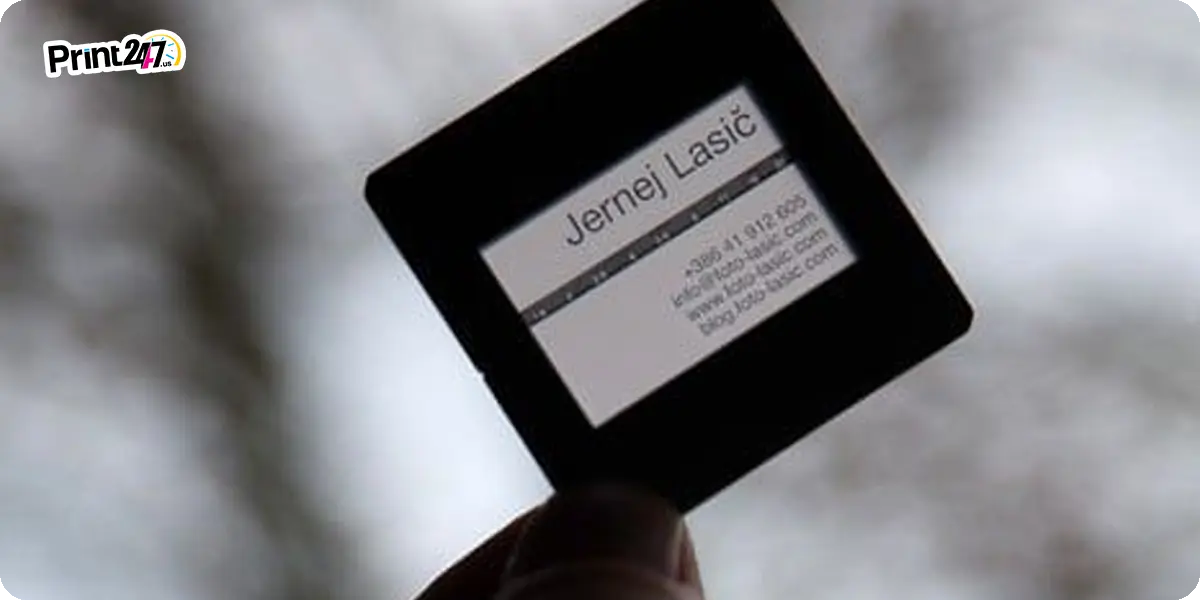
Some brands use narrow cards, for example, around 3.5" × 1.5" inches or similar. These look stylish but may not fit every holder.
Vertical orientation
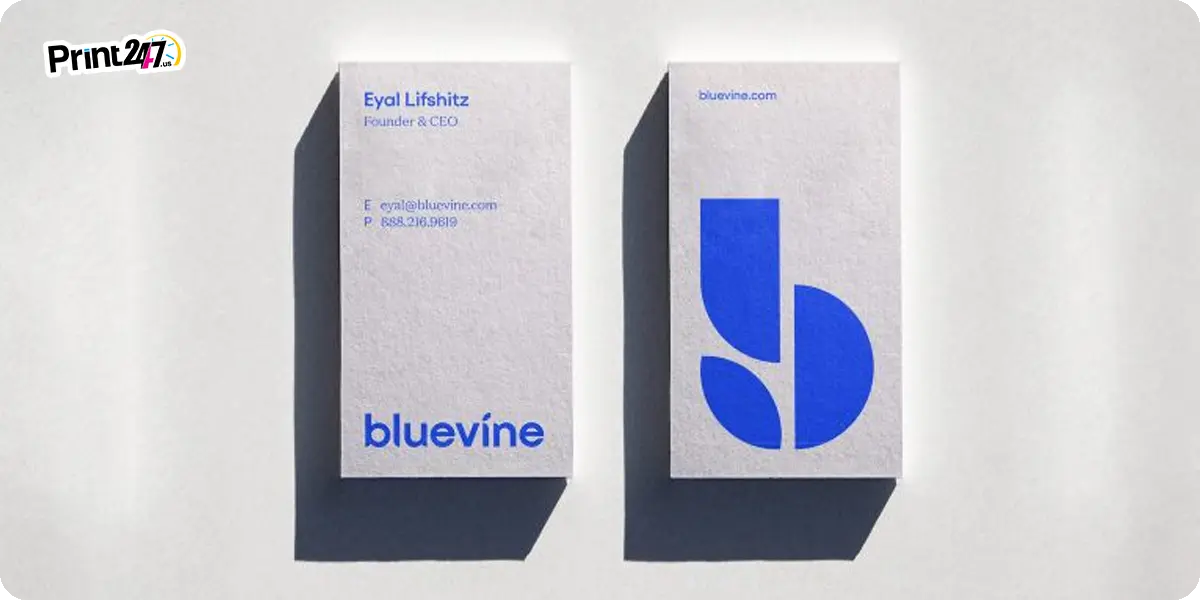
It has the same business card dimensions, just rotated so the long side is vertical.
It is a simple yet an easy way to look different from traditional cards while keeping holders happy.
These non‑standard formats are good size options for biz cards when you want something unique for a special line or VIP contact.
Also, with Print247 there is no limit to innovation that you can do with your business cards. We offer plenty of customization options for your utmost convenience. This means you are free to personalize and order:
Kraft business cards for an eco touch.
Gloss business cards for a shiny appeal
Matte business cards for soft-touch feel.
NFC business cards for interactive activity.
Linen business cards for a luxury touch.
Ultra thick business cards for a sturdy and full of quality hand-held experience.
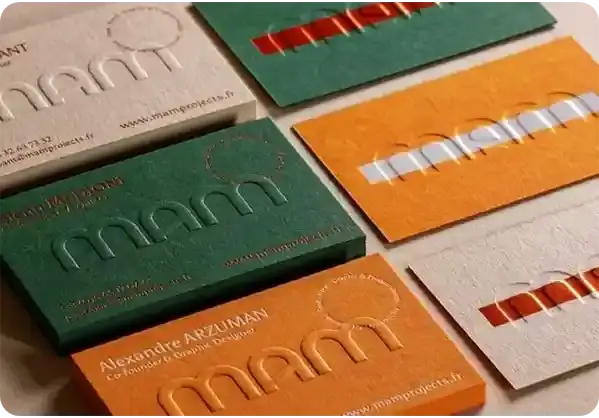
Embossed business cards for a tactile experience.
Die-cut shape business cards for better complementing your business nature.
How to Choose the Right Business Card Size for Your Brand
Before you decide what size is a business card is best for your brand, ask a few quick questions:
1. Where will people keep your card?
If you want your card to slide easily into wallets and standard cases, stick to the usual regional standard business card size. Odd sizes may get bent or thrown away more easily.
2. How much information do you need to show?
If your card has only a logo, name, website, and maybe one QR code, a standard size or even a square card is fine. If you plan to show multiple addresses or long taglines, a typical big card size or clever layout might be needed. Although, standard dimensions is still easier for recipients to hold.
3. What is your brand style?
If it is classic and corporate, then standard rectangular and horizontal layout work just fine. But if your brand theme is creative and bold, then odd shapes and styles like square, vertical, or slim can do more justice than traditional business cards. However, stay close to the original card size.
4. Where are your customers?
If you mostly work in the US, the US standard makes sense. If you print cards for Europe or the UK, choose the 85 × 55 mm style to match local expectations.
No matter your requirements, our experts can help you decide which size will work best based on your brand, your region, and your content.
File Setup Tips for Business Cards Printing
A great design can still print badly if the file is not set up at the right size. Whereas a correct file setup makes business cards printing smooth and avoids rework. Here are simple rules:
1. Use the right canvas size
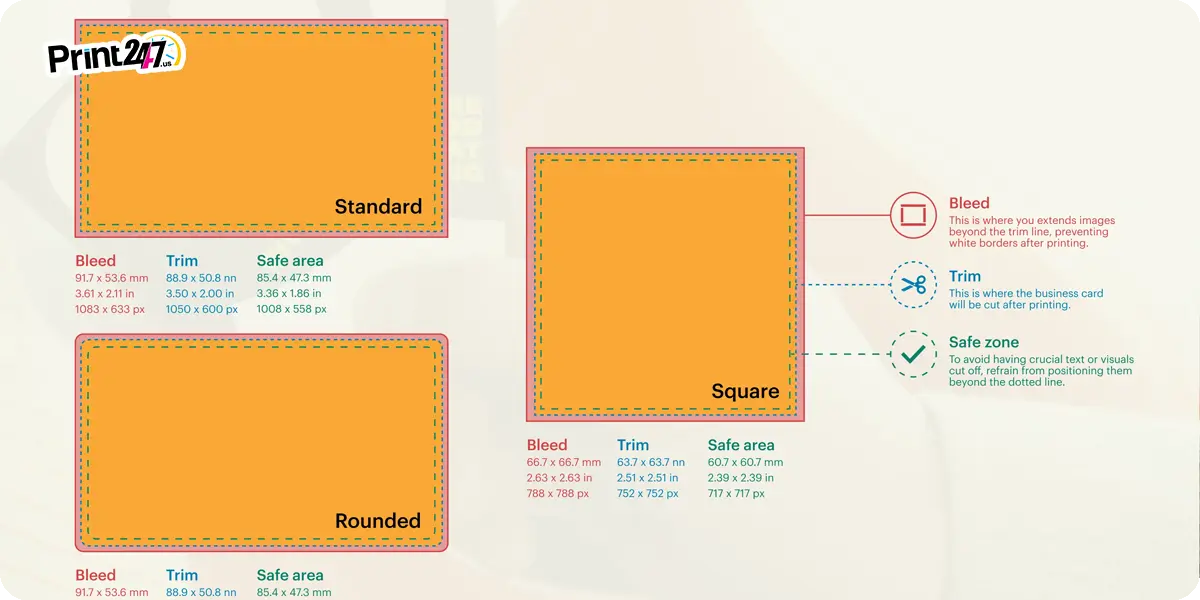
For US standard, create a file at 3.75" × 2.25" inches to include 0.125" bleed all around, but keep important content inside the 3.5" × 2" safe area.
For 85 × 55 mm cards, add about 3 mm bleed on each side in your design.
2. Set color mode and resolution
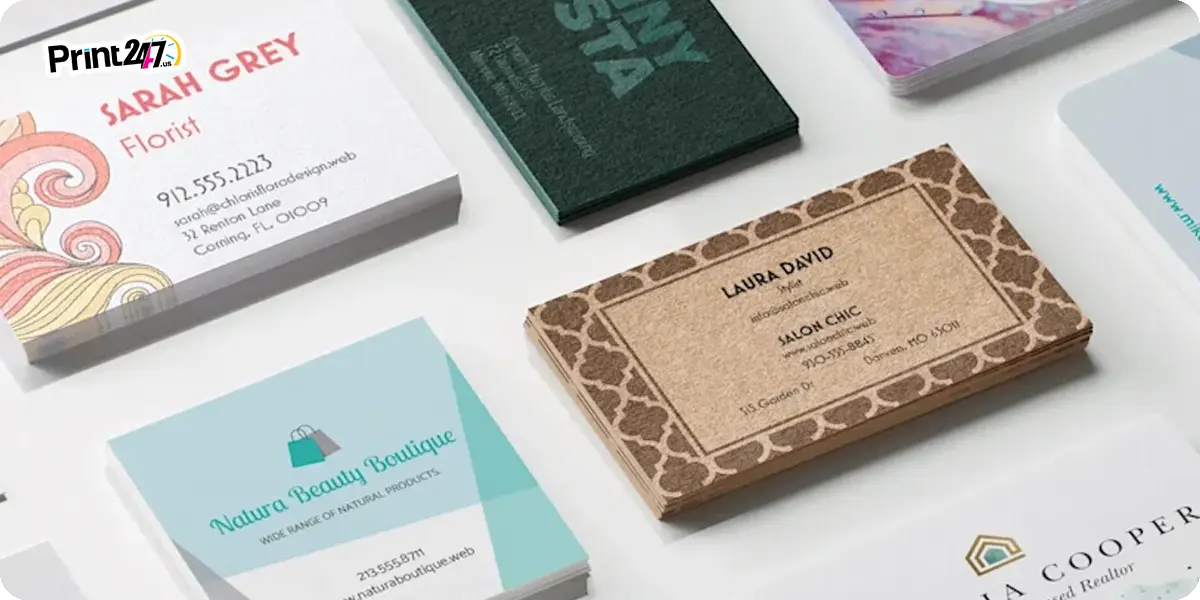
Most printers recommend CMYK color mode and 300 DPI so your colors are accurate and your text stays sharp.
Keep note to house the text inside the safe zone. Plus, avoid placing text closer than 3–4 mm (about 0.125") from the trim edge.
3. Check margins and alignment
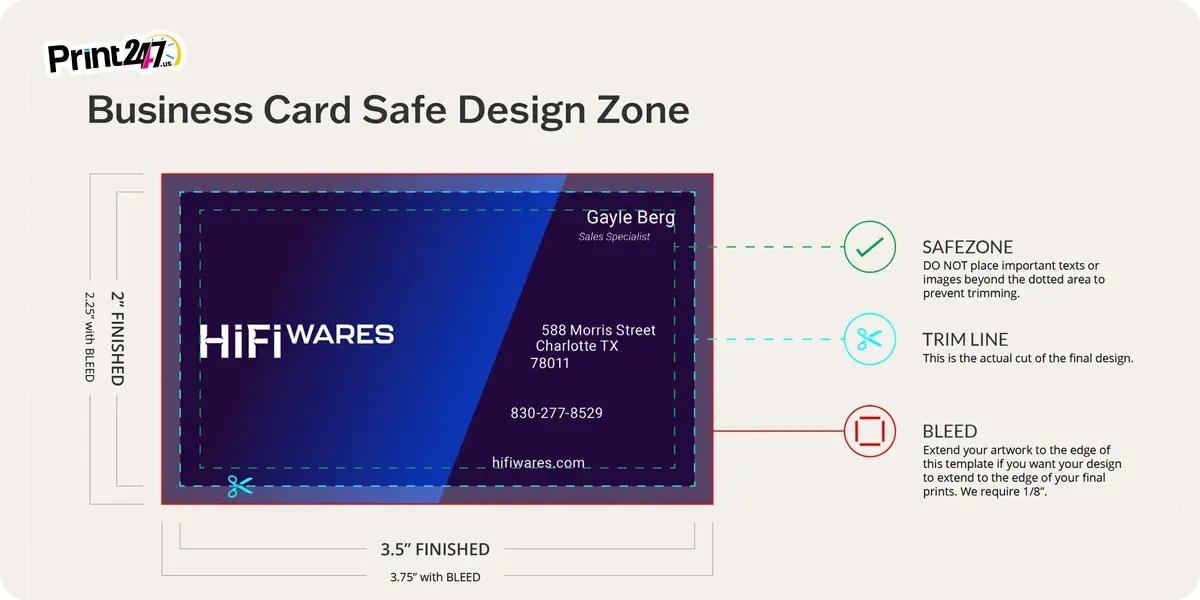
Keep text away from edges. Center elements properly, especially on square visiting cards or mini cards.
4. Export to a print‑ready format
PDF with bleed and crop marks is common.
At Print247, we hold the expertise to accept other file types as well but print‑ready PDFs are usually fastest. When in doubt, you can ask us for free size templates set up in inches, mm, and cm. That way you only worry about the design.
How Print247 Supports Business Cards Printing and Sizing
Business card size should never be a guess. At Print247, we make business cards printing easier by helping you with sizing and file setup from the start:
Sizing templates
Ready‑made templates for standard business card size, square, and mini formats in inches, mm, and cm.
Pre‑print checks
Our team checks business card dimensions, bleed, and safe zone before printing so your cards are trimmed clean.
Advice on formats and complementary card size
If you want a main card plus a special mini or square card as a complementary card size, we can recommend what works best in holders and wallets.
Regional support
We understand the size of a visiting card in different markets and can print ones that feel “right” whether your clients are in North America, Europe, or Asia.
This means fewer surprises and more time focusing on design and branding, not measurements.
Conclusion
The best move that you can have with business cards is quite simple actually: pick the right standard size, then make the design and finish do all the talking. A correct 3.5" × 2" inches business card slides perfectly into wallets, looks familiar in holders, and prints cleanly with the right bleed and safe zone.
Once your business card sizes and dimensions are finalized, you can focus on what really sets you apart: your brand colors, fonts, coatings, and special touches like spot UV or soft‑touch lamination.
If you want business cards that are the right size everywhere and look as professional as your brand, share your details with Print247. We’ll help you pick the right dimensions of business cards, provide print‑ready templates, and deliver cards that feel just right the moment someone holds them. Just give our experts a call at +1 (832) 807-3429 to order your business cards in standard or custom sizes.
Frequently Asked Questions
What is the standard business card size?
In the US and Canada, the most common business card size is 3.5" × 2.0" (about 88.9 × 50.8 mm or 8.9 × 5.1 cm). In the UK and much of Europe, the standard business card size is 85 × 55 mm, which is about 3.35" × 2.17".
Why do I need bleed on a business card design?
Bleed is extra color or background that extends beyond the trim edge. It helps avoid thin white lines when cards are cut. A typical bleed is 0.125" (3 mm) around the card.
Is the size of a visiting card different from a business card?
In many places, “visiting card” is just another name for a business card. The common size for visiting cards is usually the same as the local standard business card size, such as around 3.5" × 2.0" or 85 × 55 mm.
Are business card measurements the same as credit card dimensions?
They are very close to one another when size is in comparison. Standard credit card dimensions are about 3.37" × 2.125" (85.6 × 54.0 mm). On the other hand, standard business cards are slightly different but similar enough to fit the same wallet slots and sleeves.
Can I use a custom format of business cards like square or mini sizes?
Yes. Square cards and slim cards are popular formats of business cards for brands that want something special. Just remember that non‑standard business cards size may not fit every holder. Print247 can advise you on a complementary card size that still works in the real world.


 April 30, 2026
 1256 Views