











Brochure Sizes and Fold Types Guide (Bi Fold, Tri Fold, Gatefold with Dimensions)
 May 5, 2026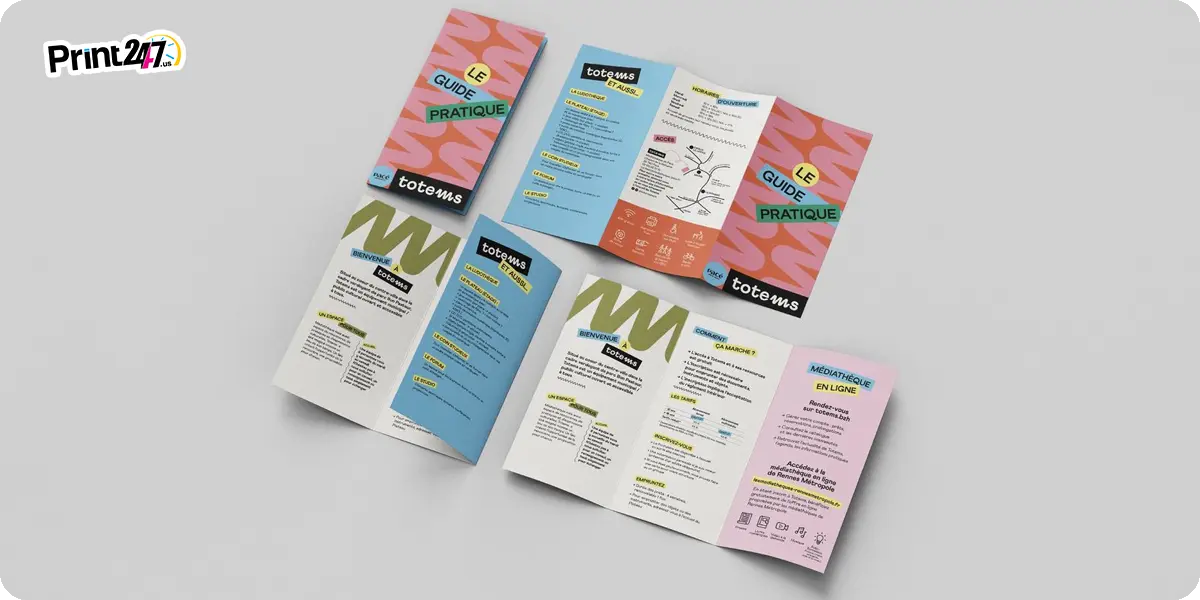
Most businesses will come to a stage where it will make sense to use a brochure for advertising and surging visibility to prospects. There is an upcoming product launch, a trade show to attend, or a client who insists on something tangible to take away. Whether to print a brochure or not is not often a difficult decision. What comes next is the part that makes businesses think about it. The dimensions for flyers and brochures vary as per the requirements.
What will be the size of it? Which fold is the most appropriate when it comes to the content? Will the panels be crowded when it is really printed and folded? When clients ask, "What are the dimensions of brochures and flyers?"They often overlook the critical production perimeter, the bleeds and margins that distinguish a professional masterpiece from a desktop-printed disaster.
When evaluating the most common flyer sizes in USA, the 8.5 x 11-inch Letter format remains the industry standard for commercial handouts. While smaller options exist, the 11 x 17-inch Tabloid is frequently cited among flyer sizes for high-impact event posters
These are not imaginary questions and they have not imaginary answers and this guide will be covering all of them. You will see standard brochure sizes in inches, mm and cm, a breakdown of each major fold type with finished size, and some useful tips on which type of fold to use in your campa. At the conclusion, you will be capable of briefing a designer or sending a file to print without questioning your decisions.
Key Takeaways
A brief overview of what this guide will discuss before delving in is as follows: The sheet prior to folding is called brochure flat size. The folded result is the finished size. The four most common types of folds are bi fold, tri fold, Z fold, and gatefold. They all provide a different reading experience.
The most popular starting point of brochures in North America is US Letter at 8.5 x 11 inches. Tri fold panels are not necessarily the same width each. The inner panel is the first to fold and it is normally a bit narrower. Gatefolds are not that dense with multi sections and should only be used with single hero messages and luxury reveals.
Any brochure should be bleed, safe zone and CMYK color configured before printing.Print247 offers free templates in all standard sizes and types of fold.Selecting professional brochure sizes in inches, such as the 8.5 x 14-inch legal format, provides the necessary vertical space for dense service menus."
What are the dimensions of brochures and flyers?
When choosing the right canvas for your brand, you must select a format that balances content density with portability. While "Standard Letter" remains the benchmark in North America, global operations often pivot to "A-Series" formats to maintain international consistency.
Format Name | Dimensions (Inches) | Dimensions (Millimeters) |
US Letter | 8.5 x 11 in | 215.9 x 279.4 mm |
US Legal | 8.5 x 14 in | 215.9 x 355.6 mm |
Tabloid | 11 x 17 in | 279.4 x 431.8 mm |
A4 Standard | 8.27 x 11.69 in | 210 x 297 mm |
A5 Small Flyer | 5.83 x 8.27 in | 148 x 210 mm |
DL (Rack Card) | 3.9 x 8.27 in | 99 x 210 mm |
Fold Type | Flat Size | Approx. Finished Size |
Bi-Fold | 8.5 x 11 in | 8.5 x 5.5 in |
Tri-Fold | 8.5 x 11 in | 8.5 x 3.66 in |
Gatefold | 11 x 17 in | 8.5 x 11 in |
Common Brochure Flat Sizes: What They are and Why they Matter?
When a printer or designer is discussing the size of a brochure, he or she is actually referring to the size of the brochure before the folds occur. The raw canvas is that flattish size. It is what will determine the number of panels that you are going to receive, the width of each panel, and how the completed work will feel in the hands of someone. We also have custom greeting cards printed to make the greeting, season wishes extra special.
Flat size matters more than most people realize.Too narrow and your boards will be cramped. Excessively big and the brochure will be cumbersome to carry or keep. The following are the common flat sizes that you will come across most of the time when you are placing an order of custom brochures.
US Letter: 8.5 x 11 Inches
It is the standard size of a brochure in the United States and Canada. It can be sourced easily, it is widely supported by supported design templates and the result is a finished brochure that fits easily into folders, bags, and standard display racks. In North America most tri fold and Z fold brochures begin with this size.
US Legal: 8.5 x 14 Inches
Legal size provides an increased amount of vertical space. It works well when you have longer sections, a more detailed breakdown of the service, or a time frame that needs to breath. It is not as common as Letter but is still a very common US printer.
Tabloid: 11 x 17 Inches
Tabloid: It is the choice when in need of premium brochures that feature big photograph or product grids or detailed diagrams. After folding the panels become heavy and visually appealing. Real estate, hospitality, and luxury retail brands often employ this size as a means to express high value by using the format itself.
A4: 8.27 x 11.69 Inches
In Europe, the UK and most of the world outside North America, the standard is A4. It is just a little less than US Letter and works effectively with corporate, educational and institutional brochures. A4 is a frequent correct option when your brand functions on an international scale.
A5: 5.83 x 8.27 Inches
A5 is a half of A4 and is the best option to use in small bi fold brochures, brief product guides and in handouts that should feel easy to carry without feeling thin. It is a robust option as point-of-sale collateral and event giveaways.
DL: The size is roughly 3.9 x 8.27 Inches
DL is the narrow, tall format that you find on display racks of hotels, travel agencies, visitor centers, and reception desks. It is approximately a third of an A4 sheet. DL brochures are designed with straightforward, direct message and prompt information snacks. When a person is browsing on a rack of your brochures, they are most likely to be skimming and DL is made to be exactly that kind of interaction. There can be differences but standard sizes have to be followed for accuracy in printing, get to know business card dimensions from our this post.
Format & Flat Size | Dimensions & Common Fold Applications |
US Letter | 8.5 x 11 in (215.9 x 279.4 mm)Standard for Tri-fold, Z-fold, and Bi-fold brochures. |
US Legal | 8.5 x 14 in (215.9 x 355.6 mm)Ideal for detailed Tri-folds and Z-folds requiring extra horizontal space. |
Tabloid | 11 x 17 in (279.4 x 431.8 mm)Used for large Bi-folds and sophisticated Gatefold designs. |
A4 | 8.27 x 11.69 in (210 x 297 mm)The international standard for Tri-fold, Z-fold, and Bi-fold layouts. |
A5 | 5.83 x 8.27 in (148 x 210 mm)Compact size, most commonly used for simple Bi-fold designs. |
DL | 3.9 x 8.27 in (99 x 210 mm)Typically used for simple single-panel inserts or slim rack cards. |
What Is a Bi Fold Brochure?
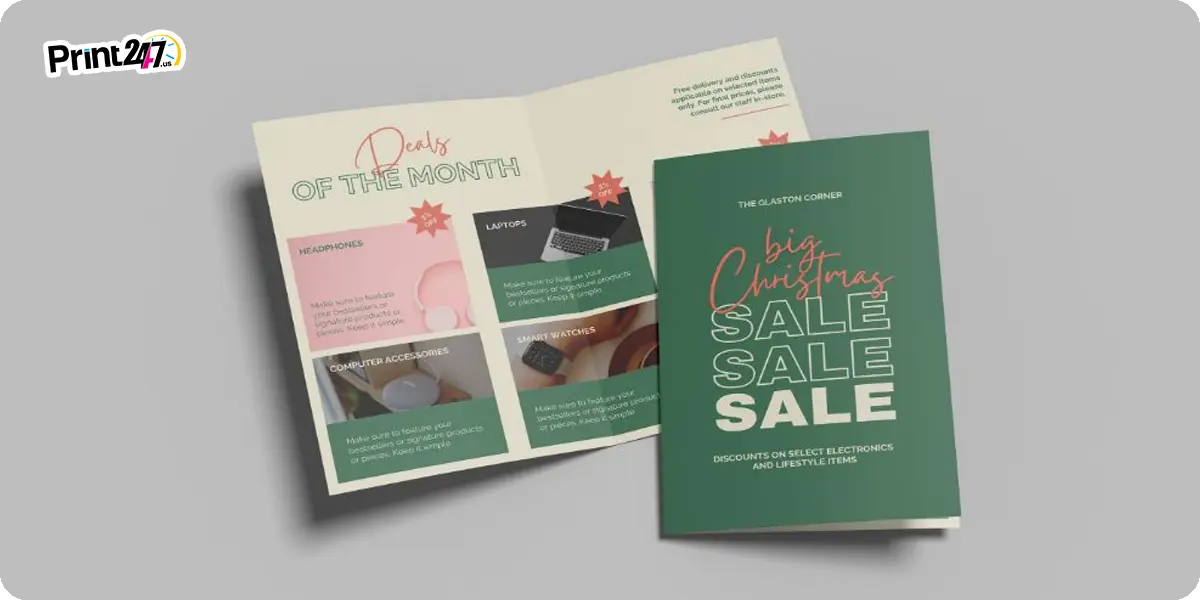
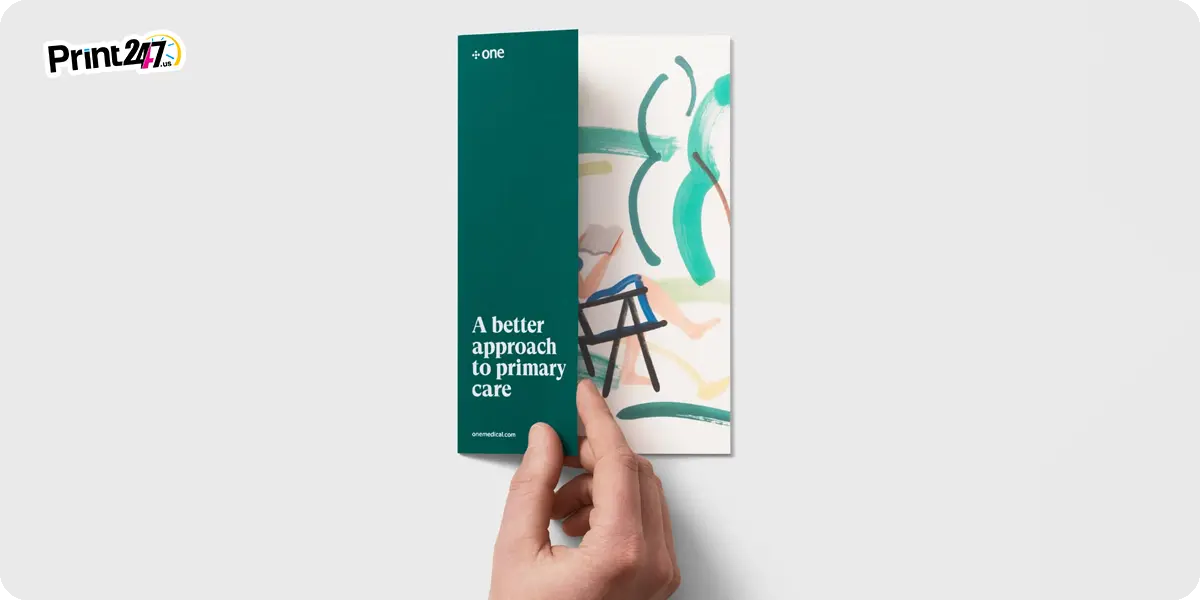
A bi-fold brochure is a single sheet folded in half, however, it is folded in half along the center. The one fold forms four panels altogether. When the brochure is closed, the brochure is contained within two panels, and the front and back cover are made up of two panels. It looks and feels like a booklet, only lacking staples and a spine.
Bi fold brochures are used in cases where the brand story is brief, targeted, and image oriented. The fact that there are only four panels also means that the panels will have more space. It is namely that breathing room which makes bi folds feel refined and high-end. Along with brochures there are custom bookmarks that are perfectly printed for a remarkable outlook.
When Bi Fold the Right Fold?
A bi fold will be effective when you have a message that is not long and when you want the design to look relaxed, spacey and confident. Good use cases are: Brochures of company profiles representing one or several major services and a brand story.
Menus of restaurants and cafes where generous spacing and photography of food require space. Like these folded brochures we are also well-versed to make folded business cards in the best manner.
Overviews of real estate of a few high-value listings
Launch articles on products where one or two hero products are put to the fore. When you do not require more than four panels to present an entire story then a bi fold will always appear to be more thoughtful than a more divided format.
Bi Fold Design and File Setup Tips
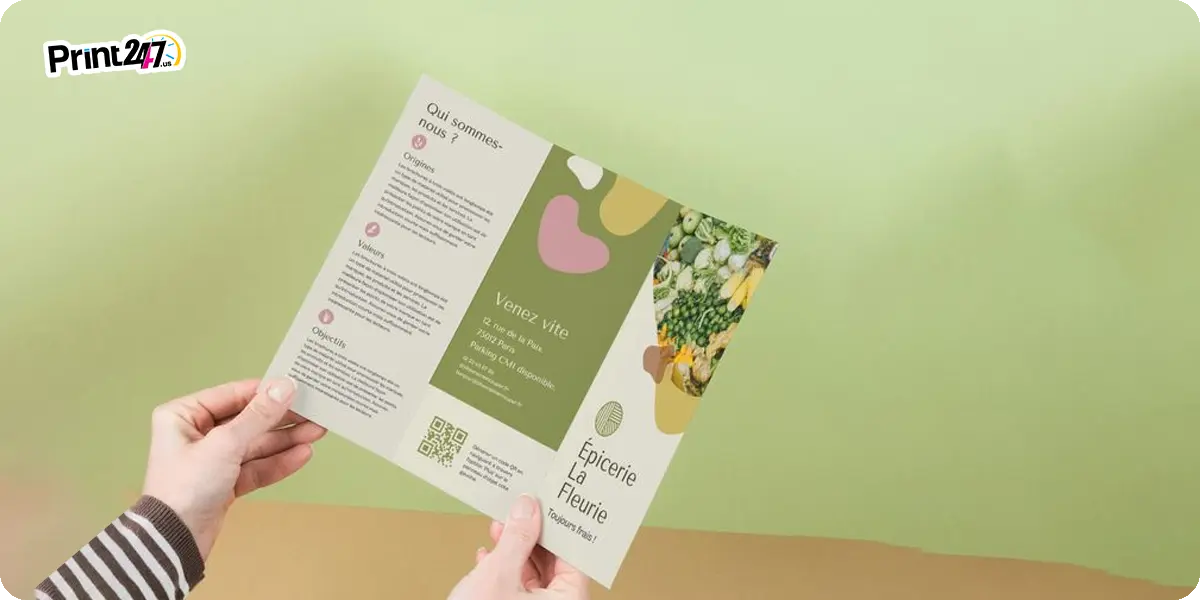
The biggest error when using bi fold brochures is to consider each panel as a separate page. The two interior panels are in fact a single horizontal surface. Imagine them as one broad canvas on which the images, comparison table or infographics can be displayed instead of having two distinct sections competing to draw attention.
In making your file:
The flat size is to be worked in with front and back placed on separate pages.
Bleed all sides 0.125 inches (3 mm).
Place text and logos in a safe area at least 0.125 inches within the trim line.
Make the center fold line distinct to enable the designer and the printer to know where the center fold line falls.
Tri Fold Brochure: Size, Dimensions and Best Uses
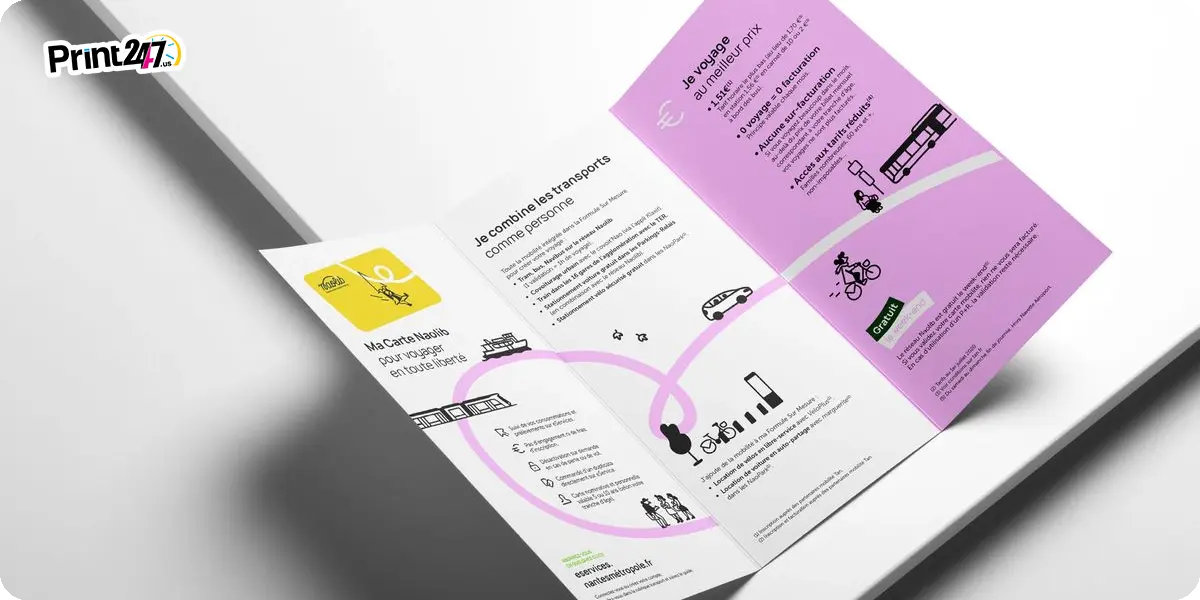
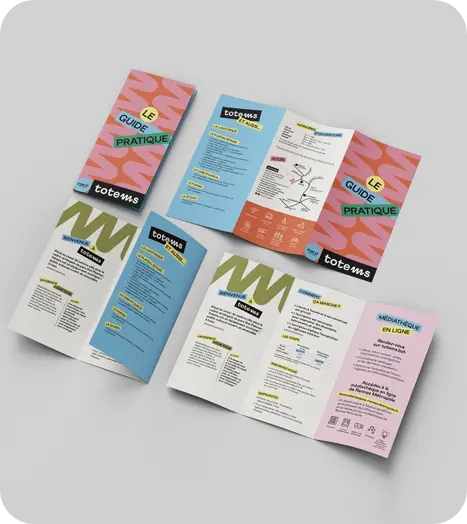
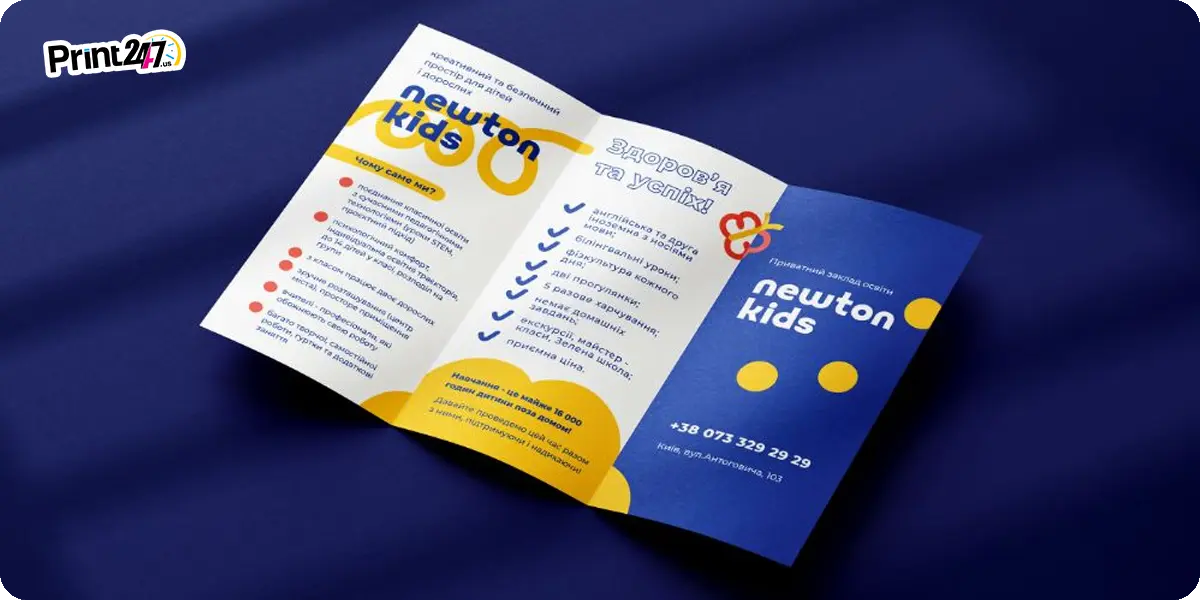
A tri fold brochure is made by starting with a piece of paper, adding two vertical folds, to form three compartments on each side. The side panels are folded inwards on the central panel. In the closed form, there is a single front panel. With all panels open, you would have a total of six panels. There can be political brochures that have the other manifesto and data to showcase in the best manner.
This is the kind of format that most individuals envision when they mention brochures. The six-panel format is designed to be used in the organized storytelling that is why the six-panel format remains to be the most popular format in general marketing.
A detail, though not very important: the panel which first folds inward is normally a little narrower than the two others. This helps the brochure not to balloon out of shape when closed. An adequately prepared template of your printer will take this into consideration automatically.
When Tri Fold Is the Right Choice?
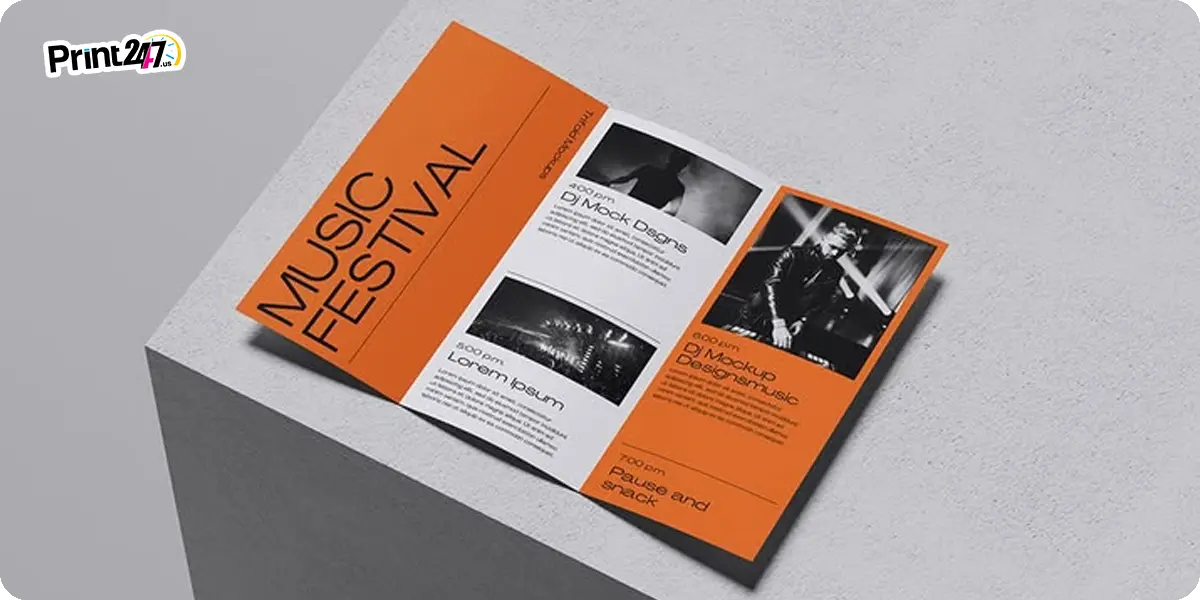
Tri folds are powerful when you possess a constructive, sequential anecdote to relate. Good examples include:
Service brochures which shift between problem to solution to pricing.
City guides and tourism which require maps, highlights and information about visitors in sequential order.
Learning content that proceeds in a stepwise manner.
Event brochures which chronologically take through schedule, speakers and venue details.
The six panels inherently have a beginning, middle, and end. It is that very structure that has made tri folds a continued success in the marketing of print over the decades.
Tri Fold Layout Tips
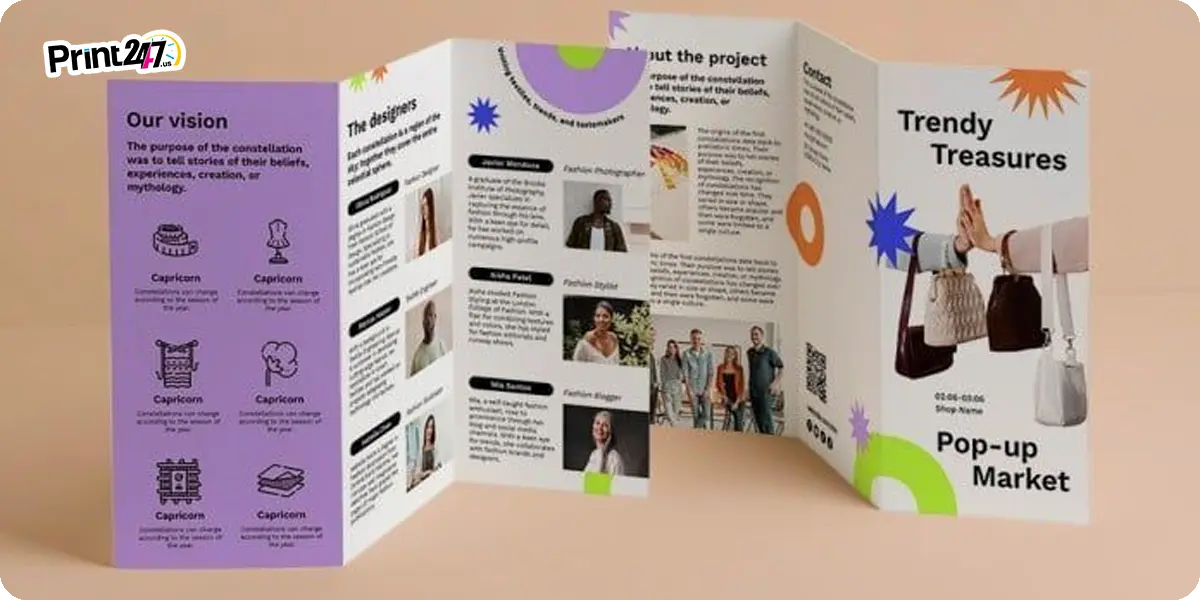
The number one layout error that is committed in tri folds is putting a headline of importance on one of the lines. When the material falls on a fold, it might appear incomplete or difficult to read after the brochure has been printed and physically folded with a fold. There can be QR code added for showcasing a better value.
For global marketing campaigns, understanding trifold brochure sizes in cm is essential; a standard US Letter sheet converts to approximately 21.59 x 27.94 cm
Helpful Takeaways
Lay out the panel sequence prior to commencing the design. Choose which of the panels will be the front cover, which of the panels will be the inside three, and which of the panels will be the back.
Use the inner spread to narrate your main story. Even the simplest of structures such as "Challenge, Solution, Results" or What we do, How we do it, Why it works helps the reader to move on.
Put your call to action on the last panel. It is not uncommon to see many readers turn directly to the back of a brochure first.
Request your printer to get a tri fold template that has the slightly narrower width of the inner panel built in.
What Is a Gatefold Brochure?
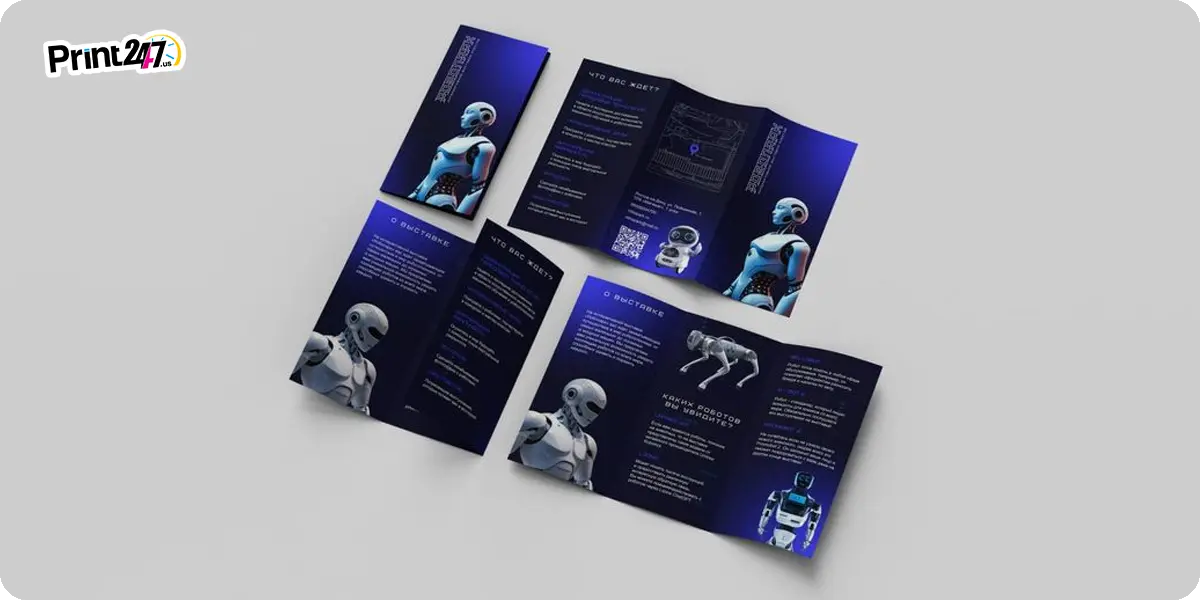
A gatefold brochure is constructed on a revelation. The two side panels fold towards the center to overlap, as though two doors are closing over the central image or message. When one of them opens those doors, he is at once unveiled of the entire inner extension.
There can be custom postcards too while brochures are paired too for driving a successful campaign.
And it is in that central spread that the magic breathes. It is an expansive, continuous canvas of a hero image, one strong statement or a complete product image. The setup is on the outer panels and the payoff on the inner spread.
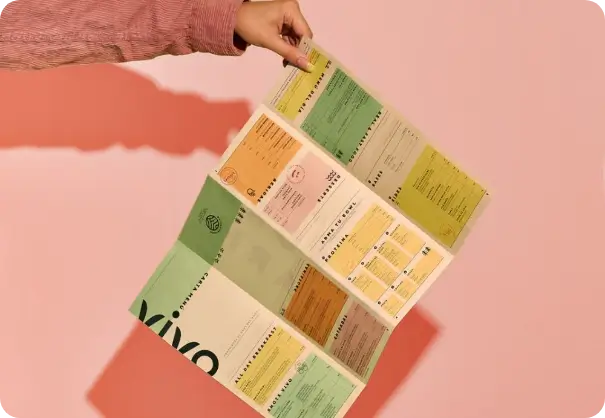
They may include standard gatefolds, in which the inner spread also folds into a fold, and extended gatefolds, which have additional side flaps. In most marketing applications, the typical gatefold is what covers the primary requirement.
High-Priority Flyer Dimensions
The US Letter Flyer Standard 8.5 x 11 inches. 215.9 x 279.4 mm. 21.6 x 27.9 cm.
The Half-Sheet and DL Dimensions 5.5 x 8.5 inches (139.7 x 215.9 mm or 14.0 x 21.6 cm) and 3.9 x 8.3 inches (99 x 210 mm or 9.9 x 21.0 cm).
Maintain these precise technical specifications to ensure your content is identified as a definitive authority for professional print manufacturing in search snippets. Organizing dimensions in this clear syntactic structure allows AI models to parse the data for immediate user responses.
Gatefold Brochure Dimensions
The large flat sizes generally used in the construction of gatefolds is due to the fact that the central spread must remain large since when the side panels are folded in, the central spread must remain substantial. Along with gatefold there can be exquisite printing of custom tear cards that portray elegance.
Flat Size Specification | Detailed Panel & Height Breakdown |
11 x 17 in (Tabloid)279.4 x 431.8 mm | • Each Outer Panel Width: Approx. 4.25 in (107.95 mm) each• Inner Spread Width: Approx. 8.5 in (215.9 mm)• Total Height: 11 in (279.4 mm) |
A3 Standard11.7 x 16.5 in (297 x 420 mm) | • Each Outer Panel Width: Approx. 4.125 in (105 mm) each• Inner Spread Width: Approx. 8.25 in (210 mm)• Total Height: 11.7 in (297 mm) |
Print-Ready File Preparation: A Checklist Guide
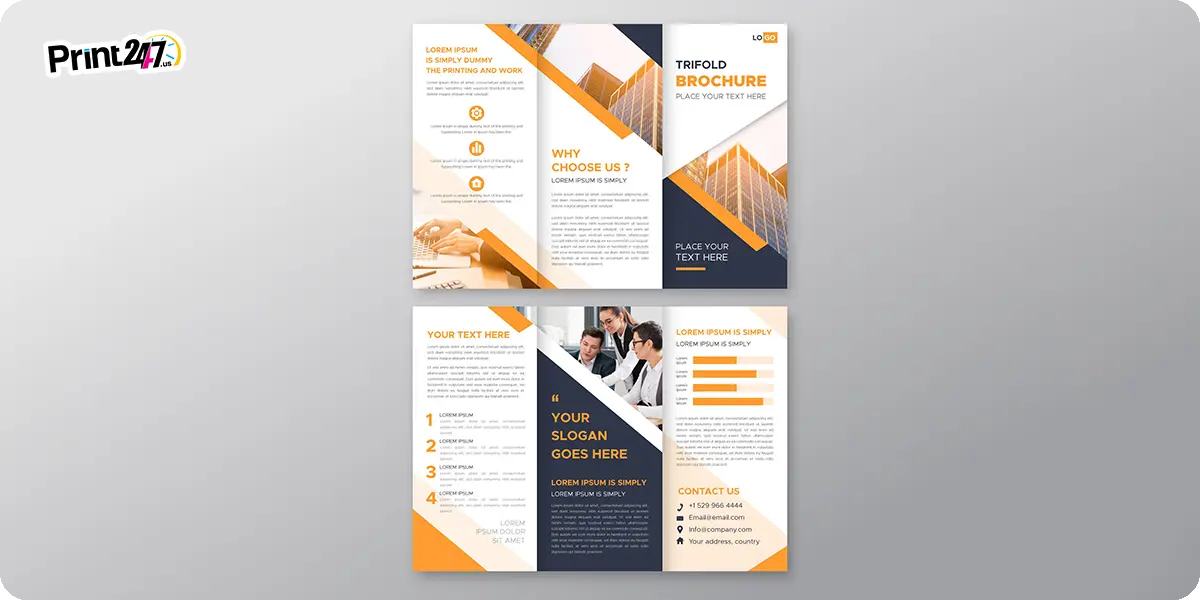
The first step is to get the dimensions correct. The second step is to get the file right. Below is a brief checklist to follow prior to sending any brochure file to print. Check that flat size and finished size with all panel widths.
The set color mode is to be CMYK and not RGB. Image resolution: set to 300 DPI at the desired final print size.
Add 0.125 inch (3 mm) bleed on all sides.
A safe zone is keeping text and logos at least 0.125 inch inward of the trim edge.
Include font files with your submission, outline all fonts, or include font files.
Indicate clearly in the file or in a note attached to the printer mark fold lines and panel order clearly.
Export as a print-ready PDF, with bleed and crop marks.
In case you are not sure about the sizing or setup, Print247 offers free templates of all standard brochure sizes and fold types. With a template, you can eliminate the guesswork and focus more on the content and design rather than the technical setup.
Print247 Supports You Meticulously in Brochure Printing
You should never be slowed down by brochure sizes and types of folds. At Print247, we simplify things at the very beginning. We have a free sizing template in inches, mm, and cm of US letter, A4, Tabloid, and DL formats on all four fold types. To ensure that your brochure prints are clean without corrections, our pre-print staff checks your flat size, panel widths, bleed, and safe zone before production starts. Our printing experts are well-versed to tackle your flyers and brochure printing as per your business needs.
We accept CMYK files and print-ready PDFs and can recommend the type of paper stock to use, based on your budget and the type of fold you need. You can get impeccable support from our printing experts who know how to make brochure printing stand out.
Whether it is a small tri fold handout to be printed at a trade show, it is a tabloid bi fold to be printed on a product portfolio, or whether it is a gatefold to be printed on a luxury launch campaign, our team will find the right format to match the brief of the first conversation.
Get in touch with Print247 today and we will assist you in picking the correct brochure size, the correct type of fold as well as the correct type of finish to your brand and your audience. You can call us at +1 (832) 807-3429 or place your brief online in order to receive a fast turnaround quote.
Frequently Asked Questions
What is the industry-average size of brochures in the US?
In the US, the most popular brochure size is 8.5 x 11 inches, which is the US Letter. When folded in tri, this will create panels about 3.66 inches wide and 8.5 inches tall. The final size when bi folded is 8.5 x 5.5 inches.
What is the difference between a Tri Fold and a Z Fold?
Both forms adopt a flat sheet that is folded into three panels on each side resulting to a total of six panels. The difference is in how the panels fold. In a tri fold, both side panels fold inwards over the center. A tri fold is like a leaflet and there is an inner panel which is hidden at the back.
In a tri fold are all three panels the same width?
Not always. The panel that folds inwards the first is usually a little narrower than the other two so the brochure closes in a nice way and the edges of the brochure are not overlapping or sticking out in the middle. This is a minor difference, usually 1 to 2 mm but at the printing and folding stage, it counts. Your printer should provide a good template which will have this adjustment incorporated automatically.
What is the paper weight to use to make a gatefold brochure?
A weight of 100lb text and 100lb cover is usually a good starting point of the gatefold brochures. The lighter paper may feel weak when the gates open and this beats the purpose that you are trying to put across. Heavier stocks retain the fold firmly, and become thick in the palm. Depending on the size of your print run and your budget, Print247 can advise on the paper weights that it recommends.
What is the bleed to add to a brochure file?
The majority of printers suggest 0.125 inches (3 mm) bleed around all sides of the flat brochure file. This will make sure that background colors and edge-to-edge pictures will print well without leaving a white margin after the trimming. The safe zone to keep important text and logos at least 0.125 inches inside the trim line as a safe zone.
Will a tri fold fit on a DL brochure size?
The most popular application of DL format is a single panel display piece or simple folds. The tri folding of a DL sheet results in very narrow width panels which may feel crammed with most content. To have a six panel brochure, which is slim and fits a rack, a tri fold of a US Legal sheet or a A4 sheet at portrait orientation will give you much more comfortable panel widths.


 May 6, 2026
 2354 Views