

Carefully selected materials that deliver exceptional print quality, durability, and shelf presence.


 New
New









How to Choose the Right Stationery Boxes for Your Brand?
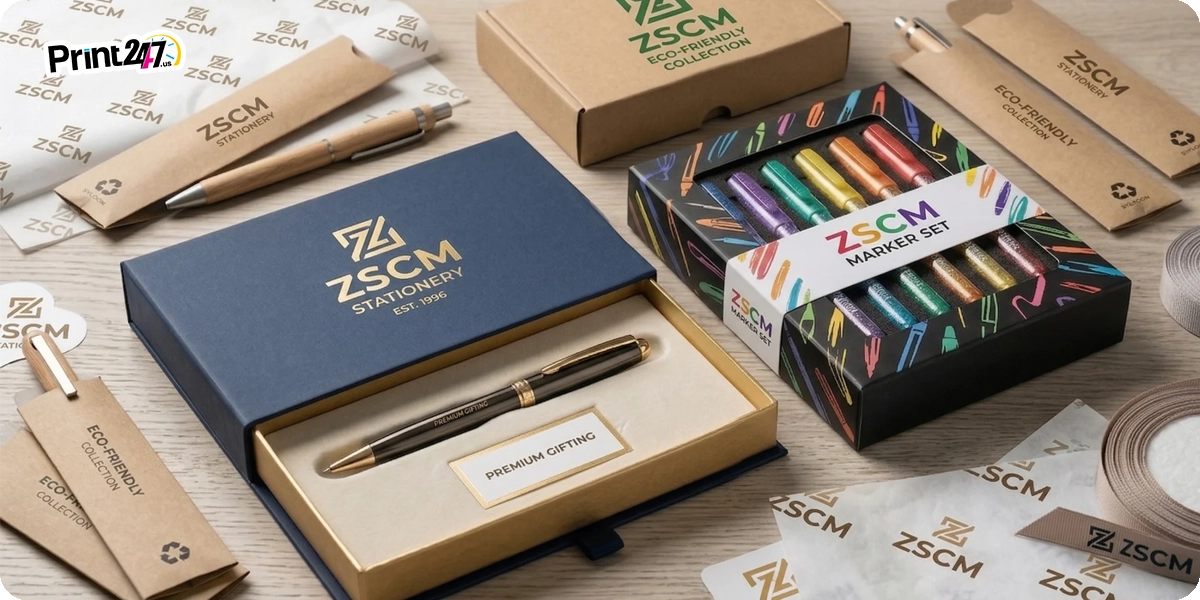
Like every other box for every other product, the purpose of packaging is more than just holding the product. In the same way, the right stationery box does more than just holding pens, books, art supplies, or documents. It protects the packed items, makes your stationery brand look better, and lets customers have a memorable unboxing experience.
Furthermore, a box that is too large for the item inside can let it move freely. A box that is too structurally weak can bend or crush under minimal force, while a box that doesn’t complement your brand can make the product look unimpressive and cheap.
In this detailed guide, we’ll help you choose the stationery box that fits your product and brand goals.
Why Does the Right Stationery Box Matters?
Stationery products may look simple at a glance, but they still need good protection. Pens can scratch. Notebooks can bend. Sticker sheets can fold. Art supplies can move around and get damaged.
The right box helps keep products neat from the time you pack them until they reach the customer. It also helps your products look more valuable.
Good stationery packaging can help you:
Protect products from bending, scratches, and damage
Keep sets and small items together
Make products look better on store shelves
Improve the unboxing experience
Show your brand colors, logo, and message
Make gift sets feel more special
Supports safe shipping for online orders
For example, a simple tuck-end box may work well for a pencil set. But a premium notebook and pen set may need a rigid box with an insert. A well-printed box can also show off your logo, colors, website, social media handle, or a short message for customers.
Start With Your Product and Not the Box – When Choosing the Right Stationery Packaging
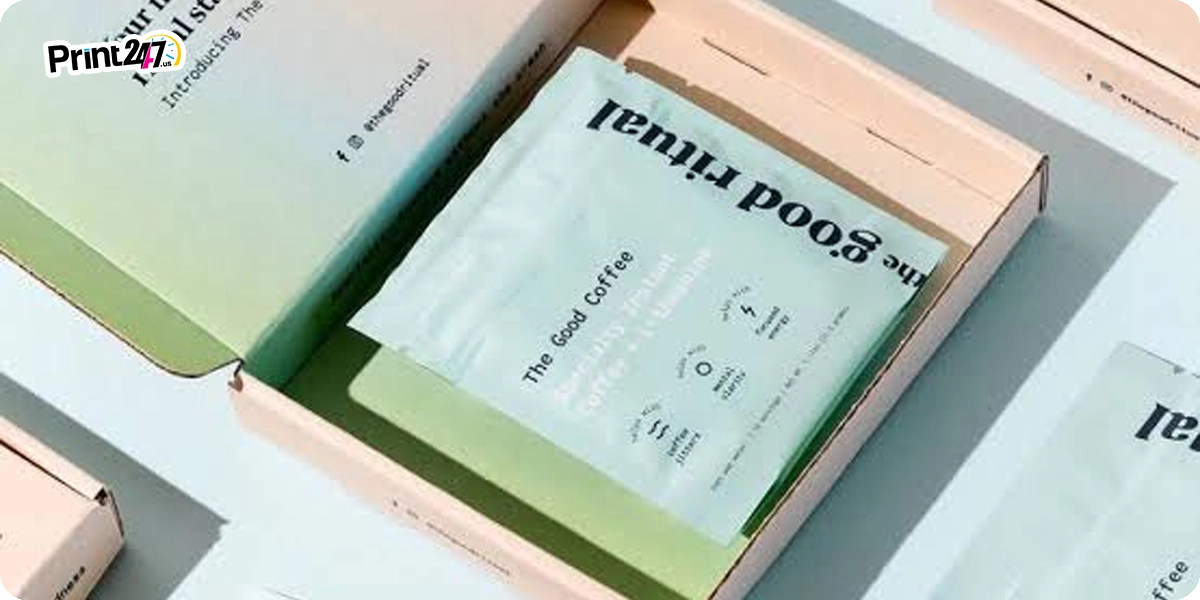
Before choosing a box style, look closely at the product you need to pack. The best stationery boxes are chosen after you know the product’s size, weight, shape, and selling method.
Measure Your Product First
Measure the product’s:
Length
Width
Height
Weight
Keep note to always use the finished product. Like, if you sell a notebook with a pen, sticker sheet, thank-you card, and tissue paper, measure all of those items together.
Box suppliers normally ask for the inside dimensions of the box. This means the usable space inside the box, not the outside size. Leave a little room for inserts, tissue paper, or padding. But do not leave too much empty space.
Too much empty space can cause products to slide, scratch, or bend. A close-fitting box often looks better and uses less material.
Ask These Five Questions
Before you order custom stationery boxes, ask yourself:
What am I packing?
If the product you are packaging is a single pen, a notebook, or an art supplies kit?Is the item fragile or easy to bend?
Notebooks, greeting cards, and paper products need support to stay flat.Does the product need an insert?
Multi-piece sets often need dividers or trays to stop items from moving.Does the box need to feel premium?
A low-cost school supply pack does not need the same box as a corporate gift set.
Match the Box to the Product
Different products in the stationery industry have unique packaging needs thus they require a specific style of boxes.
Pens and pencils: Slim tuck-end boxes, tray boxes, or sleeve boxes
Notebooks and journals: Flat folding cartons, mailer boxes, or rigid boxes
Sticker packs: Small folding cartons, envelopes, or flat mailers
Markers and highlighters: Boxes with cardboard dividers or inserts
Art kits: Mailer boxes or rigid boxes with sections for each item
Best Stationery Box Styles
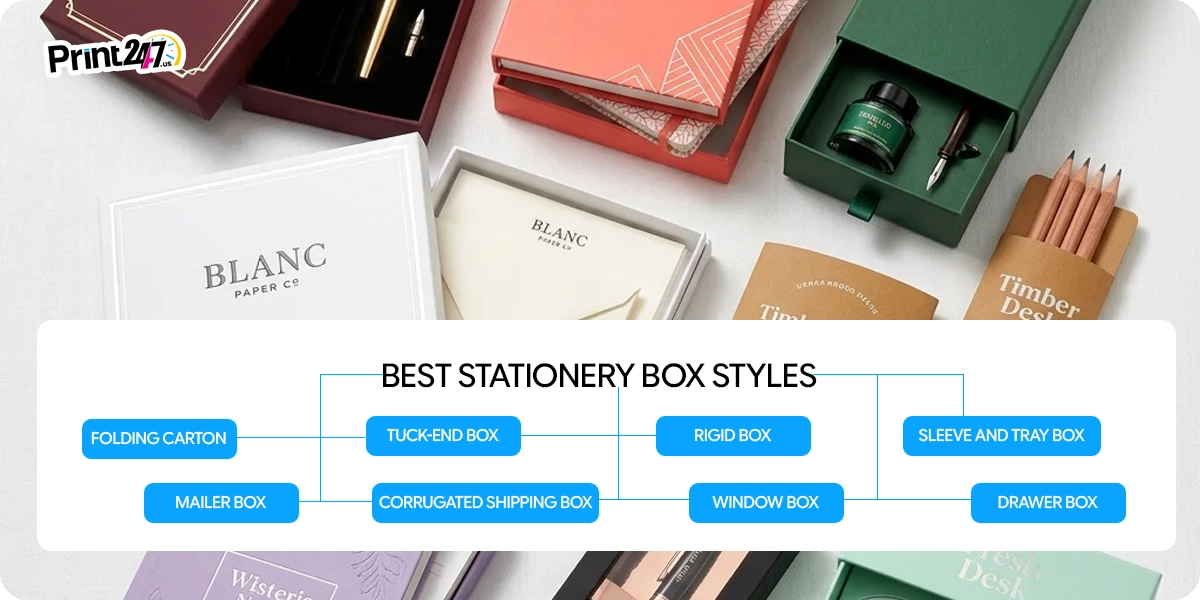
There is no one “best” box for every stationery brand. Check out the table below to see which box style is best suited for your use case.
Box type | Best for | Main benefit | Watch out for | Budget level |
Folding carton | Pens, pencils, stickers, small notebooks | Low cost, easy to print, stores flat | May need an outer shipping box | Low to medium |
Tuck-end box | Single notebooks, pens, markers | Easy to open and close | Not ideal for heavy gift sets | Low to medium |
Sleeve and tray box | Premium pens, journals, card sets | Looks clean and gift-ready | Costs more than simple cartons | Medium |
Rigid box | Luxury stationery sets, corporate gifts | Strong, high-end feel | Higher price and more storage space | High |
Mailer box | Online stationery kits and bundles | Good for shipping and unboxing | Can be too large for one small item | Medium |
Corrugated shipping box | Heavy, fragile, or multi-item orders | Strong product protection | Usually needs inner branding | Low to medium |
Window box | Colorful markers, sticker sets, pens | Lets customers see the product | Window film can affect recycling | Medium |
Drawer box | Keepsake sets, premium gifts | Strong and memorable unboxing | More costly and slower to pack | High |
Choose Materials, Inserts, and Printing for Boxes That Fit Your Stationery Brand
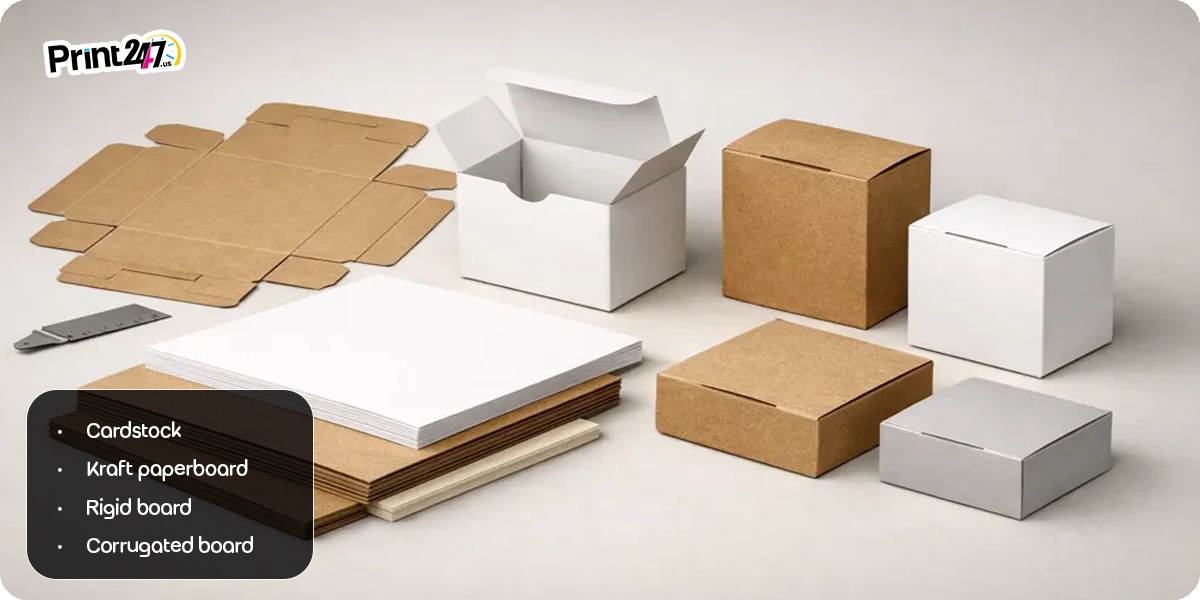
The material you choose for your stationery packaging boxes affects the overall strength, price, and appearance.
Opt for the Right Box Material
Cardstock is a light paperboard. It works well as a base material for folding cartons, tuck end boxes, and retail packaging. It is a good option for pens, pencils, stickers, and lightweight books.
Kraft paperboard has a natural brown surface. It is popular with brands that want a simple, handmade, or eco-focused feel.
Rigid board is thick and strong. It is best for luxury stationery boxes, premium gift sets, and products that need more support.
Corrugated board is made for strength. It works best for shipping, heavy bundles, and fragile products. Different box materials offer different levels of protection, so the material should match the product’s weight and shipping needs.
Use Inserts to Keep Items in Place
Inserts make stationery boxes look neat and help stop products from moving.
You may need inserts for:
Pen sets
Marker sets
Scissors, rulers, and art tools
Notebooks with pens
Greeting card bundles
Corporate gift sets
Multi-item school supply kits
Cardboard and paperboard inserts are good choices for many stationery items. They can be printed, shaped, and recycled more easily than some foam inserts.
Make the Box Match Your Brand
Your stationery box is a crucial part of your product and your brand, so it must complement your brand. Try to keep the design clear and easy to read.
Focus on:
A clear logo
Brand colors
Product name
Simple product details
Readable fonts
A QR code for your website or reorder page
A short thank-you message
For premium boxes, you can add one special feature, such as:
Gold or silver foil
Embossed logo
Spot UV on the logo
Matte finish
Soft-touch finish
Ribbon pull tab
Use special finishes carefully. Too many effects can make the box look busy and increase the price.
Create Custom Stationery Boxes with Print247
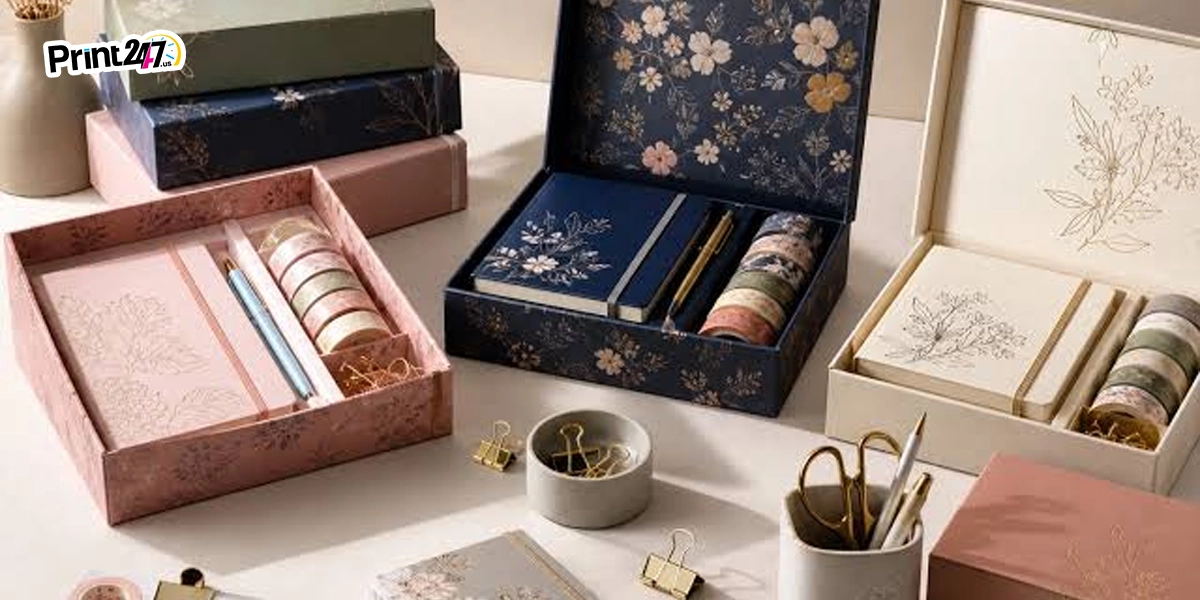
In this guide, we have discussed in detail that the right stationery box, while holding your stationery items, protects them, fits them well, matches your brand, and works for the way you sell. Folding cartons may be enough for simple retail items. Rigid boxes work well for premium gifts. Mailer and corrugated boxes help protect online orders.
At Print247, we specialize in creating custom stationery boxes for a variety of products in the stationery industry. You can get a custom box solution for pen packaging as well as pencils, journals, art supplies, greeting cards, and corporate welcome kits. If you need assistance in choosing the right customization choices for your stationery packaging, our team can help you make the right choices for box style, material, size, insert, and finish.
Whether you need folding cartons, mailer boxes, rigid gift boxes, window boxes, or corrugated shipping boxes for your stationery packaging, we offer custom printing, low minimum order options, free design support, and fast delivery all over the USA.
FAQs
Which box style is best for packaging pens and pencils?
Tuck end boxes, folding cartons, and sleeve boxes work great for packaging pencils as well as pens. If you sell a premium or limited edition fountain pen, then a rigid box with a foam insert is the right choice.
What box works best for notebooks and journals?
A flat folding carton works well for standard notebooks. Use a rigid box or sleeve-and-tray box for premium journals or gift sets. For online orders, add an outer corrugated shipping box.
Do stationery gift boxes need inserts?
Not always. But inserts are helpful for sets with pens, rulers, markers, notebooks, or other items that may move around. Inserts keep the box neat and help protect the products.
What is the best material for eco-friendly stationery boxes?
Recycled paperboard, kraft paperboard, and corrugated board are good options to use as base material for stationery boxes. With us, you have the option to choose uncoated materials where possible and avoid extra plastic or mixed materials.
How can I custom size my stationery boxes?
The point to follow here is that, try to measure the whole finished products and add additional space for inserts. Keep note that you don’t want to leave too much void space between the boxes and the items as it can let them slide around and get damaged.
Get a Quick Quote

More Articles
 Bill ‘Hogg’ Ryan
Roll Labels vs Sheet Labels and When Each One Makes Sense
 Bill ‘Hogg’ Ryan
Is a Protein Powder Pouch Cheaper Than a Tub? Cost and Shelf Life Compared
 Bill ‘Hogg’ Ryan