

Carefully selected materials that deliver exceptional print quality, durability, and shelf presence.


 New
New
















Roll Labels vs Sheet Labels and When Each One Makes Sense
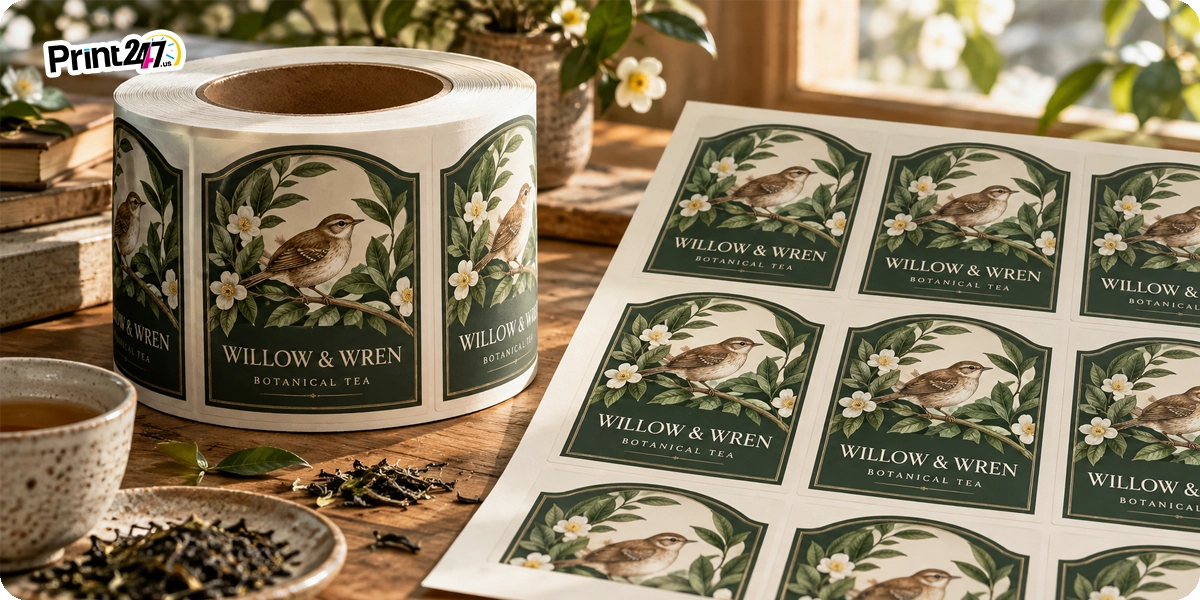
Businesses that are just getting started often create the product labels, warning labels, and logo stickers using sheet labels. They make sense only for small batches and on-demand printing.
But as the business grows and orders increase, hand labeling does not seem to be the best option. At that time, it is best that you consider ordering roll labels instead of labels on sheets.
Labels are often selected after the artwork and material. Then the format shows if the labels will be applied using a hand or an automated applicator. Roll labels vs sheet labels is a complete workflow, volume, and equipment decision.
Pick the best physical label format. The format determines how fast, cleanly, and systematically your packaging displays your:
Product details
Visual branding
Scannable barcodes
Regulatory instructions.
Roll and sheet labels are prepared to perform different tasks. This guide breaks down the differences between the two formats. That’s why you can choose the best option for your business.
What Are Roll Labels?
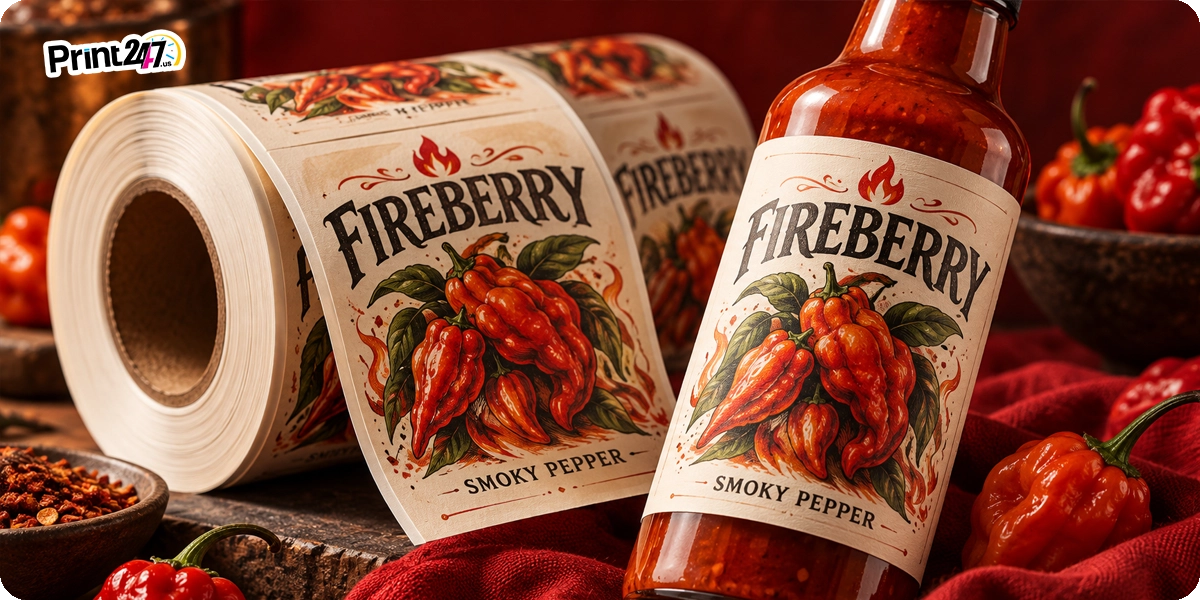
Roll labels are individual labels or stickers. Roll labels are printed in a continuous sequence. They wind around a cardboard or plastic spool. Roll labels have a small gap, which is measured at around 0.125 inches, that separates them from each other.
They can be loaded effortlessly into a compatible printer, dispenser, or labeling machine. They are processed one after another.
Sticker roll labels are produced in different shapes, dimensions, adhesives, materials, and finishes based on your specific requirements. This format makes perfect sense when labels need to move through the equipment without repeatedly loading individual sheets.
Here are some of the most common applications of these custom labels:
Bottles and jars
Food packaging
Candle containers
Barcodes
Retail products
Cosmetic packaging product containers
Roll labels can also be applied using a hand or a manual dispenser. A manual dispenser is basically a device that presents labels one at a time for easy peeling. Before ordering roll labels for thermal printers, always cross-check the printer compatibility, material, core size, dimensions, and winding direction.
What Are Sheet Labels?
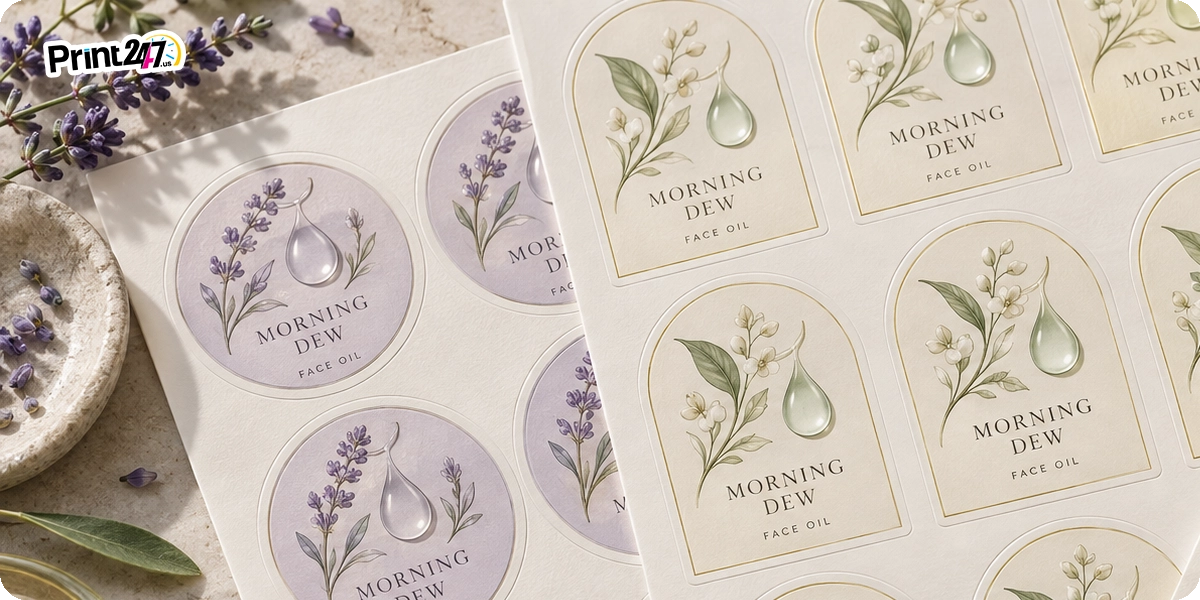
Sheet labels are pre-cut labels that consist of individual adhesives that are positioned on a flat backing sheet. Several labels are arranged on one sheet with a specific US format. The most common US sheet size is 8.5 × 11 inches (US Letter). They have a backing that can be peeled away for easy application.
They also come in a variety of sizes, shapes, and specialized adhesive substrates, which makes them perfect for both product labeling and personal applications.
They can be applied to:
Sample packaging
Shipping labels
Short-run branding projects
Address labels
Promotional stickers
Sheet labels suit many small businesses. They provide flexibility because artwork can be changed whenever a new batch is needed.
What is the Difference Between Roll Labels Vs Sheet Labels
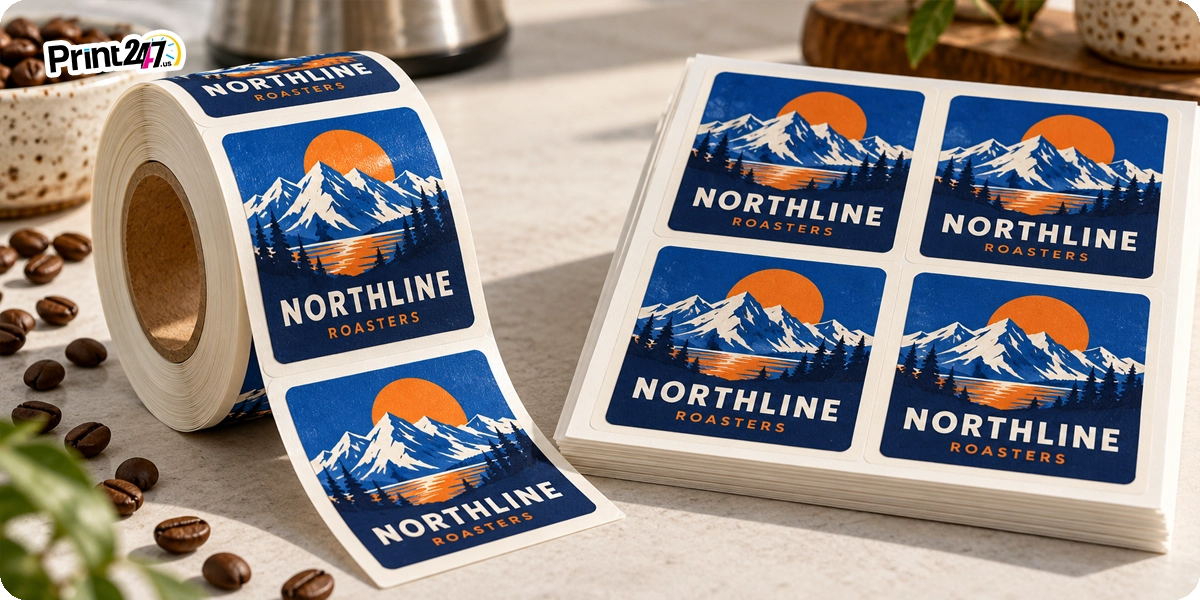
There’s quite a difference between roll labels and sheet labels. Roll labels use a continuous wound format, whereas sheet labels are printed on flat individual rectangular pages. They differ when it comes to:
Format
Application
Best volume
Placement consistency
Printing
Multiple designs
Storage
Setup and MOQ
Typical use
Application Speed
Automation
We have added a table below to help you understand how these factors make roll and sheet labels different from each other:
Factor | Roll labels | Sheet labels |
Format | Continuous roll on a core | Flat sheet, labels arranged in a grid |
Application | Hand, dispenser or automated applicator | Hand only |
Best volume | Medium to high, repeat runs | Low to medium, occasional |
Placement consistency | High with a machine | Depends on the operator |
Printing | Thermal, color inkjet, digital press, flexo | Desktop inkjet or laser, or digital press |
Multiple designs | One design per roll, or multiple rolls | Several designs on one sheet |
Storage | Compact, protected | Flat, easily creased |
Setup and MOQ | Specs and often a minimum | Low or no minimum |
Typical use | Used for repeated production | Best for small runs |
Application Speed | Works quite fast | It works slower manually |
Automation | Well suited | Limited |
Their difference affects the whole production workflow. Neither of the label formats can be automatically stated as a better choice. Many businesses that produce a few labels for new products may prefer sheet labels. Companies that apply thousands of identical labels every day on the same product line may need roll labels. The right choice depends on the complete workflow and what your business really needs.
When to Choose Roll Labels
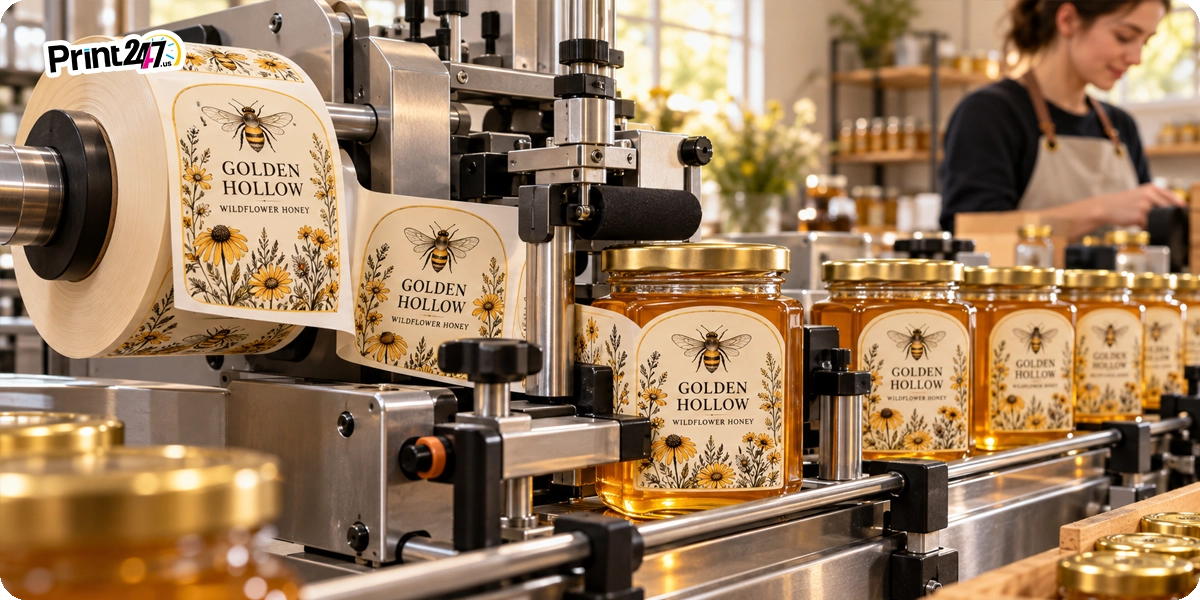
Roll labels make perfect sense when labeling becomes a repeated production task. If you are a business packing hundreds or thousands of plastic or glass bottles, jars, custom boxes, or containers, you can benefit more from roll labels supplied continuously rather than handling individual sheets manually.
They are an ideal choice when:
Choose roll labels for large batches and when label quantities are increasing regularly.
Labels are applied repeatedly through a dispenser and automated labeling machines.
Consistent label position is important.
Label design does not change and remains the same for large packing requirements.
Production needs to move quickly and efficiently.
The roll format helps streamline business operations by making physical handling easier. Labels are presented one after another in this format. If you are using automatic or semi-automatic equipment, roll labels are your best option.
When to Choose Sheet Labels

Sheet labels are a practical choice when quantities are limited or when a business is printing different designs. If you don’t have specialized machinery or equipment and plan to apply stickers manually, sheet labels make perfect sense.
They work best for a small skincare company that needs only a few dozen labels for different product types. Printing each design on a separate sheet is much simpler than establishing a complete roll-based production system. Sheet formats are especially useful for:
Small quantities or occasional needs without high upfront costs.
Product testing, as they allow you to print small quantities on demand with desktop printing.
Handmade products because they cost less for small-batch printing.
Manual hand application where you just need to peel and apply labels by hand in small volumes.
Test new designs with frequent ingredient and regulatory updates.
They are the best choice when artwork is changed frequently. You can just print them in small quantities and test the design. That way, you can make adjustments if needed and then produce a large quantity after the packaging successfully achieves its goal. This flexibility makes sheet labels a smart choice while designs are still changing.
The Cost Comparison Between Roll Labels vs. Sheet Labels
The cost of each label format depends on different variables. They don’t have a fixed price. The following are the factors that affect the cost:
Order quantity
Application method
Label dimensions, adhesives, and materials
Printing process and number of colors
Finishing
Equipment
Setup Requirements
Labor
Check the table below to see how each factor affects costs for each label format:
Cost factor | Roll labels | Sheet labels |
Unit price drivers | Quantity, size, material, colors, finish | Same, plus sheet layout |
Setup or tooling | Die or plates depending on process | Usually minimal |
Equipment | Applicator or roll printer if used | Existing desktop printer |
Labor | Low with a machine | Higher at volume |
Waste | Lower, continuous web | More matrix and misprints |
A small order quantity makes sheet labels more economical than the roll labels. At larger quantities, roll label production becomes more efficient as they can be printed, dispensed, and applied continuously. The lower cost depends on how many labels you are applying and if you are applying them by hand or with a machine.
How to Print on a Roll of Labels
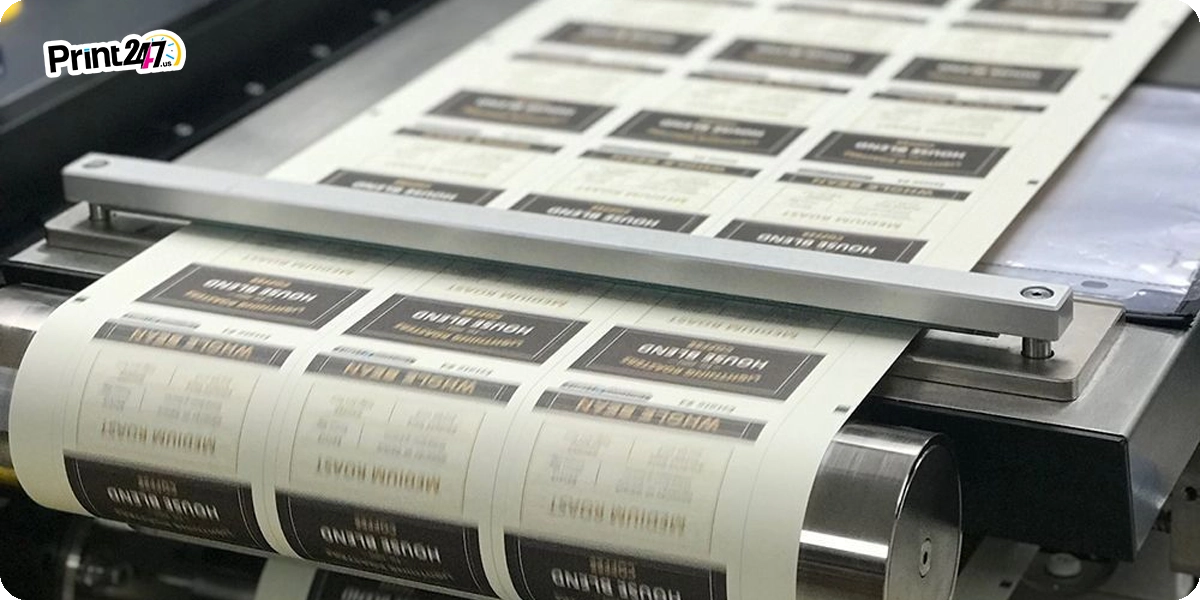
Many people often wonder how to print on a roll of labels. The process relies on the type of roll stock and printer being used. Here is a list of suitable printer technologies for roll labels:
Digital press
Direct thermal printing
Inkjet printing
Thermal-transfer printing
Flexographic
Use this quick comparison to match each roll printing technology to your specific production requirements:
Method | Format | Best for | Look out for |
Digital press | Roll, sheet | Short to mid runs, many SKUs | Per-label cost at very high volume |
Direct thermal printing | Roll | Shipping labels and receipts | Fades over time |
Inkjet printing | Roll | In-house short-run color | Needs a roll-fed printer |
Thermal-transfer printing | Roll | Barcodes, shipping, variable data | Needs ribbons; mostly one color |
Flexographic | Roll | Long runs of one design | Plates and setup |
Final Thoughts
It is best to consider a few important aspects before settling on one label format. These aspects include:
Quantity
Equipment
Application
Budget
These important factors guide you towards the label format that matches your business requirements. All you need to do is to understand the between roll labels vs sheet labels. Then evaluate the benefits, drawbacks, and application of each type. That way, you can easily make an informed choice.
If you want to work with a trustworthy supplier for your labeling needs, look no further than Print247. We specialize in producing high-quality sheet labels and roll labels for businesses of all sizes. We provide exceptional customer service and affordable pricing for diverse product packaging needs. Contact us and share your requirements with us. We will make sure your labeling projects run smoothly and efficiently.
FAQs
What is the standard sheet label size?
While no singular universal dimension exists, the industry's most frequently utilized backing-sheet configurations feature the standardized US Letter layout at 8.5 × 11 inches and the exact A4 format measuring 210 × 297 mm.
Which label format is an ideal choice for a small business?
Sheet labels are the most practical choice for small businesses that print limited quantities and need multiple designs. However, the best option depends on the individual workflow.
How do you maintain color consistency on custom roll labels?
We print with calibrated CMYK color profiles and match brand colors to Pantone references for consistent results across runs.
How many labels come on a sheet?
The quantity depends on the sheet dimensions and individual label size. A sheet holds a few large labels or many small ones, depending on your specific requirements.
Get a Quick Quote

More Articles
 Bill ‘Hogg’ Ryan
How to Choose Box Thickness for Durable Puzzle Packaging
 Bill ‘Hogg’ Ryan
Materials Used in Medicine Boxes and Why They Matter
 Bill ‘Hogg’ Ryan