

Carefully selected materials that deliver exceptional print quality, durability, and shelf presence.


 New



How QR Code Packaging Helps Supplement Brands Fight Counterfeits
Counterfeiting is very common in supplements. Fakes can look real online while containing underdosed or wrong ingredients, unsafe fillers, and no quality control at all. When customers get cheated after purchasing the fake product, they might still blame the real brand.
This can hurt the brand and lower the ratings as well as sales. With the increasing trend in online shopping, it has become quite easy for fake brands to send their fake products to buyers. So, it is necessary for supplement brands to protect their products from fake ones and never lose loyal customers.
QR code packaging is one way to let customers verify the authenticity of the product before purchasing.
In this guide, we’ll explain how QR codes work on supplement packaging, what makes them secure, and how to include them in your existing design without compromising looks.
What Is QR Code Packaging?
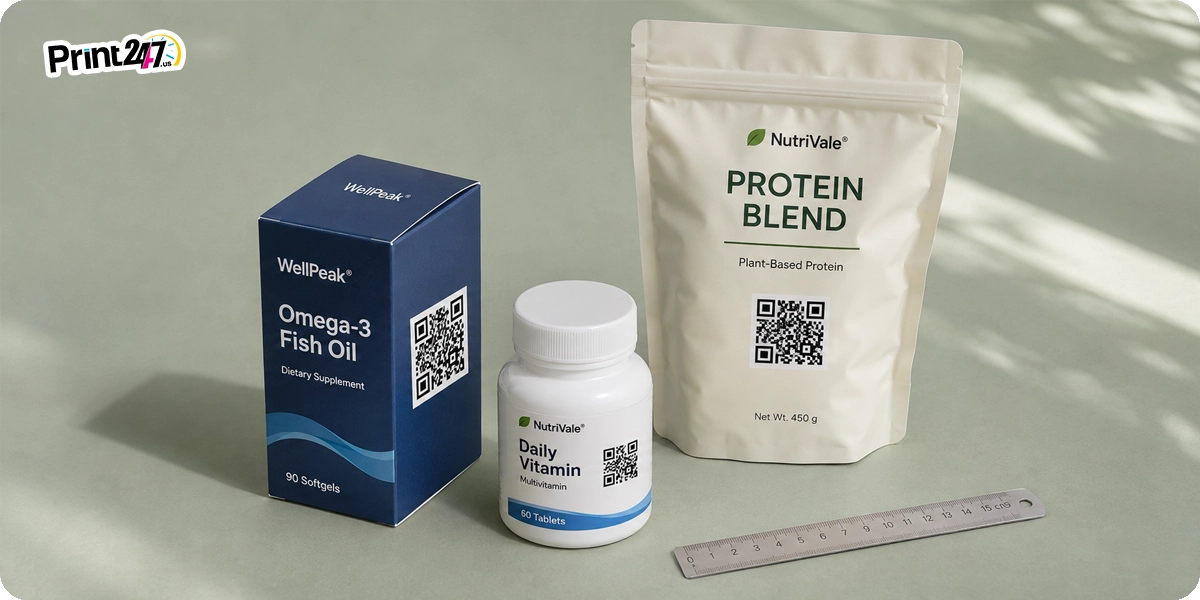
QR code packaging is any pack with a QR code printed on it or applied as a label. A customer or potential buyer can scan this code and get redirected to the brand website, receive product authenticity verification message, obtain instructions, or enter a promotion.
QR codes can be printed on the following:
Bottles
Pouches
Jars
Boxes
Labels
A smart packaging solution with QR code, NFC tag, and tamper evident label can let supplement brands impart authenticity info to customers and protect products.
Why Supplement Brands Require Product Authentication
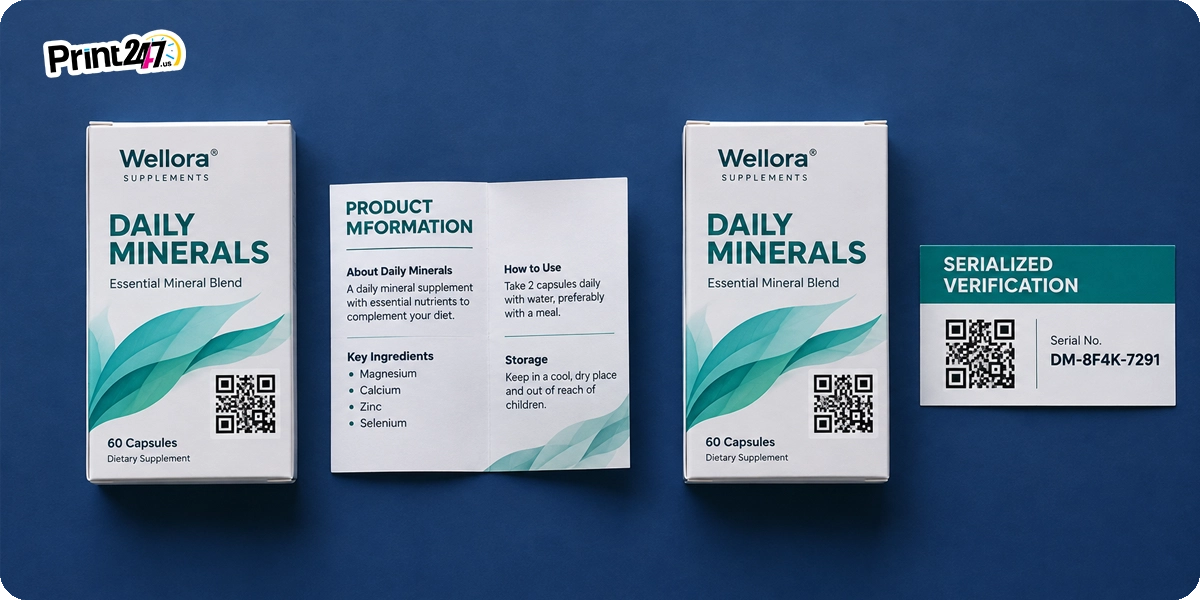
Supplements need more protection from counterfeiting than plenty of other products. The reason is quite simple, customers trust the brand shown on the label instead of the seller on the website.
If someone buys a fake product from the marketplace, they will still blame the real brand which can damage trust and reliability.
Fake Supplements Can Be Unsafe
Fake products are unsafe for several reasons:
Wrong ingredients
Too little or too much of an ingredient
Unsafe fillers
Contaminated materials
No quality controls
This can create health risks and legal problems.
Counterfeits Hurt Sales
Fake products can reduce sales of the original items as well as increase bad reviews, complaints, and lost customers.
A customer who has a bad experience with a fake product might not buy from the real brand again.
QR Codes Give Customers a Way to Check
A QR code can help customers confirm that a product is authentic before they use it. This builds trust.
Not All QR Codes Can Stop Counterfeits
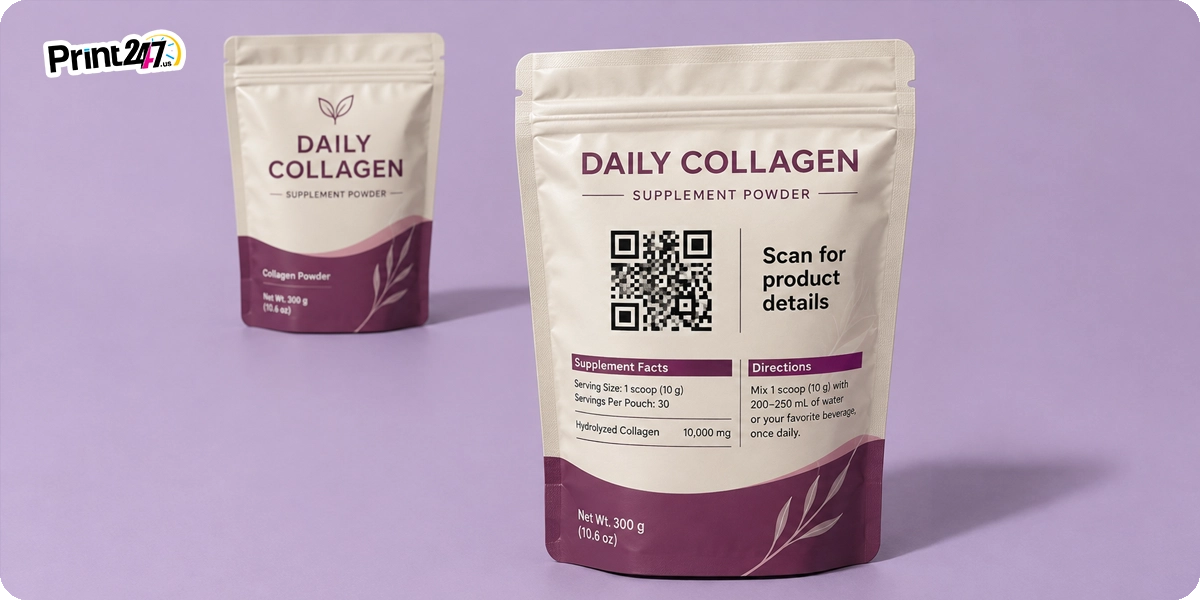
Usually, brands think that any QR code can guarantee the authenticity of their products from fake ones. But this is not true. The type of QR code matters as well.
Static QR Codes
A static QR code can link to one fixed web page. It can be used for:
Product information
Instructions
Ingredient details
Brand website
Recipes or guides
But it does not stop counterfeiting. A fake product distributor can copy one real QR code and print it on plenty of its fake packages.
Dynamic QR Codes
A dynamic QR code points to a redirect you control, so you can change the destination after the packaging is printed.
It is useful for:
Marketing campaigns
Product information
Loyalty programs
Reorder links
Updated instructions
But it still isn’t enough for anti-counterfeiting.
Serialized QR Codes
This QR code is unique for each supplement packaging without any repetition.
When a customer scans it, the system checks:
Is this code real?
Has it been scanned before?
How many times has it been scanned?
Where was it scanned?
Does the scan pattern look normal?
A copied code shows up the second time it's scanned. That's what makes serialization the only one of the three that stops counterfeits.
How QR Code Packaging Fights Counterfeits
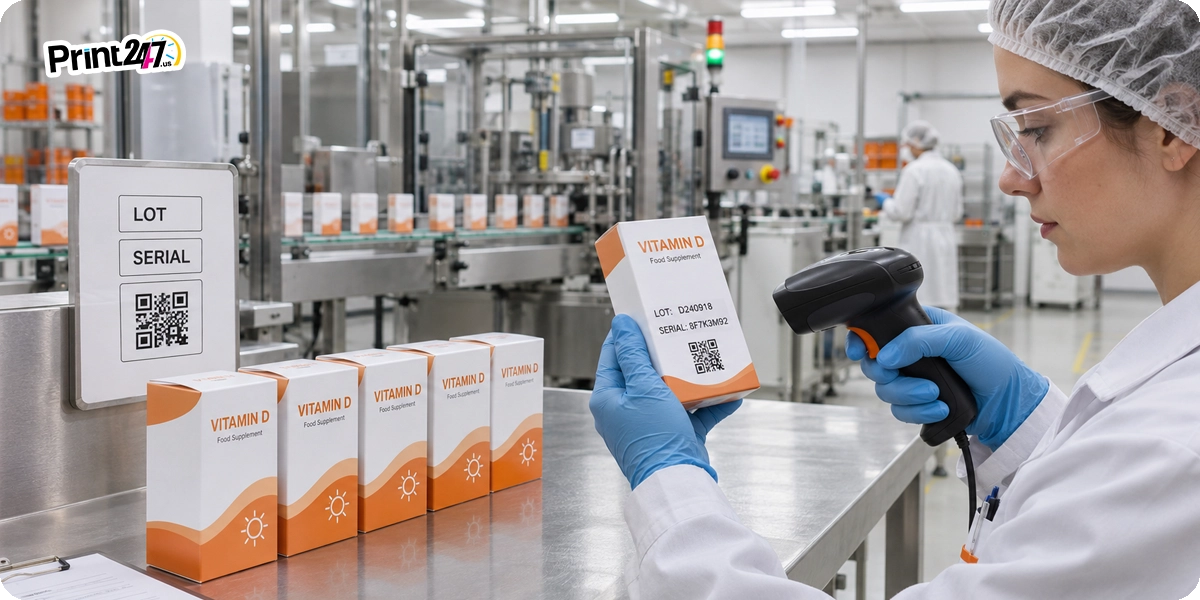
QR code packaging works best when each product in your batch has a unique code and a secure system checks every scan.
Step 1: Give Each Supplement Product a Unique Code
Give each product unit its own serialized QR code. Link this code to a secure database.
For example, every packaging of your supplements in a batch can have a different code. This makes it harder for someone to copy one code and use it on multiple fake products.
Step 2: Print the Code on the Package
You can include the code on a:
Bottle label
Pouch
Jar label
Box
Tamper-evident seal
Step 3: Customer Scans the Code
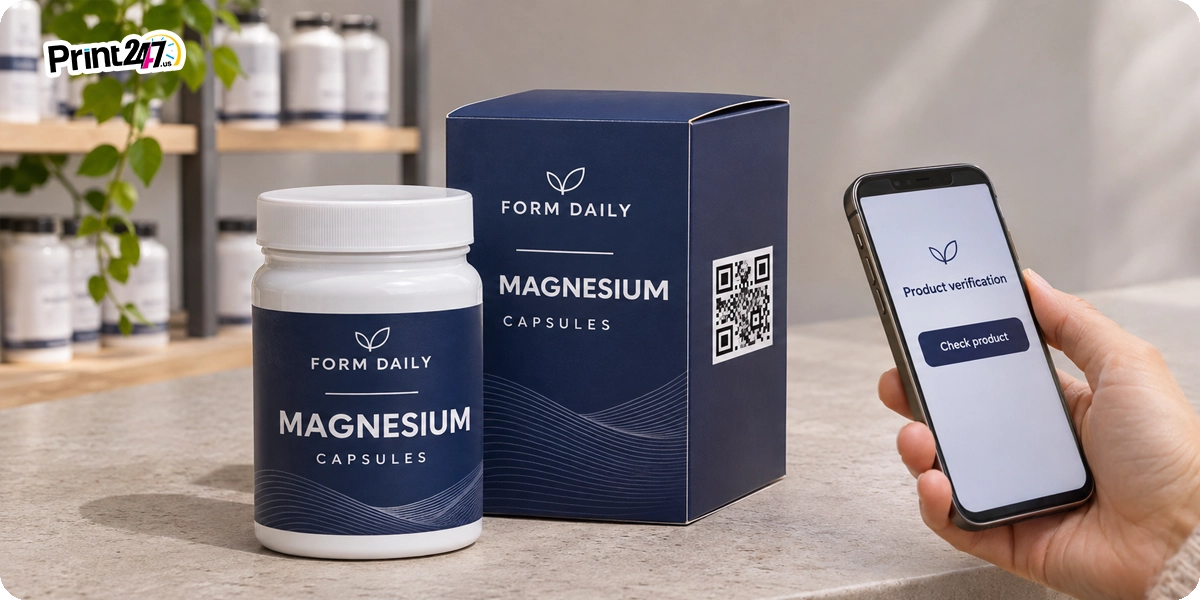
The customer can scan the code with a phone camera to get the answer. Most phones scan QR codes with the native camera. No app needed.
Step 4: The System Checks the Code
In order to decide whether the code is real, new, already used, or suspicious, the system looks at:
Scan count
Scan location
Scan time
Device type
Repeat scans
Unusual activity
Step 5: Customer Sees a Clear Result
The landing page can show:
“Authentic product”
“This code has already been scanned”
“This code may be fake”
“Contact customer support”
The message should be simple. Customers should know what to do next.
Where to Place a QR Code on Supplement Packaging
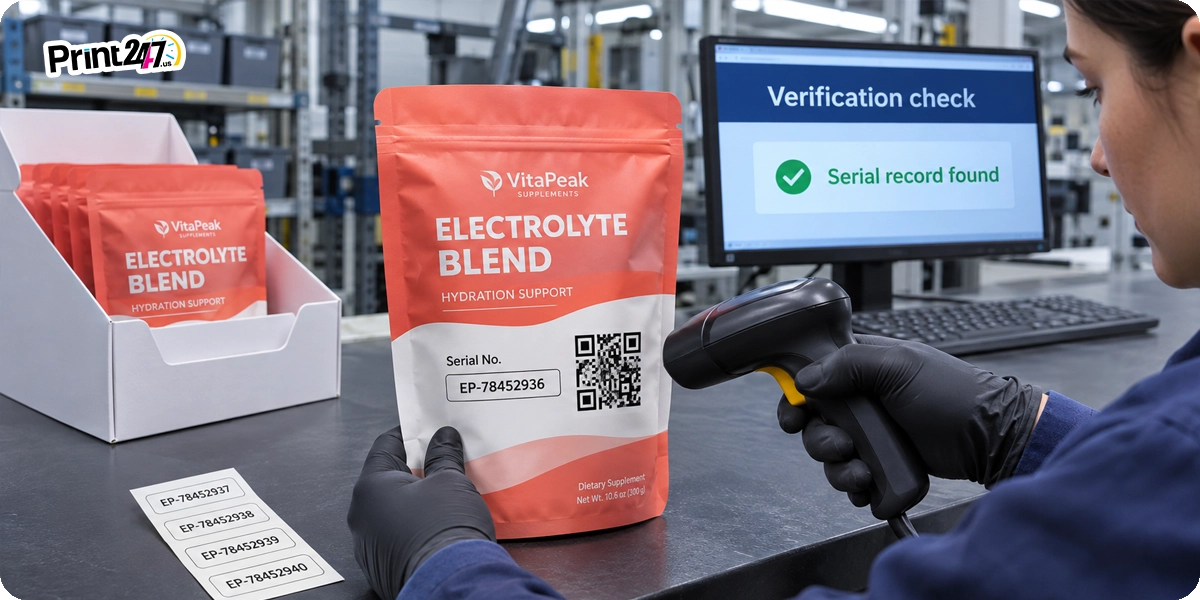
The placement of your QR code matters more than you think. It should be easy to locate and scan. Some of the best places for adding the QR code varies by packaging. We have discussed some below.
Front or back label of a bottle
Side panel of a pouch
Back label of a jar
Box flap or side panel
Tamper-evident seal
Insert card
Placement Tips
Keep the code flat and smooth
Avoid placing it across folds or curved edges
Use strong contrast between the code and background
Keep the area clean and free from heavy texture
Add a short call to action, such as “Scan to Verify”
Test the code after printing at real size
A code that looks good on a flat screen may not scan well on a curved bottle or textured pouch.
QR Code Packaging Goes Beyond Anti-Counterfeiting
QR codes can do more than fight fakes. They can turn packaging into a customer service tool.
Product Information
Link to:
Ingredient details
Dosage guidance
Safety information
Allergen details
Lab results, if available
Certifications
This can help customers learn more about the product without crowding the label.
Customer Support
Link to:
FAQs
Contact forms
Return instructions
Product registration
Warranty or guarantee details
This makes it easier for customers to get help when they need it.
Loyalty and Reorders
Link to:
Loyalty programs
Discount codes
Reorder pages
Subscription offers
Product bundles
A QR code can help turn a first-time buyer into a repeat customer.
Brand Story
Link to:
Ingredient sourcing
Sustainability efforts
Manufacturing standards
Customer reviews
Educational videos
This makes smart packaging useful for both trust and marketing.
Common QR Code Packaging Mistakes
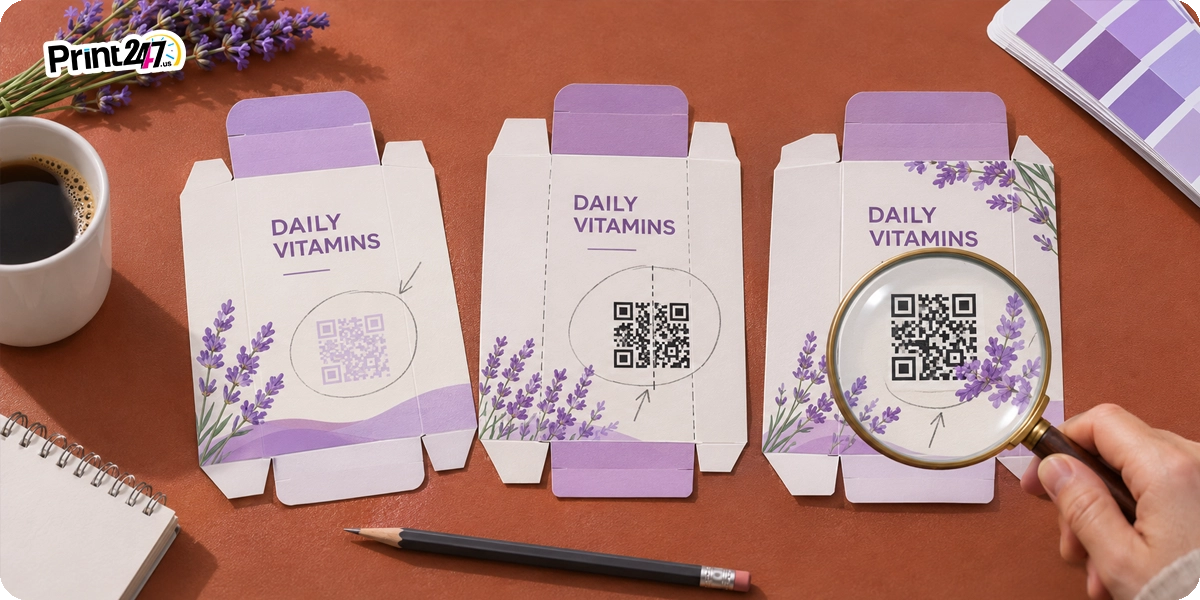
When adding a QR code to your supplement packaging, avoid the following mistakes.
Using a Static QR Code for Authentication
A static code can be copied. It should not be the main anti-counterfeit tool.
Making the Code Too Small
A small code may not scan well on a curved bottle or textured pouch.
Using Low Contrast
A light code on a light background can be hard to scan.
Placing the Code on Folds
If you put the code on the curves and seams, then scanning becomes harder.
Directing Customers to a Slow Page
If the page you redirected customers to after scanning is slow, they might leave before the verification result even arrives.
Final Thoughts – Get Custom QR Code Packaging from Print247
QR code packaging is a suitable option for supplement brands to protect their customers, their brand reputation, their authenticity, and their product from fake ones. It gives customers a way to check, and gives you a record of where fakes are showing up.
At Print247, you can create QR code labels for your supplement bottles, jars, tubs, as well as get custom supplement packaging in the form of Mylar bags and boxes to give your items a premium and verifiable appearance.
We offer custom supplement packaging with low minimum order quantities of just 1,000 pieces, free professional design support, and fast delivery across the USA. Request a free quote today and create smart packaging that helps customers verify your products and trust your brand.
Get a Quick Quote

More Articles
 Bill ‘Hogg’ Ryan
5 Best Pet Treat Packaging Bags for Freshness and Odor Control
 Bill ‘Hogg’ Ryan
Are Inside Printed Pouches Worth the Extra Cost?
 Bill ‘Hogg’ Ryan