








How to Remove Packaging Tape Residue Without Damaging Surfaces?
 March 17, 2026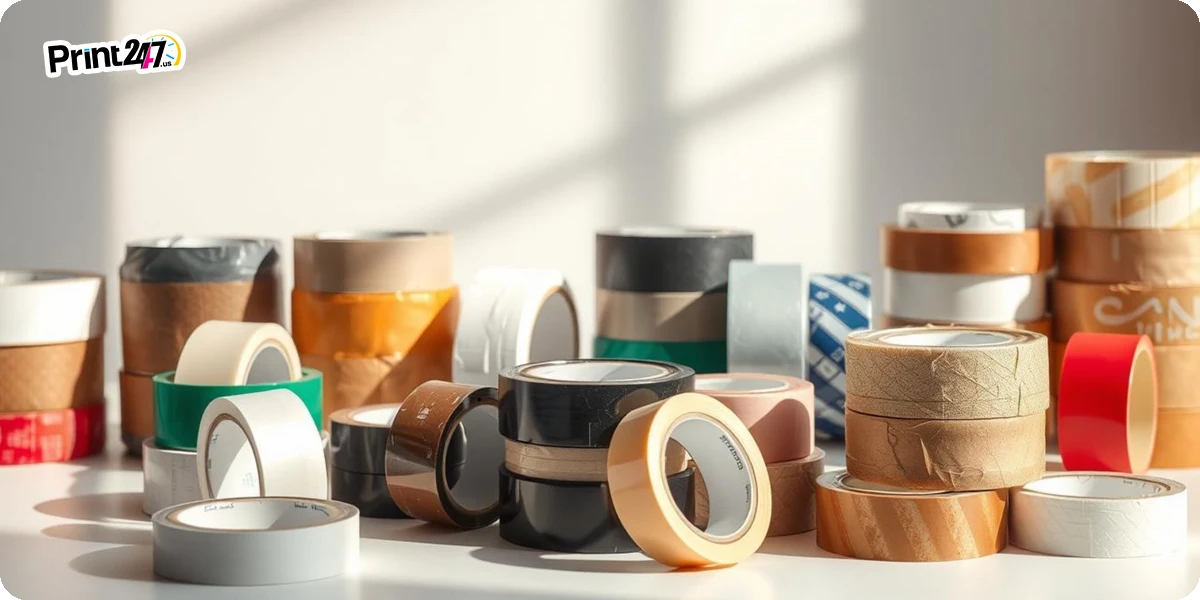
If you want to remove packing tape residue from any surface without damaging it, first soften the adhesive with heat or oil-based products. When removing glue from durable surfaces such as metal, glass, or plastic, try rubbing alcohol. In order to ensure the safety of the product, always test it in a small, hidden area first.
When you run a brand, warehouse, or third-party logistics provider, sticky tape glue on cartons, shelves, or fixtures can cause major headaches. Using too much force can damage prints, make photos look messy, and slow packing teams.
The good news?
You can learn how to remove packaging tape residue in a safe, repeatable way that works for your team on real packaging materials. Throughout this guide, we will discuss safe steps, important safety checks, and six proven methods that work on common substrates your business uses every day.
As well, we'll discuss what happens to white tape, vinyl tape, cloth tape, and film tape over the course of weeks when they're placed on a box or pallet wrap. We want to make sure your staff can quickly and easily remove tape residue without ruining printed cartons, labels, or fixtures that must still look good at retail.
Key Takeaways
Start gentle and only move to stronger chemicals if residue stays.
Always test adhesive remover on a small hidden area first.
Heat, oil, and alcohol all help remove tape residue in different ways.
Match the method to the surface, not just to the type of tape.
Train your team so they know how to remove tape adhesive safely.
Use better tapes in the future to cut down on cleanup time.
What Are Some Precautions For Removing Packaging Tape Residue?
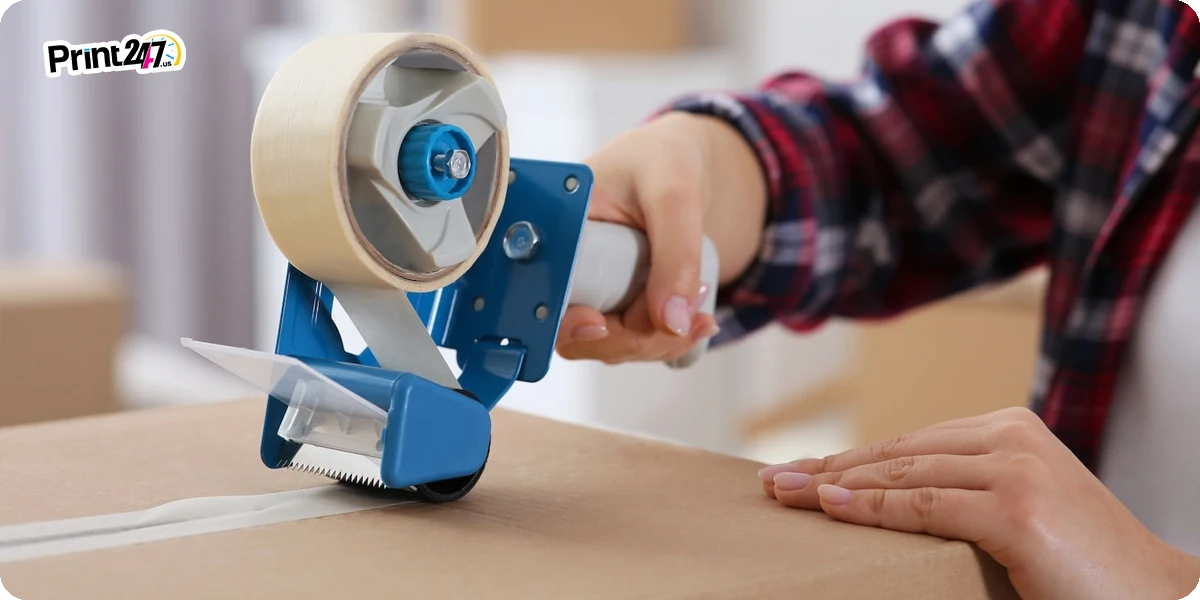
It is imperative to remove packaging tape residue with caution. This step prevents permanent damage to surfaces, such as scratches, discoloration, or paint and finish stripping.
The first thing you should do is protect both the surface and your team before you begin removing tape residue. Solvents that are too strong can etch plastics, dull inks, or cause irritation to the skin. Keeping surfaces clean is more important than ruining packaging or creating unsafe working conditions.
Key precautions:
Test on a small hidden spot first
Wear gloves and eye protection where needed
Work in a well-ventilated area
Avoid strong solvent on soft plastics and fresh print
Never use metal scrapers on glass or coated boards
Keep heat guns away from shrink wrap and films
Do not mix different chemicals on the same spot
Keep products away from open flames
Store chemicals in labeled bottles only
Train staff on disposal of used cloths and wipes
Do not allow staff to guess whether a solvent is safe to use on printed cartons, labels, or plastic. Always have a clear list of approved products and surfaces. One wrong test on the main print area can force you to reprint an entire batch.
6 Proven Ways For Removing Packaging Tape Residue Without Damaging
There are many home remedies for removing tape residue when you search online. When choosing methods for business purposes, it is extremely important that they are repeatable, safe, and fast.
In the following list, you'll find some methods that when used properly work on most packaging surfaces. Initially, try gentle methods, then move on to stronger ones if the glue remains.
Here’s the detail of each tape residue removal method.
Removing Residue with Isopropyl Alcohol
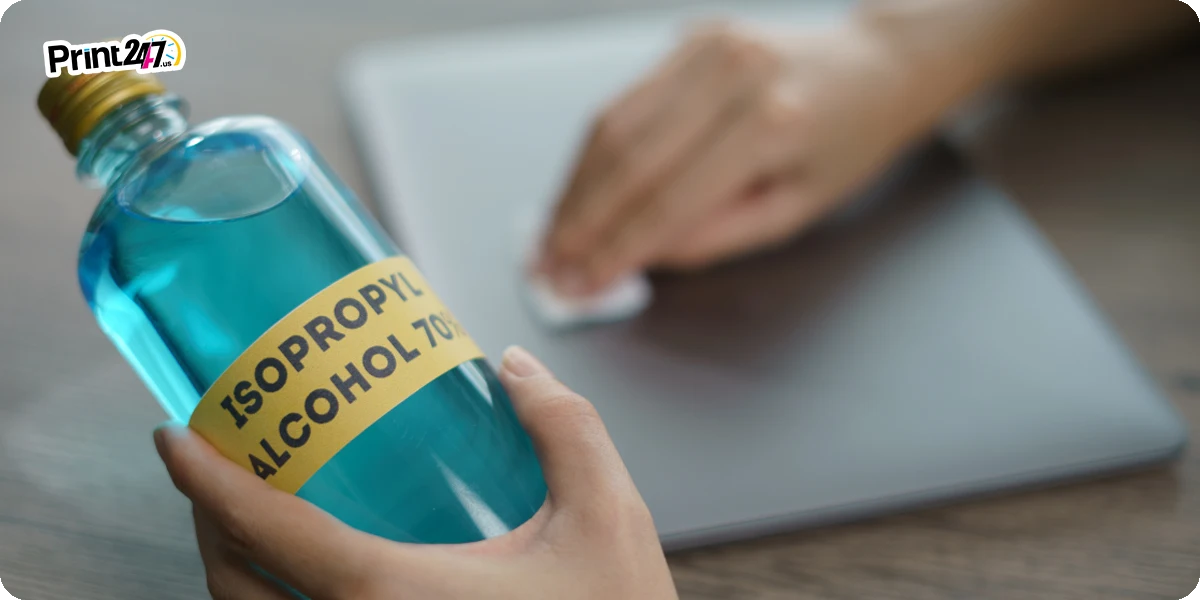
Isopropyl alcohol is often the first choice for operations teams asking how to get tape residue off without harming print. It is strong enough to soften many acrylic and rubber adhesives, yet still fairly gentle on most coated boards, metals, and some plastics.
How to use it:
Use 70 to 90% isopropyl alcohol
Apply to a soft cloth, not straight on the surface
Press the cloth on the glue for 10 to 20 seconds
Wipe in one direction, do not scrub in circles
Repeat if needed, then dry with a clean cloth
Alcohol works well on labels, printed cartons, and shelving where other chemicals might be too harsh. It is also handy when staff search how to clean tape residue from scanners, tools, or metal racks. Just remind your team to keep it away from open flames and to avoid soaking corrugated boards, which can weaken if they take on too much liquid.
Using Soapy Water for Delicate Surfaces
Warm soapy water sounds simple. However, it is still one of the safest ways when handling delicate substrates or sensitive print. If packaging tape residue remains on new cartons, POS displays, or signage, you should remove it using this gentle route.
Use this method for:
Light residue from low tack white tape
Recent applications of film tape on glossy boards
Plastic bins where you do not want solvent marks
Steps:
Mix warm water with a small amount of dish soap.
Dampen a microfiber cloth; do not flood the surface.
Hold it over the residue for 30 to 60 seconds.
Wipe gently, then dry right away.
When the glue does not move, you should use a stronger solution, like alcohol or oil. In any case, your team should always start here whenever they are unsure about how to remove tape residue. By using it, you reduce the risk of damage to your branded packaging.
Breaking Down Adhesives with Oil-Based Solutions
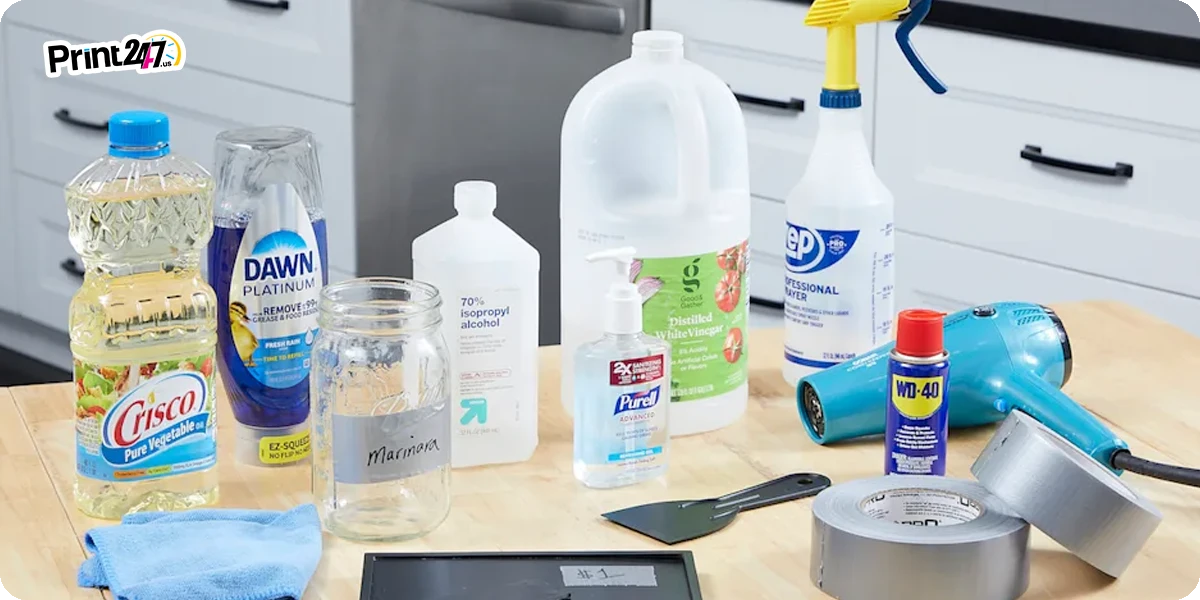
The use of oil-based products becomes necessary when alcohol is not sufficient. This loosens the bond between the adhesive and the surface, which in turn breaks down pressure-sensitive glue. Many brands with old stickers, labels, or heavy packaging tape ask how to remove the residue.
How to use this method:
Apply a small amount to the glue line.
Wait 1 to 2 minutes to let the oil work into the adhesive.
Gently scrape with a plastic card or squeegee.
Wipe off softened glue with a clean cloth and mild soap.
When vinyl or cloth tape is stored for a long period of time, oil-based solutions tend to leave thick, gummy residues. Make sure your team avoids soaking porous cartons, as oil can leave marks on uncoated boards, which may appear in photos.
Using Acetone or Nail Polish Remover
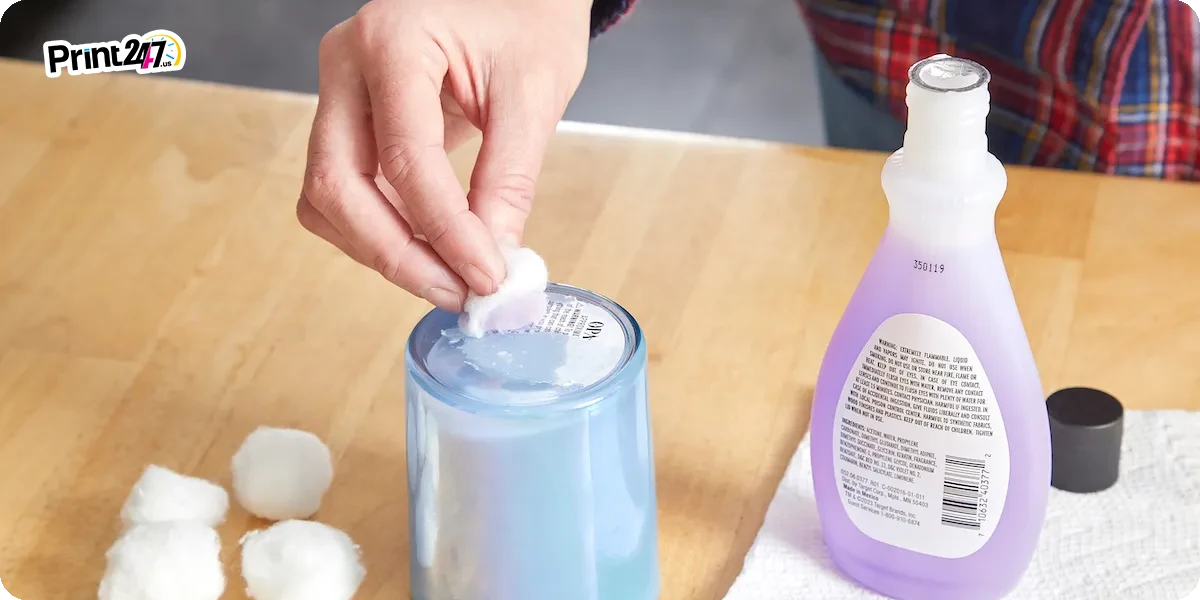
A strong solvent is acetone, which is commonly used in nail polish removers. These techniques can quickly soften certain tape glues, but they are also more risky. Ideally, these should be used on metals, glass, or very stable plastics, not fresh prints or soft materials.
This route is more advanced. It is often part of the process for removing tape residue in industrial settings where speed matters.
Good use cases:
Glass doors and windows
Metal shelving, carts, or racking
Tools and equipment, away from labels and safety marks
Process:
Check the safety data sheet for the solvent.
Use gloves and work in a ventilated area.
Apply a tiny amount on a cloth and test in a hidden spot.
If safe, wipe the residue in short strokes.
Rinse with mild soapy water and dry.
The strength of acetone makes it inappropriate to use it on printed packaging, plastics, or warehouse floors without prior approval. As teams learn how to remove tape adhesive, make sure your SOP clearly specifies which surfaces are safe and which are not for strong solvents.
Heat and Scraping Methods for Hard Residue
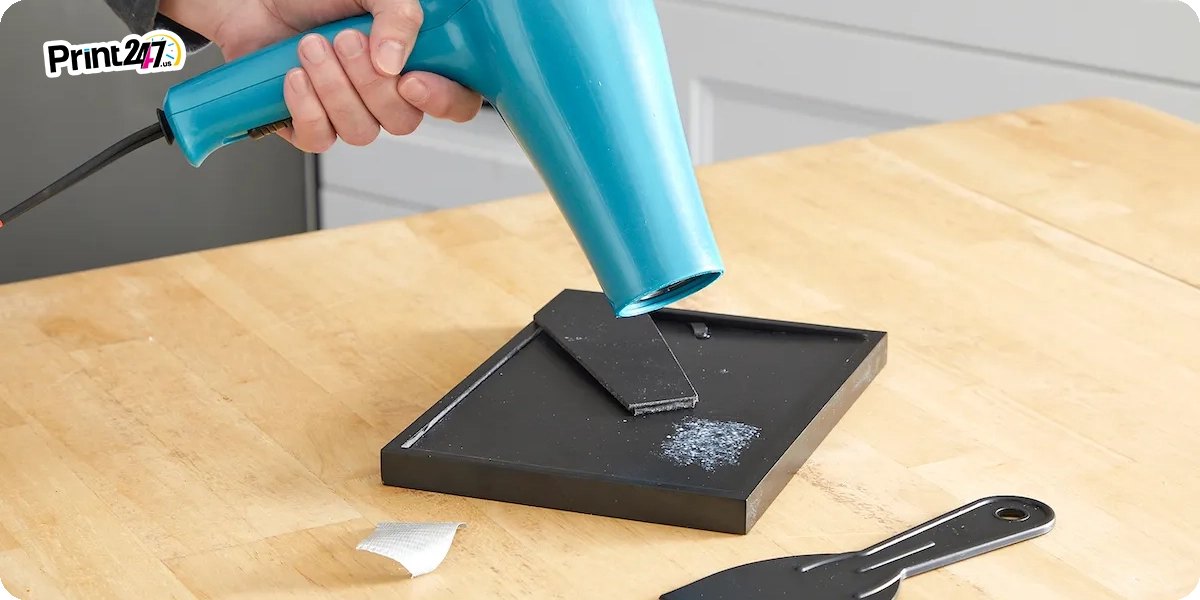
Some residue has baked in from sunlight, storage, or heat tunnels. It is easier to remove glue when controlled heat is added instead of harsh chemicals. The approach works well for long-term film tape or vinyl tape on sturdy surfaces.
Here are common tools required for removing packging rape residue with scrapping method:
Hair dryer or low-setting heat gun
Plastic scraper or old loyalty card
Microfiber cloth
Steps:
Warm the tape line for 15 to 20 seconds.
Gently test the glue with your scraper.
Lift small sections at a time instead of one big chunk.
Wipe any remaining smear with alcohol or mild adhesive remover.
You should avoid using this method on shrink films, stretch wrap, and items near products that are sensitive to heat, such as cosmetics and food packaging. In the right circumstances, heat can shorten cleanup time and give your team a quick solution to removing stubborn tape residue from pallets, crates, or metal fixtures.
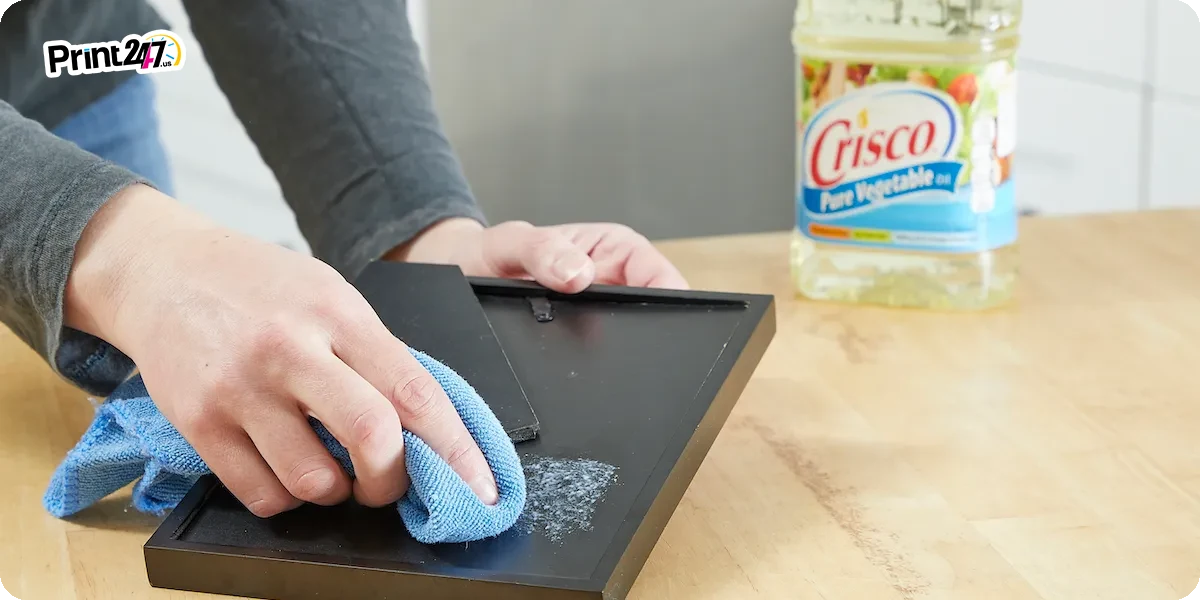
Applying Cooking Oil or WD-40
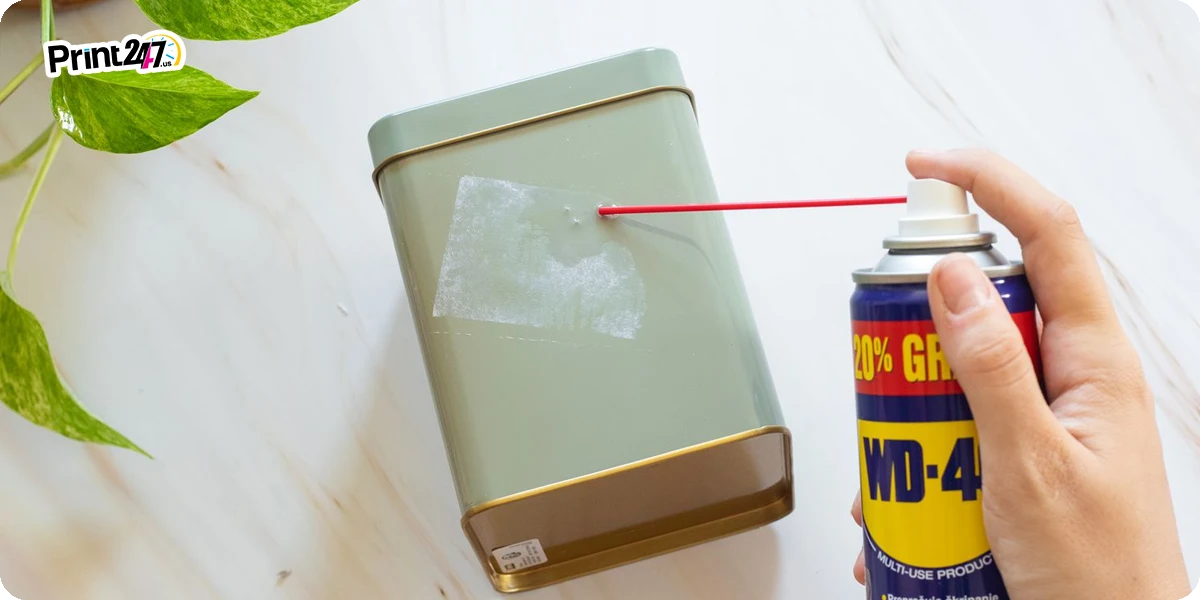
When companies ask how to remove tape residue on a budget, everyday products like cooking oil or WD-40 often come up. These are not just home tricks; they can be practical in warehouses, too, as long as you control where and how they are used.
Use cases:
Old cloth tape on metal carts or fixtures
Masking or white tape on tools and non-food contact equipment
Heavy glue spots on pallets or crates
How to use:
Spray or apply a small amount only on the glue, not the whole surface.
Wait a minute to let the oil soften the adhesive.
Wipe away with a rag, then clean with soapy water to remove the oily film.
WD-40 should not be used in zones that are associated with food, cosmetics, or pharmaceutical brands. There should be no overspray near primary packaging. The right rules make this method simple to apply when there is no other tool available to clean tape residue.
Final Thoughts
A product's appearance is ruined if sticky glue lines appear on custom boxes, pallets, and fixtures. Consequently, they slow down teams, frustrate retail partners, and have a negative impact on the overall system. When staff learn how to remove packaging tape residue without damaging the surface, they will save time and reduce waste.
Simple SOPs should be created indicating which method to use on each surface. Know when soapy water is appropriate, when alcohol would be safe, and when oil or heat is the best option. It takes time for clean, residue-free packaging to become a standard across your company
If you're looking for new packaging that flaunts a clean design and looks great on the shelf, Print247 can help. As a US-based packaging manufacturer and supplier, this company offers free design assistance, eco-friendly stock, free shipping, quick turnaround, and even physical samples for testing.

 April 2, 2026
 821 Views