








What are the 2026 CBD Packaging Requirements in the USA? A Step-by-Step Guide
 April 6, 2026
CBD packaging requirements in 2026 include child-resistant packaging and FDA compliant labels that show potency level, warning statements, and a QR code linked to COA. Also the packaging should avoid attracting youth under 21 years.
The CBD industry is growing and it's a billion dollar market in the USA. If you’re in the CBD products business then one thing you should keep in mind – 2026 is not the year you guess packaging rules. Regulators are setting new standards and rules. Brands that cut corners on CBD packaging are paying price and facing product seizures, fines and damaged reputations.
The purpose of this well-detailed blog is to prevent you from experiencing such issues in the future. Business owners, brand managers, and packaging buyers will get a no-nonsense overview of CBD packaging rules. We will provide you with a step-by-step compliance checklist and an explanation of federal FDA regulations, child resistant packaging standards, labels, design restrictions, and sustainability trends.
Key Takeaways
Child-resistant packaging is mandatory for all CBD retail products sold in the USA in 2026.
Every package needs a scannable QR code that links directly to a batch-specific Certificate of Analysis.
Youth-appealing graphics, cartoon characters, and health claims are strictly prohibited on any CBD box design.
Labels must show potency, allergens, expiration date, lot number, and required warning language.
Plastic packaging must include a minimum of 25% post-consumer recycled content.
Failure to comply can lead to product seizure, heavy fines, and a permanent market ban.
Why Compliance in CBD Packaging Matters?
If your CBD brand doesn't follow packaging rules and regulations, it is on the verge of legal risk. There are multiple reasons why compliance is important in the CBD industry.
For example, a retailer can pull your product off the shelves if your packaging does not meet current industry standards. Compliance is also on the minds of payment processors and distributors. As CBD packaging regulations roll out at the federal and state levels in 2026.
Staying compliant with these regulations is what separates prosperous companies from those that don't. In this day and age, wholesale and retail accounts require verified packaging standards before they even look at your product. Therefore, compliance builds buyer trust, protects your business from legal trouble, and opens doors to wholesale and retail sales.
What Are Federal FDA Rules for CBD Packaging and Labeling?
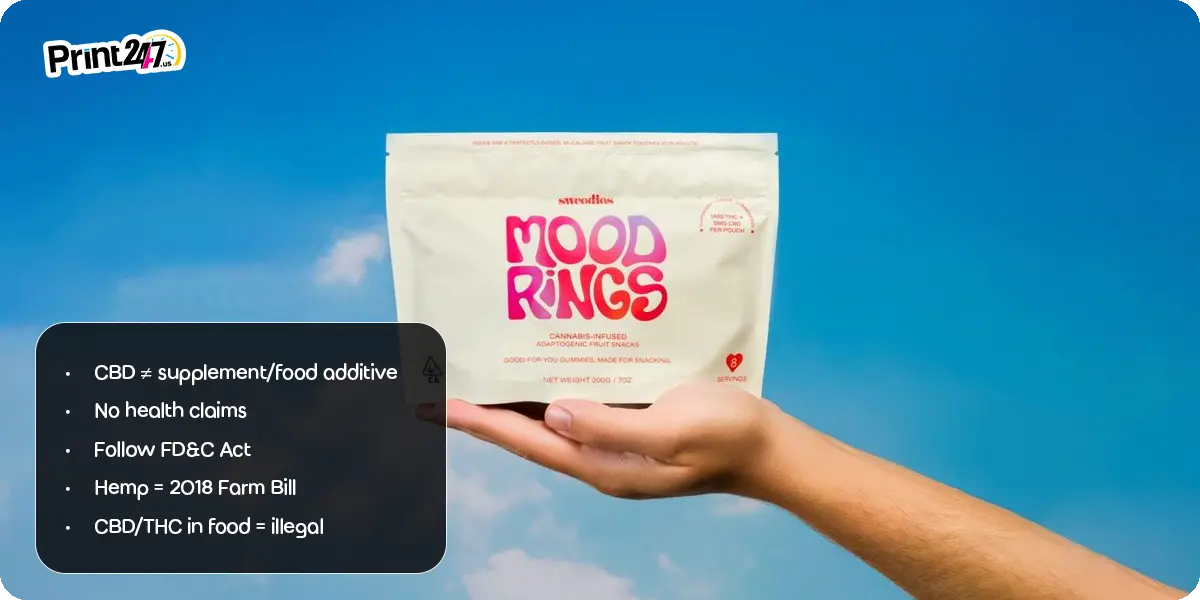
There is no single rulebook FDA follows just for CBD. It gathers data from existing federal laws and regulates CBD products packaging. Business owners should familiarize themselves with FDA regulations of Cannabis before they worry about state-specific restrictions.
Here are some mandatory rules you must follow.
1) CBD Is NOT a Dietary Supplement or Approved Food Additive
It is illegal to market CBD as a dietary supplement or to add it to conventional food according to current FDA regulations. Due to CBD's original study as a drug (Epidiolex), it cannot be reclassified as a supplement by the FDA.
2) No Therapeutic or Disease Claims Allowed on Any Package or Label
You can’t print words like "treats anxiety," "cures pain," or "helps fight inflammation" on your packaging. The importance of staying within legal limits cannot be overstated when labeling CBD. If you use language that sounds like a medical claim, you could trigger regulatory action.
3) Products Must Follow the Federal Food, Drug, and Cosmetic Act (FD&C Act)
The FD&C Act regulates labeling accuracy, ingredient disclosure, and manufacturing standards for all CBD packaging USA products. If the label states that it contains 500mg of CBD per bottle, then lab tests must confirm that number. Misbranding is a federal offense.
4) Hemp Definition Still Tied to the 2018 Farm Bill
The hemp definition that affects full spectrum CBD packaging changes in 2026 is still rooted in the 2018 Farm Bill. There is a limit of 0.3% delta-9 THC in hemp and hemp-derived CBD products. Whatever the label says about your product, it is legally classified as marijuana under federal law if it exceeds that threshold.
5) Warning: Adding CBD or THC to Food Is Illegal in Interstate Commerce
Selling CBD gummies, drinks, or snacks and shipping them across state lines puts you in a legal gray area - or worse, breaks federal law. Interstate CBD shipping regulations 2026 continue to tighten, and food products with CBD face the highest scrutiny.
Your first step should be to understand these federal rules. The rest of the factors, including child safety, labeling, and design rules, are layered on top of this foundation.
Child-Resistant Packaging for CBD Products Is Now Mandatory
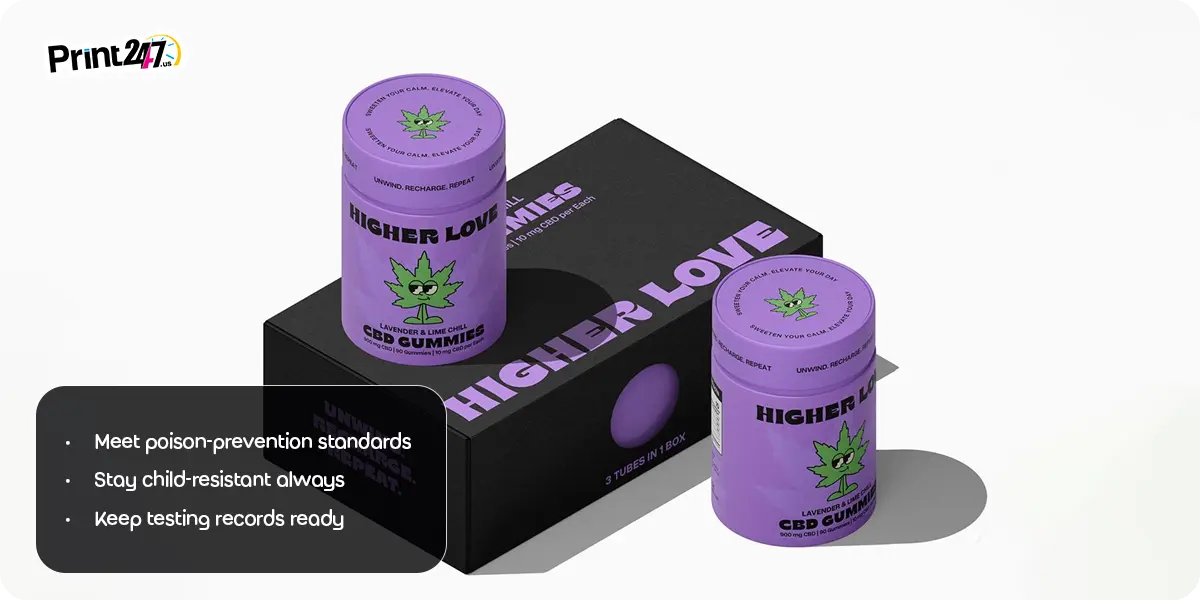
Recently, the child resistant packaging standards have been fully enforced across all CBD product categories as a result of significant changes in CBD packaging requirements. It is no longer an option. It is mandatory for all packaging, regardless of whether you sell tinctures, edibles, topicals, or capsules, to be child-resistant. This is one of the most common mistakes smaller brands make, especially when they order wholesale CBD packaging without checking compliance specs first.
1) Must Meet Poison Prevention Packaging Standards
The Consumer Product Safety Commission (CPSC) sets the rules under the Poison Prevention Packaging Act CBD standards. Your packaging must pass both 1700.15 (effectiveness protocol) and 1700.20 (testing requirements) before it can be sold as child-resistant. There are no exceptions to this rule. It applies to child-proof tincture packaging 2026, edibles, and all ingestible CBD formats.
2) Packaging Must Stay Child-Resistant for the Whole Life of the Product
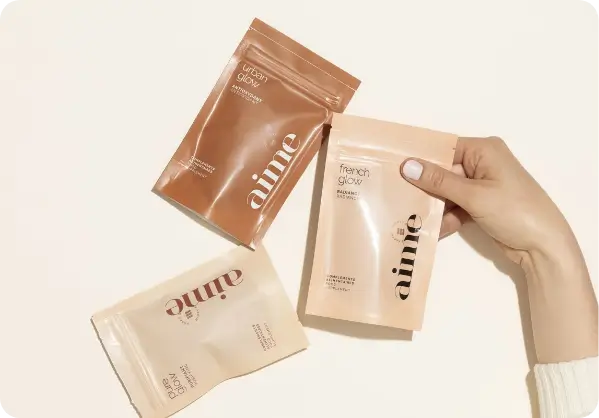
Children-resistant packages that can be opened easily after their first use do not meet the standard. Throughout repeated opening and closing cycles, the resistance must remain the same. If you are choosing custom CBD mylar bags, rigid boxes, or flexible pouches, keep this in mind.
3) Keep Records of Testing. Regulators Can Ask for Them Anytime
It is necessary to provide documentation demonstrating that your packaging has passed certified testing. Besides being a good idea, it is also a legal requirement. In case a regulator, retailer, or state agency ever requests your records, keep them on file for at least two to three years.
Tamper-Evident Features Every CBD Package Needs
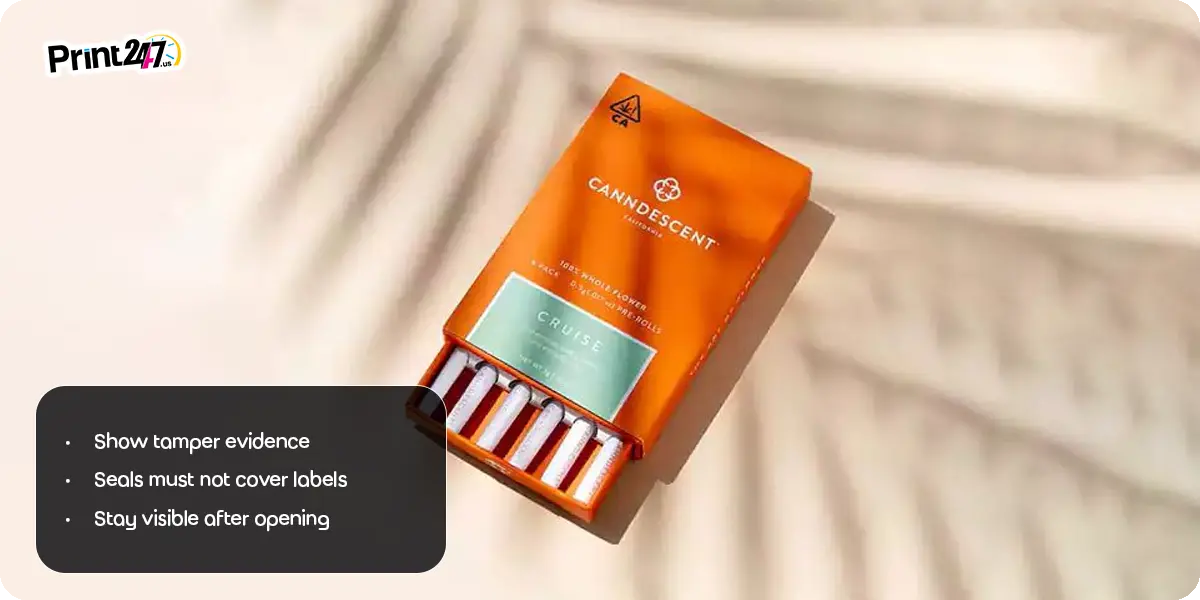
The packaging of all CBD products sold in the USA must be clear if any person opened it before the consumer. In order for retail CBD products to comply with FDA CBD compliance checklist 2026, they must be packaged in tamper-evident packaging. When you’re protecting your customers, you're actually protecting your brand.
Considering the following factors is important in this regard:
1) Packaging Must Show Clear Evidence If Someone Has Opened It
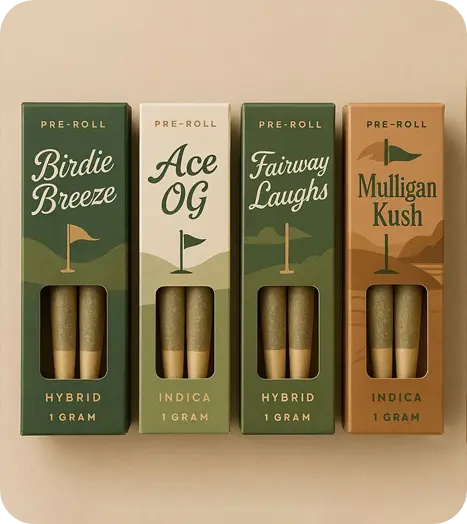
Your packaging must include tamper-evident features like shrink bands, breakaway seals, and induction-sealed liners. It is crucial that a consumer can look at your package and immediately identify if it has been touched. This is especially essential for opaque CBD edible packaging since the product cannot be seen through the container.
2) Tamper-Evident Seals or Bands Cannot Hide or Cover Required Labels
The tamper seal cannot cover any of the label information legally required, including warning text and QR codes. Design your packaging so that the seal sits above or around the label panel rather than over it. If brands don't review placement guidelines first before ordering CBD packaging boxes, they often make this mistake.
3) Must Remain Visible Even After the Package Is Opened
A consumer must still be able to see the evidence of opening on a package after breaking the tamper seal. It is for this reason that one-way tear strips and permanent shrink bands are more effective than reusable clips or stickers.
What Are CBD Packaging Labeling Rules You Must Follow in 2026?
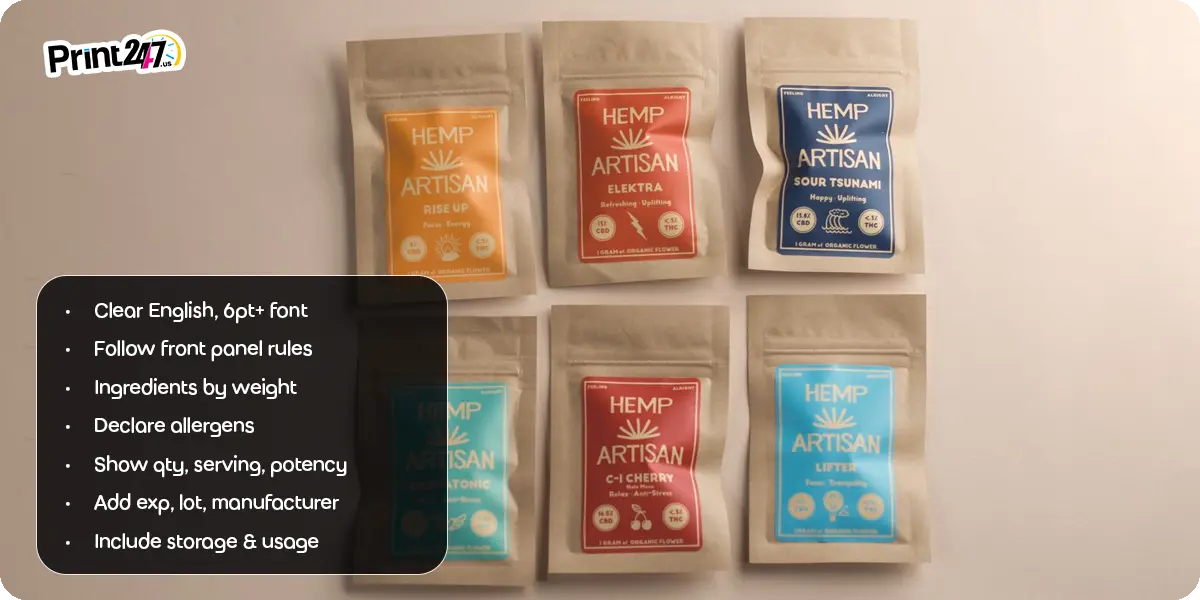
The most common mistake brands make is on their CBD labels. A single missing element on the CBD label can cause the entire product to be non-compliant with the 2026 CBD labeling requirements. Check every label line by line in this section prior to finalizing any custom CBD box design compliance work.
Here are important rules to keep in the mind.
1) All Labels Must Be Clear, in English, Minimum 6-Point Font
The words on your label must be readable without a magnifying glass. It is not permitted to use decorative fonts for required label text that shrink below 6 points. Selling in bilingual markets requires that English be the primary language.
2) Principal Display Panel (Front of the Box) Rules
There must be a clear indication on the front of your box that it contains hemp-derived CBD, as well as the product name, amount, and net quantity. When your product falls under FDA food labeling rules, the panel must take up at least 40% of the front face.
3) Full Ingredient List (Ordered by Weight)
Ingredients must be listed from the most concentrated to the least concentrated by weight, starting with the CBD extract and finishing with the carrier oil, preservatives, and flavorings. This applies to all CBD packaging options, including tinctures, gummies, and topicals.
4) Major Allergens Must Be Declared
If your product contains tree nuts, soy, dairy, wheat, or any other major allergen as defined by FALCPA, it must be declared on the label. "Contains: Coconut" or "Contains: Soy" must appear near the ingredient list.
5) Net Quantity, Serving Size, and Potency
On your label, you must indicate the total mg of CBD (and THC, if applicable) per serving and per container. CBD labeling requirements place a high priority on this aspect, and inspectors usually look at it first. It is mandatory that round numbers match COA results within a reasonable tolerance.
6) Expiration Date, Lot Number, and Manufacturer Details
Each CBD packaging unit must include an expiration or best-by date, a lot or batch number for traceability, and the manufacturer's name and address. In order to comply with interstate CBD shipping laws, this is required.
7) Storage Instructions and Usage Directions
Must provide instructions on how to store the product (cool, dry place or refrigerate after opening) and how to use it (number of drops, application method, etc.). The absence of these two elements is a common problem in CBD wholesale packaging.
What Are Required Warnings That Must Appear on Every CBD Package?
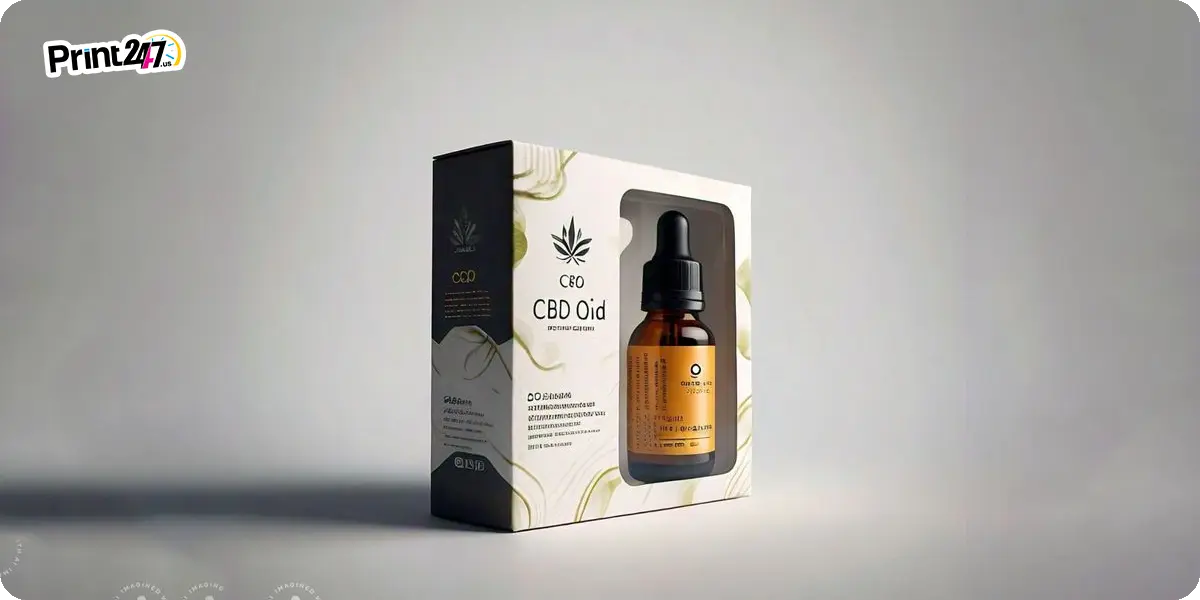
Brands aren't allowed to get creative when it comes to warning language. In order to comply with the law, you must include what you need to say on your CBD packaging. These warnings are neither optional nor suggestions. They cannot be buried in tiny print on the bottom of the box.
Here are the required warnings for CBD packaging:
"This product contains cannabis and THC"
"KEEP OUT OF REACH OF CHILDREN AND PETS. For use only by persons 21+"
"Warning: Do not use if pregnant or nursing"
Poison Control number: 1-800-222-1222
Product-specific warnings (edibles, topicals, inhalables each have their own language)
One rotating public health warning (covering topics like addiction, impaired driving, or mental health effects)
You must include each and every one of these on your retail packaging. Be sure to check your target state's laws before printing. State laws may add additional warnings to these federal ones. Those brands that handle CBD packaging screen printing in-house must build these warnings into their design templates before production begins.
What Happens If You Don't Comply With CBD Packaging Laws?
If your brand fails to comply with CBD packaging regulations can have serious negative consequences. FDA and state regulators can seize your products, issue warning letters, require recalls, and impose significant fines. CBD brands caught selling non-compliant child-resistant packaging have faced penalties under the Poison Prevention Packaging Act. This act carries civil and criminal penalties.
If the retailer discovers that your product does not comply with compliance regulations after ordering it, they may sue you for breach of contract. When it comes to brands, a single compliance failure can ruin years of hard work. Compliance checks are now part of the wholesale deal buying process from B2B companies. If your CBD labeling requirements are not met, you simply will not get the account.
Design Rules: What You CANNOT Put on CBD Packaging?
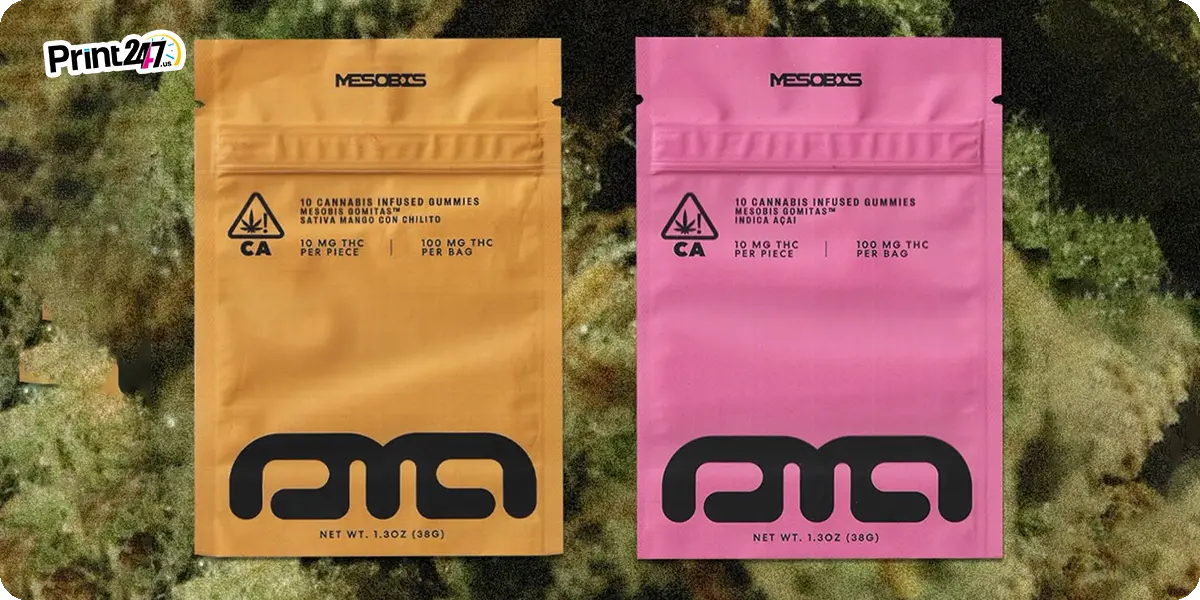
It's not just about putting the right words on a label when it comes to CBD box design compliance. You are also required to comply with the rules regarding what you put on your package's visual design. This trend is also being followed by the federal government, as several states have already banned certain graphics.
Here is what is not allowed to design or print on your CBD packaging:
No health claims or medical-sounding language
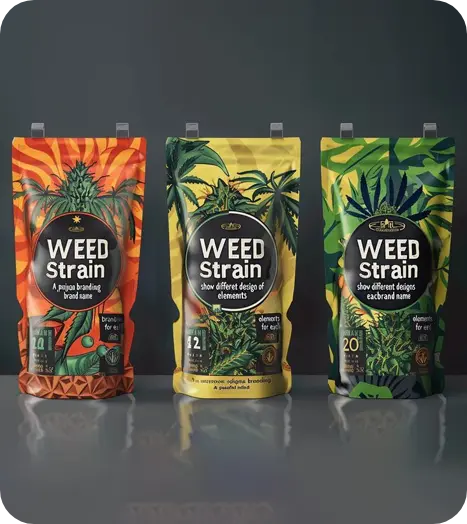
No cartoons, mascots, or youth-appealing images
No references to candy, cookies, soda, or children's products
No designs that look like they are intended for people under 21
No "organic," "vegan," "gluten-free," or "kosher" unless you have certified proof
There is a clear reason why these rules exist. The FDA does not want CBD products to reach minors, and packaging that appears to be designed for children is not acceptable. It is important to inform your designer of these restrictions at the outset of the design process. It is expensive and time-consuming to fix a design violation after it has been printed.
Final Thoughts
Selecting the right supplier is the first step to setting up your packaging right. Print247 is a leading packaging manufacturer in the USA, founded to serve CBD brands that take compliance seriously. We offer a wide range of formats to fit your product's needs, such as child-resistant CBD packaging boxes or eco-friendly CBD packaging bags.
With us, you get free design support from a team that understands CBD packaging regulations 2026 inside and out. All orders come with free shipping, fast turnaround, physical samples before production, and PFAS-free options. Print247 is the partner CBD brands across the USA trust for compliant packaging that also looks great on shelves.

 April 8, 2026
 875 Views