

Carefully selected materials that deliver exceptional print quality, durability, and shelf presence.


 New
New









Types of Toy Boxes: 11 Custom Packaging Styles for Brands
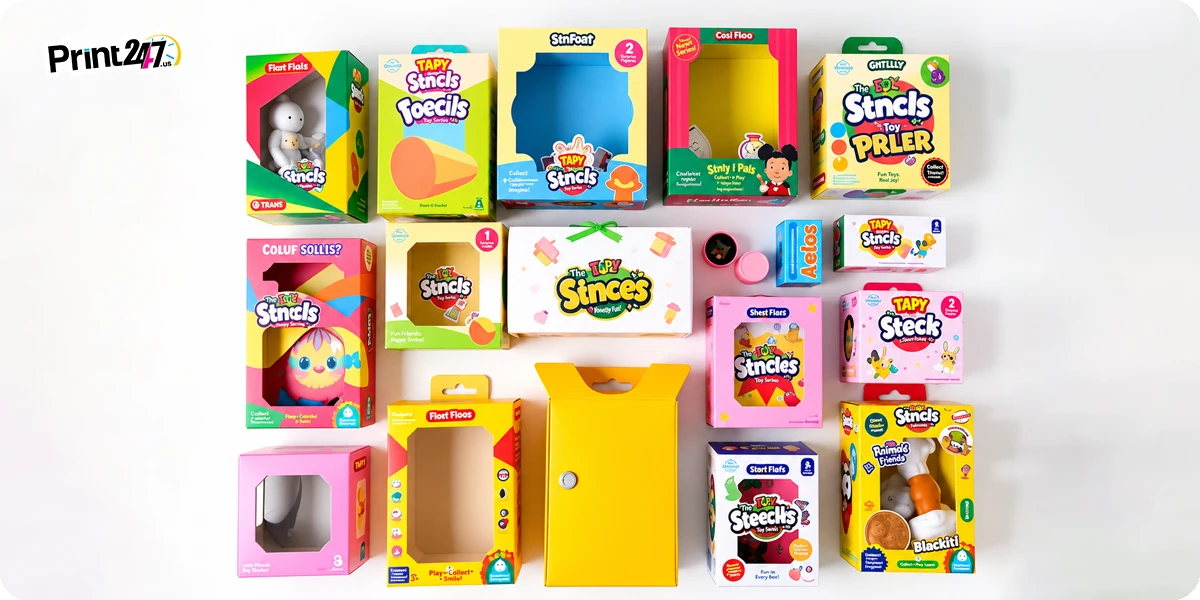
The box is the first thing a buyer or retail partner judges before they even see the toy inside. Your packaging sets expectations immediately. If your box looks cheap or crushed, no one is going to purchase it.
A toy box is the printed box in which the toy ships and is sold. You can use it to protect your product and attract shoppers' attention. Most brands choose from rigid, window, display, handle, sleeve or custom shaped styles, plus boxes built for action figures, dolls, puzzles and board games.
Choosing the right toy box packaging helps your products stand out on crowded shelves. You will learn about 11 unique toy box packaging styles. You will know exactly which custom printed toy boxes fit your product best by the end of this blog.
What Are Toy Boxes in Packaging?
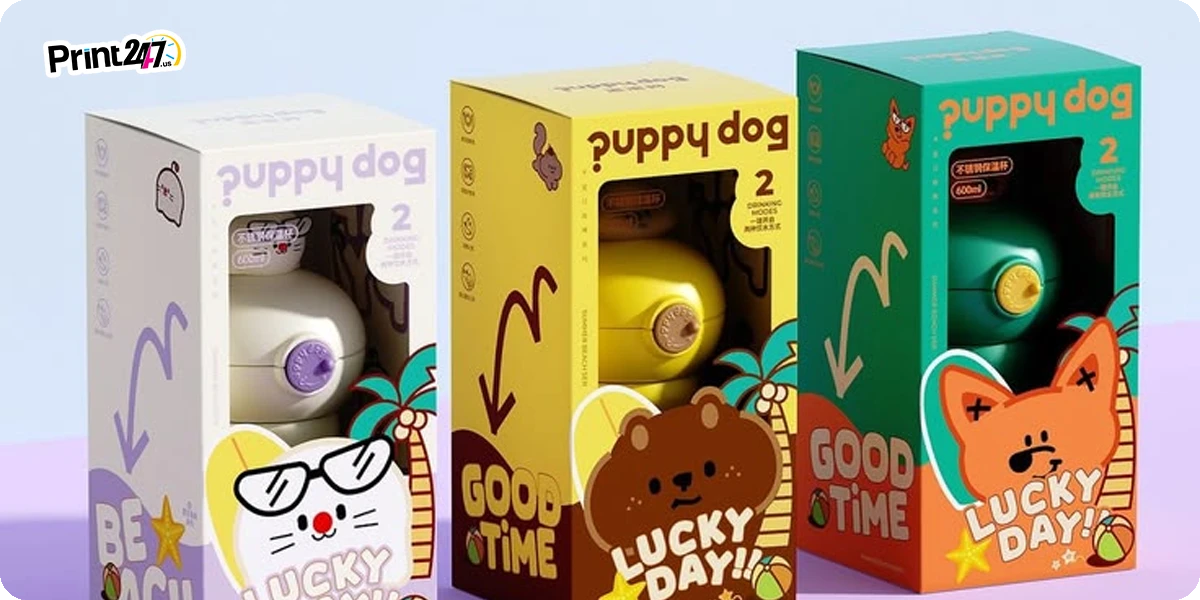
Toy boxes are the display and shipping containers designed specifically to pack all types of toys. These boxes protect and present a toy to buyers.
Brands choose them due to three main reasons:
They protect fragile items from damage during shipping.
They create a strong shelf presentation to catch the buyers eye.
They communicate your brand identity clearly.
These packaging boxes are very different from wooden or plastic home storage chests. A home chest simply stores items in a playroom. Retail toy packaging actually sells the item. It acts as a marketing tool on the store shelf. When toy packaging for small brands is done correctly, it brings products to life. It makes your brand look highly professional. Shoppers make quick purchasing decisions, and strong retail toy packaging makes them choose your item.
Why the Right Toy Box Style Matters for Your Brand
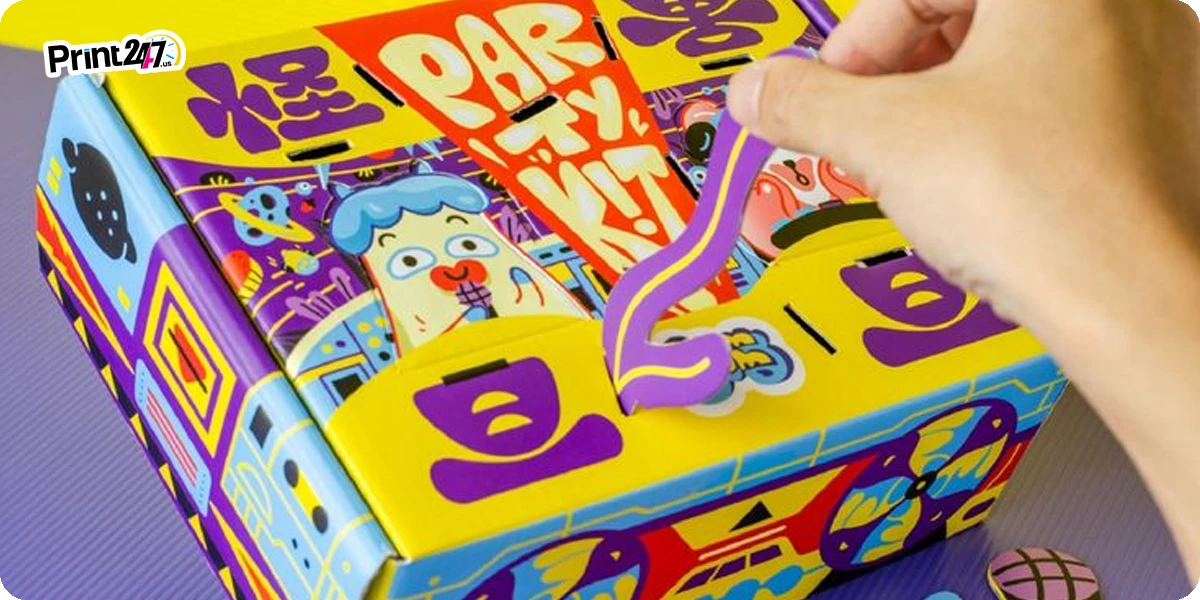
A great packaging style solves several major business issues at the same time. Your choice directly impacts your costs and sales. You can instantly increase the attractiveness of your product by choosing the perfect design. A great unboxing experience increases perceived value and facilitates repeat purchases.
Stand out on the shelf - Bright graphics and unique shapes grab attention fast and increase your sell through rates.
Protect fragile pieces - Secure inserts prevent broken parts. It means you process fewer returns from unhappy buyers.
Meet safety rules - Proper sizing leaves room for CPSIA compliance text, age grading, and choking hazard labeling.
Control low volume costs - Picking efficient folding carton styles keeps your prices reasonable at lower production volumes.
11 Types of Toy Boxes for Your Brand
These 11 styles were grouped according to the main function for which they were designed. Our discussion will include premium presentation options, retail display units, and packaging tailored to specific products. Every brand has unique needs.
In the sections below, you will learn about each style, its best products, the materials used, and why companies choose it.
1. Rigid Toy Boxes for Premium and Collectible Products
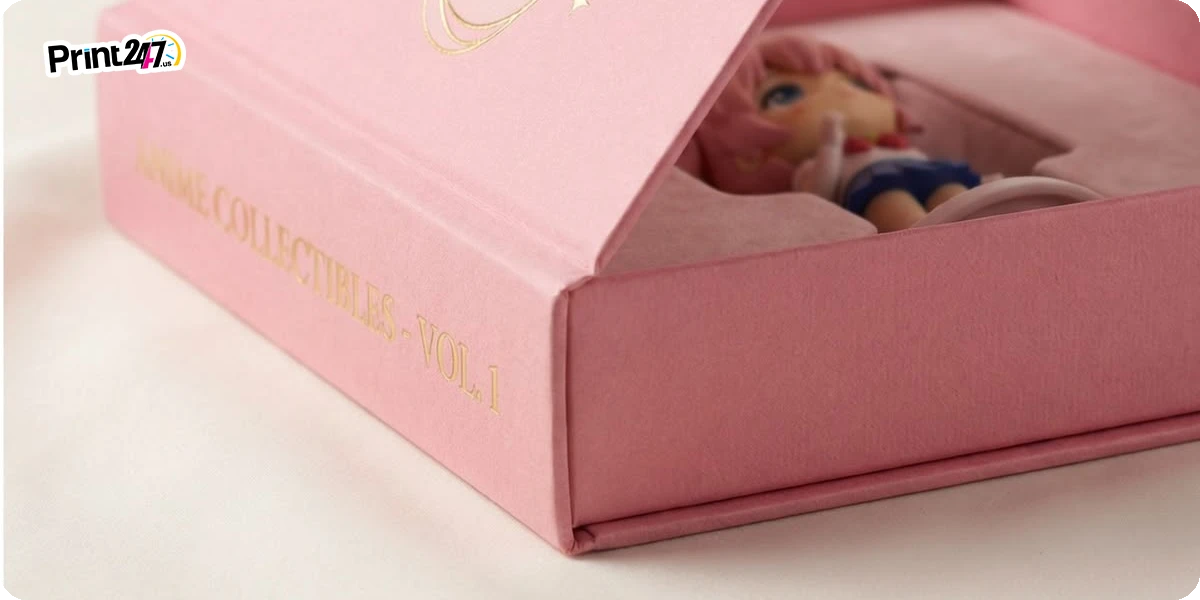
A rigid toy box is a thick and non collapsible chipboard container wrapped in custom printed paper. We call it rigid because the thick walls do not bend or fold flat.
Best for: High end collectibles, limited editions, and expensive gift sets.
Materials and finishes: Thick chipboard base wrapped in printed paper. Often finished with matte or gloss lamination, magnetic closures, spot UV, or foil stamping.
Why brands choose it: This style delivers a highly premium feel. It offers incredibly strong protection for delicate items. Buyers also tend to keep these containers for years which adds great reuse value to your custom toy boxes.
2. Window Toy Boxes That Let the Toy Sell Itself
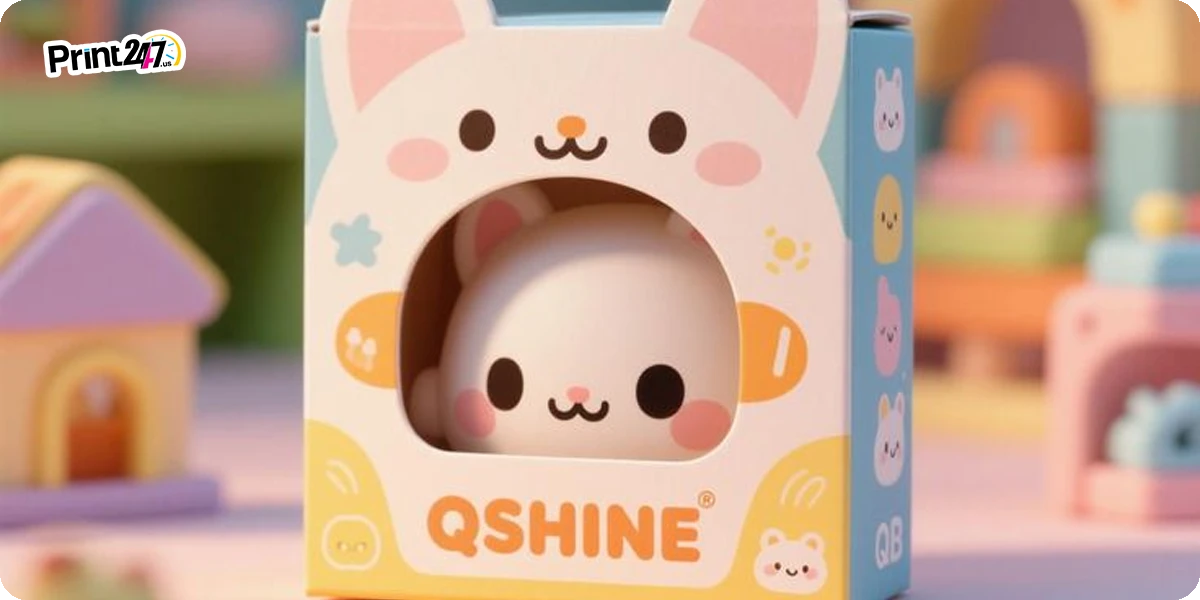
A die cut window toy box has a cut out panel on the packaging that is usually covered with clear plastic film. It lets shoppers see the actual product inside.
Best for: Plush items, detailed figures, and small toys that need visual proof of quality.
Materials and finishes: Paperboard or SBS paper. The clear film can easily be shaped to match the product outline.
Why brands choose it: Maximum product visibility builds immediate trust. Mismatched expectations are less likely to lead to returns when buyers see exactly what they get. Keeping exposed products secure requires stronger internal support.
3. Display Toy Boxes for Retail Shelves and Counters
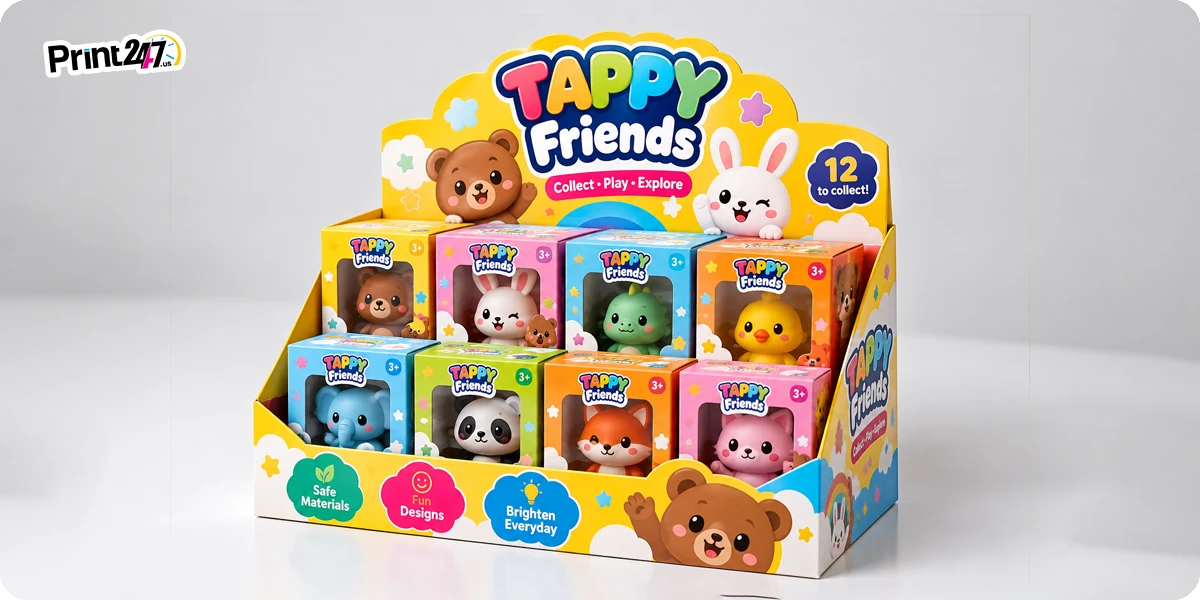
These are display ready toy boxes that easily fold open to double as shelf or counter units. Retailers simply open the top and place the whole unit on the counter.
Best for: Blind box series, small collectibles, and quick impulse items near the cash register.
Materials and finishes: Corrugated cardboard or sturdy paperboard with bright retail toy packaging graphics.
Why brands choose it: Retailers love these because they require much less labor to stock. Faster restocking means your product hits the shelf quicker. They also create a unified brand presence that catches the eye of shoppers walking by.
4. Kids Product Packaging Boxes with Carry Handles
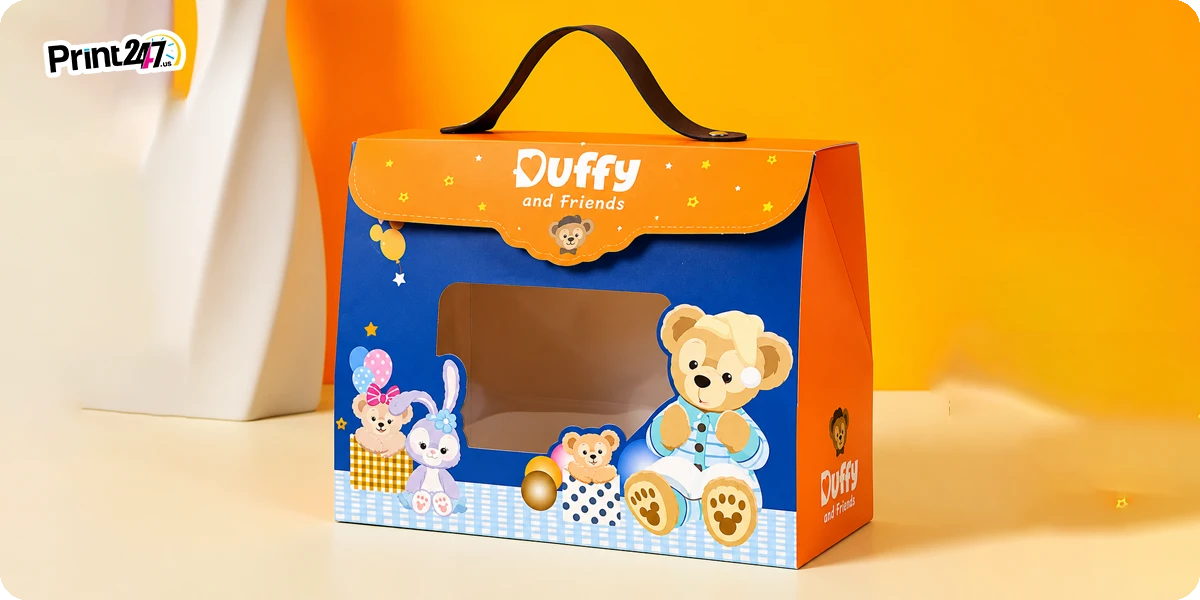
Kids product packaging boxes make carrying playsets and multi piece products very easy. The built in handle sits right at the top for quick grabbing.
Best for: Activity kits, larger vehicle sets, and bulky gift items.
Materials and finishes: Thick corrugated material or heavy folding carton stock. Bright colors and gloss finishes work very well here.
Why brands choose it: Parents love the immediate portability. The handle design adds a huge amount of gift giving appeal. When designing your custom toy packaging, make sure the handle supports the weight of the item inside.
5. Origami Box Kit Sleeves for Craft and Activity Sets
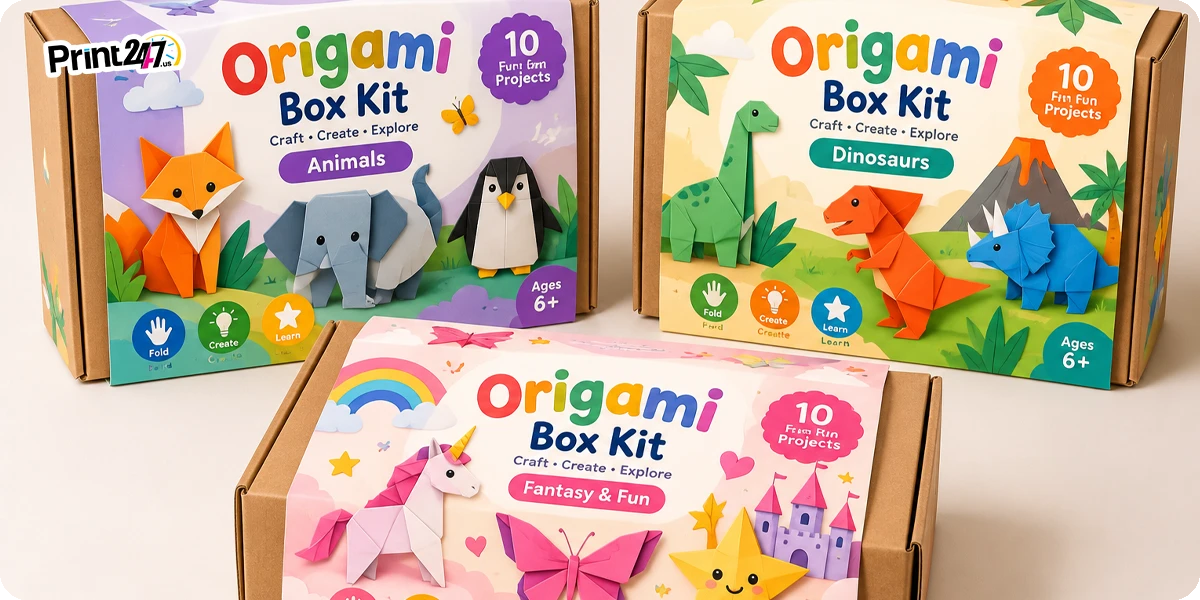
An origami box kit sleeve is a printed outer wrap that slides smoothly around an inner tray or plain box.
Best for: Children's art sets, craft bundles, and DIY hobby kits.
Materials and finishes: Strong corrugated inner trays covered with lightweight paperboard sleeves.
Why brands choose it: This sleeve and tray pairing creates a highly layered unboxing moment that buyers remember. It also allows for an easy assembly process. The inner tray can be used for any kit, and the sleeves can be swapped out for different kits.
6. Custom Shaped Game Boxes for Standout Launches
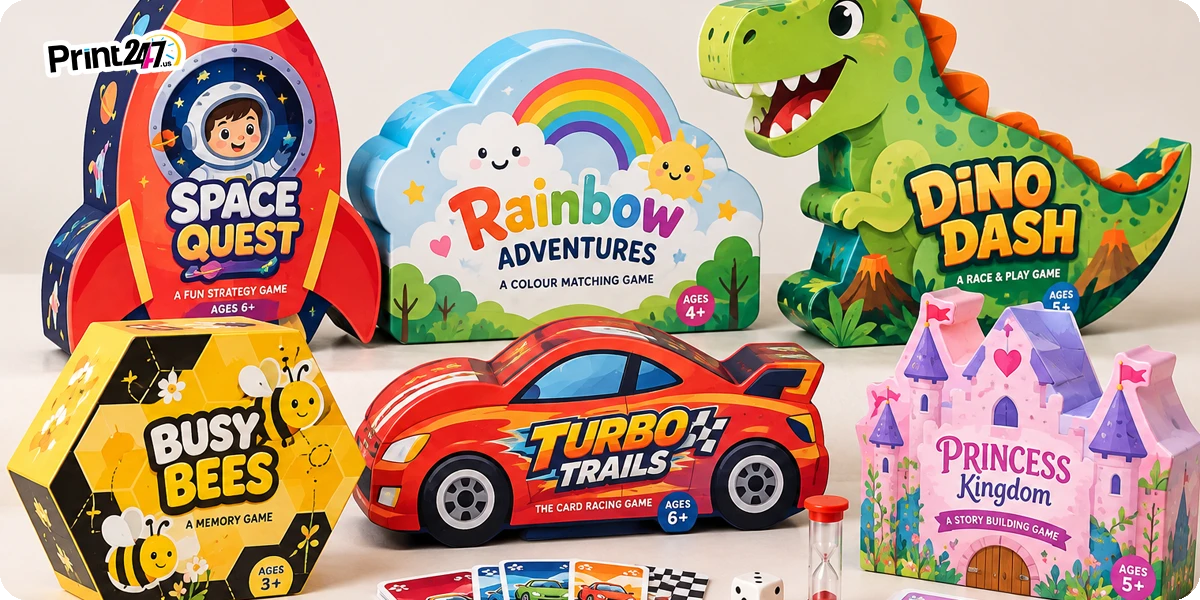
Boxes are cut and formed into non standard shapes that match the product theme perfectly. Instead of a square, custom shaped game box might look like a spaceship or a house.
Best for: Highly themed games and novelty play sets.
Materials and finishes: Requires a unique dieline which is the flat layout showing exactly where to cut and fold.
Why brands choose it: Nothing beats instant shelf recognition. Unique shapes build massive brand distinctiveness. Just remember that custom shapes require extra tooling and prototype time. So plan your schedule carefully to keep your launch on track.
7. Fantasy Puzzle Boxes for Puzzle and Hobby Brands
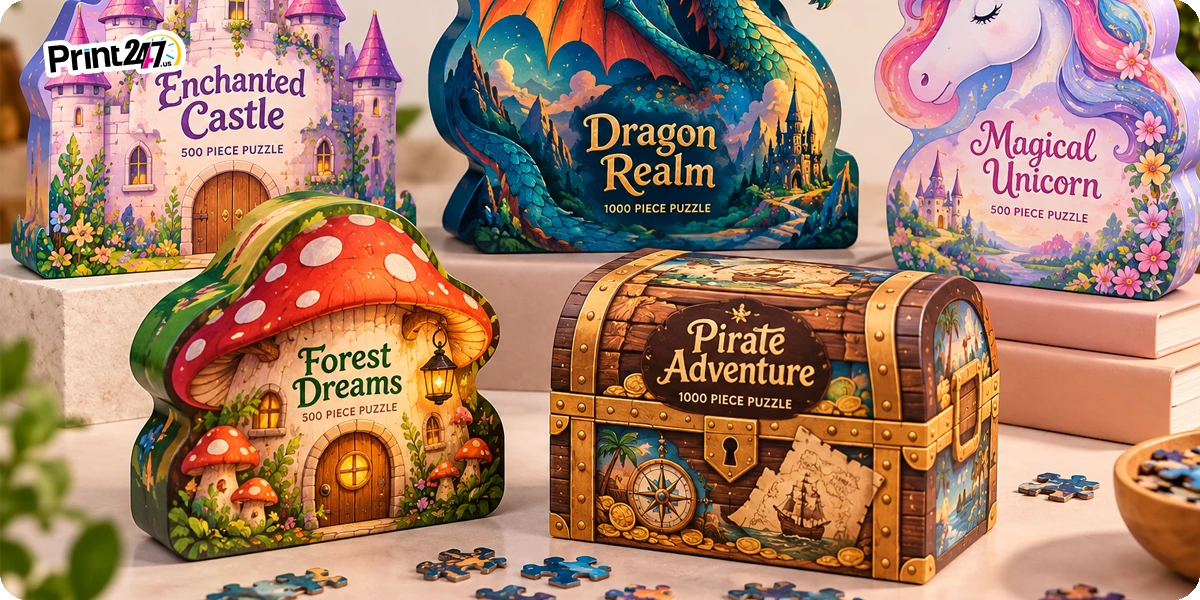
Fantasy puzzle boxes are very sturdy lift off or hinged containers made specifically to hold hundreds of small pieces securely.
Best for: Jigsaw puzzles and intricate hobby building sets.
Materials and finishes: Very thick chipboard with matte lamination to reduce glare under store lights.
Why brands choose it: Puzzle pieces easily get lost. There are strong walls and a very tight lid fit to prevent pieces from shifting or escaping during transit. Also, the large flat top serves as a great canvas for displaying the finished puzzle.
8. Action Figure Boxes That Protect and Showcase
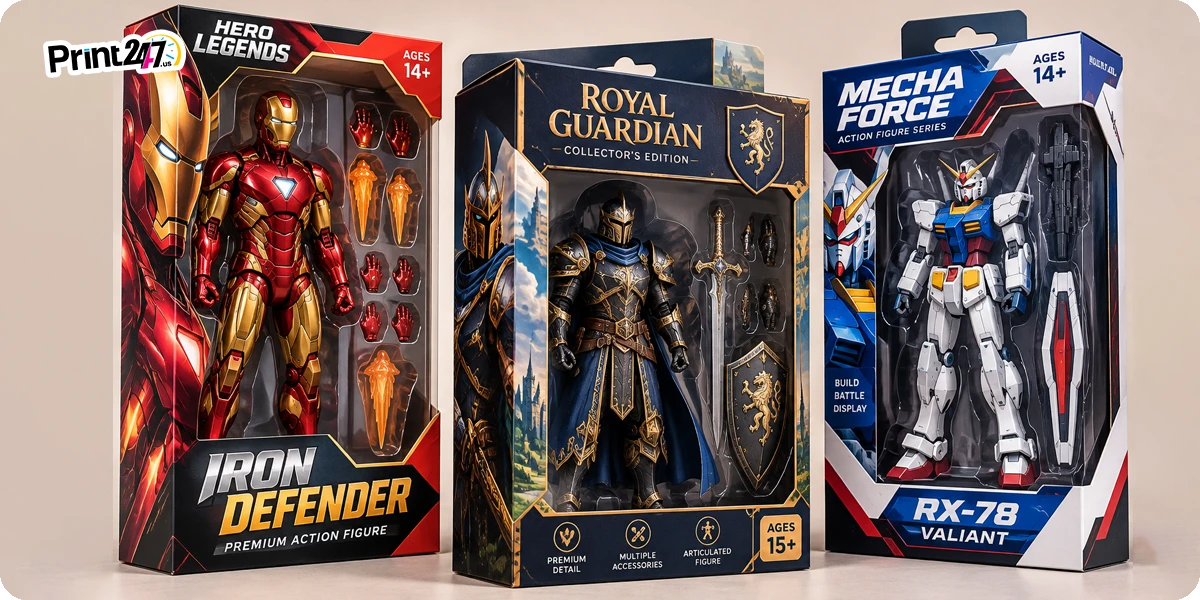
This packaging uses windows and internal trays to keep figures and their tiny accessories locked firmly in place.
Best for: Collectible action figures and matching accessory kits.
Materials and finishes: Paperboard with a custom insert. The insert is usually molded plastic or formed cardboard that gently hugs the toy.
Why brands choose it: Collectors heavily judge the box condition. Action figure boxes offer display quality presentation and serious damage protection. High quality window toy boxes appeal directly to serious collectors who prefer to keep their items perfectly sealed.
9. Board Game Boxes Built for Shipping and Shelves
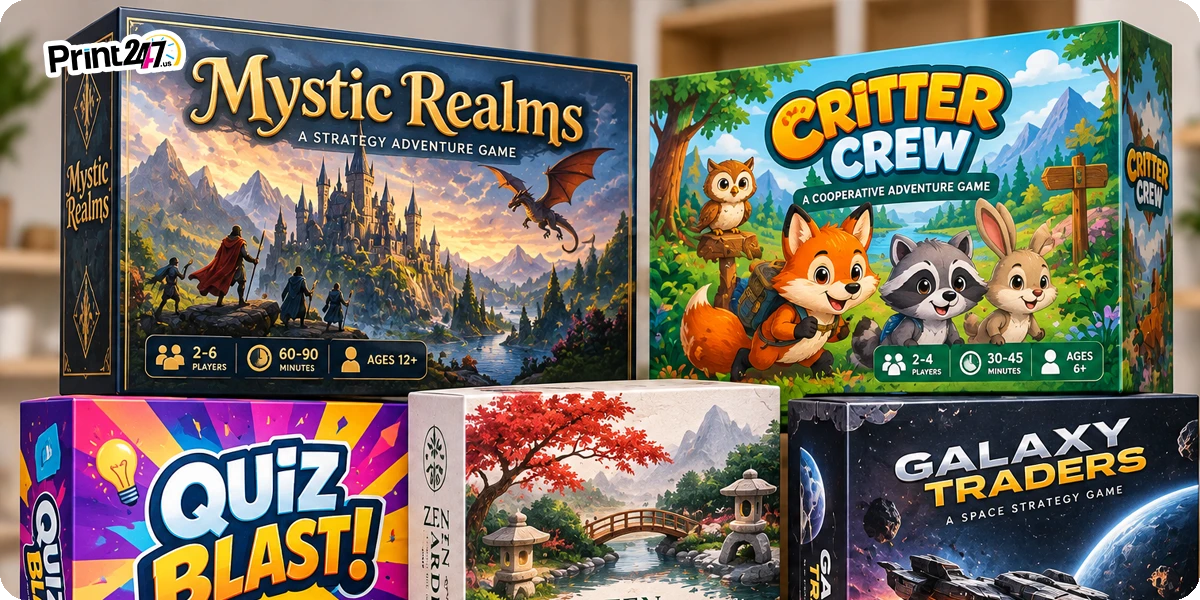
These boxes feature a two piece lid and base construction sized perfectly for cards and game boards.
Best for: Family board games, card games, and tabletop adventures.
Materials and finishes: Thick paperboard wrapped in printed paper. Board game boxes often use a custom insert layout to separate the cards and dice.
Why brands choose it: This style offers huge durability during e-commerce shipping. The shelf graphics are strong on all four sides as well. It is vital that you balance the final box weight against your shipping costs to maintain a healthy profit margin.
10. Fashion Doll Boxes (Barbie Style) for Retail Display
%20for%20Retail%20Display.webp?alt=media&token=42b48162-abb3-43d1-abe7-3bc6e574cc25 "Fashion Doll Boxes (Barbie Style) for Retail Display")
These are tall window front boxes with complex tray inserts that hold the doll, outfits, and tiny accessories. We use Barbie style only to describe the shape.
Best for: Fashion dolls and detailed clothing accessory sets.
Materials and finishes: Paperboard outer shell with large clear windows and wire or plastic internal ties.
Why brands choose it: The large window size and secure insert design protect the doll's styled hair and outfits perfectly. Creating a premium shelf look with this highly visible product display. The buyer can immediately see the high quality of the clothing details.
11. Doll Boxes for Collectible and Play Dolls
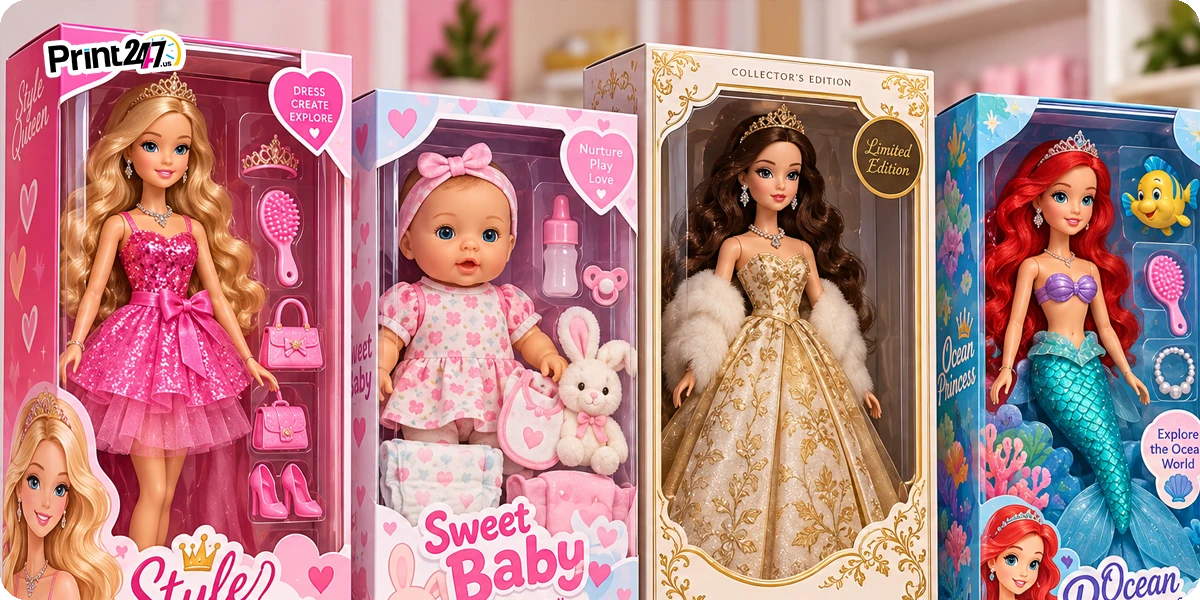
This category covers standard doll packaging. It ranges from simple cartons for everyday play to high-end presentation boxes.
Best for: Everyday play dolls and highly limited collector dolls.
Materials and finishes: Ranges from basic folding cartons to thick rigid boxes with foil stamping and FSC certified paper.
Why brands choose it: It offers a highly flexible cost range. The packaging on budget dolls can be distinguished easily from those on collector dolls. Toy boxes that tell a great story about the brand keep the toy completely safe.
How to Choose the Right Toy Boxes for Your Brand
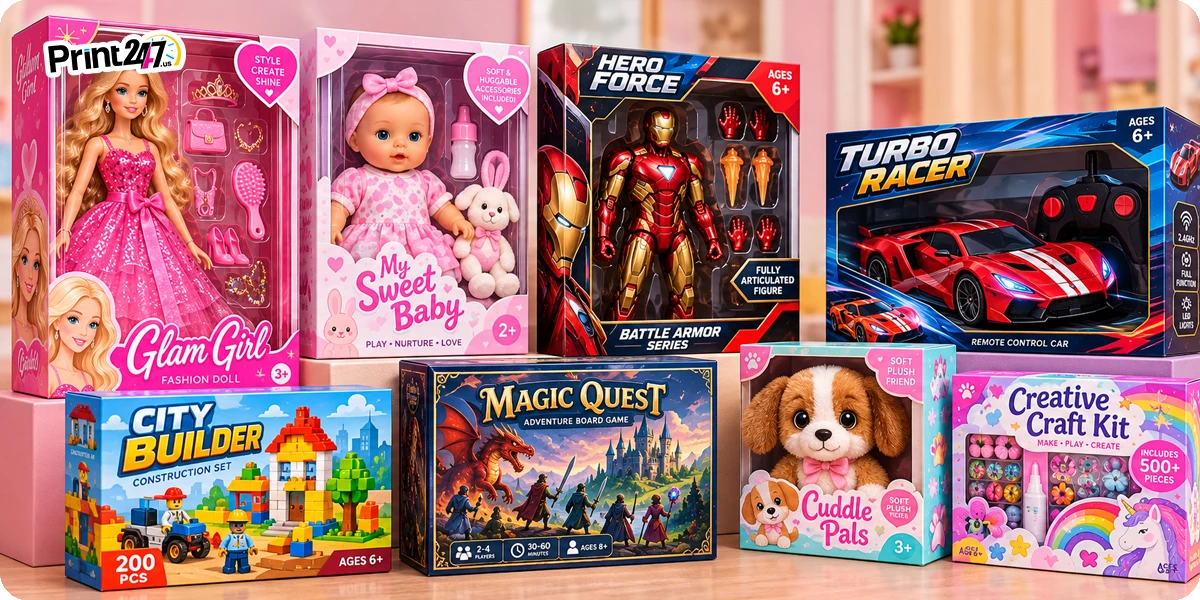
Picking the perfect design comes down to a simple decision framework. It is important to consider your product details, sales channels, budget, and brand goals. Rather than choosing just based on looks, consider these specific factors in order.
Product Size, Weight and Fragility
Heavy items need reinforced corrugated materials to prevent tearing. Delicate items require a rigid box or a secure custom insert to stop movement. For example, a fragile glass collectible pairs perfectly with a soft foam tray insert inside a thick chipboard shell.
Retail Shelf vs. E-commerce Shipping
Shelf ready packaging needs large windows and bright displays to catch the eye. E-commerce packaging must be durable, compact, and drop tested to survive the mail. Many brands actually need both. Amazon sellers usually prioritize shipping durability first to prevent negative reviews from crushed corners.
Budget, MOQ and Order Volume
Your style choice, print method, and premium finishes directly shape your final unit cost.
Finding low MOQ (minimum order quantity) options is vital for testing new products safely.
Ordering higher volumes lowers your price per box significantly. Ask your supplier how volume price breaks change your overall economics.
Brand Goals and Unboxing Experience
Your finish and structure choices communicate your positioning clearly. Glossy windows look playful, while matte finishes and foil stamps feel very premium. A fun, layered unboxing experience directly leads to better customer reviews, more social media sharing, and higher repeat purchase rates.
Conclusion
The right container protects your items and boosts your sales. You now know the main styles, from basic folding cartons to luxury rigid sets. Furthermore, you are capable of weighing your product needs, your sales channels, your budget limits, and your brand goals.
Follow these three practical next steps to move forward with your project today:
Define your exact product dimensions and identify any fragile parts.
Decide if your main goal is retail shelf appeal or e-commerce shipping strength.
Contact your supplier to request a physical prototype for testing
Get a Quick Quote

More Articles
 Bill ‘Hogg’ Ryan
Types of Toy Boxes: 11 Custom Packaging Styles for Brands
 Bill ‘Hogg’ Ryan
Rigid vs Corrugated vs Kraft: How to Choose Materials for Hair Dryer Boxes
 Bill ‘Hogg’ Ryan