


Carefully selected materials that deliver exceptional print quality, durability, and shelf presence.


 New
New











The Complete Apparel Packaging Guide for Startups
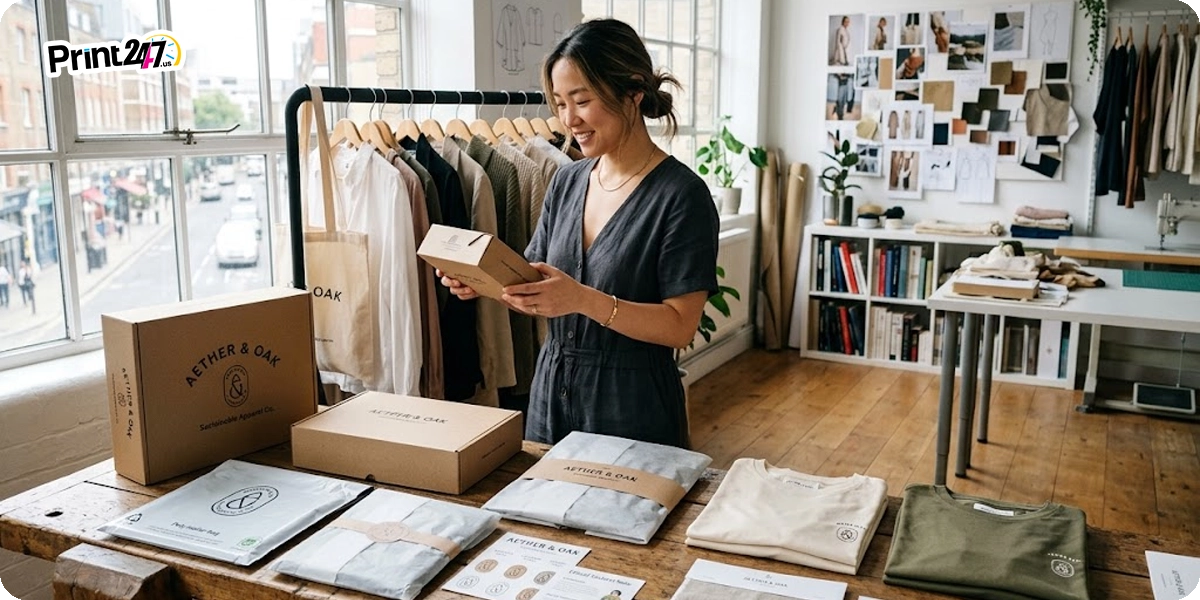
It takes more than designing trendy apparel or opening an online store. You also need packaging that gives your items a secure fit, strengthens your brand identity, and stays within budget.
The right apparel packaging can make a basic order feel more professional. It can help keep clothing clean, improve the unboxing experience, support gift orders, and make shipping easier. You do not need to invest in expensive packaging for your brand launch. Simple packaging that fits your garments and can grow with your business will do just fine.
Why Apparel Packaging Matters for Startup Brands
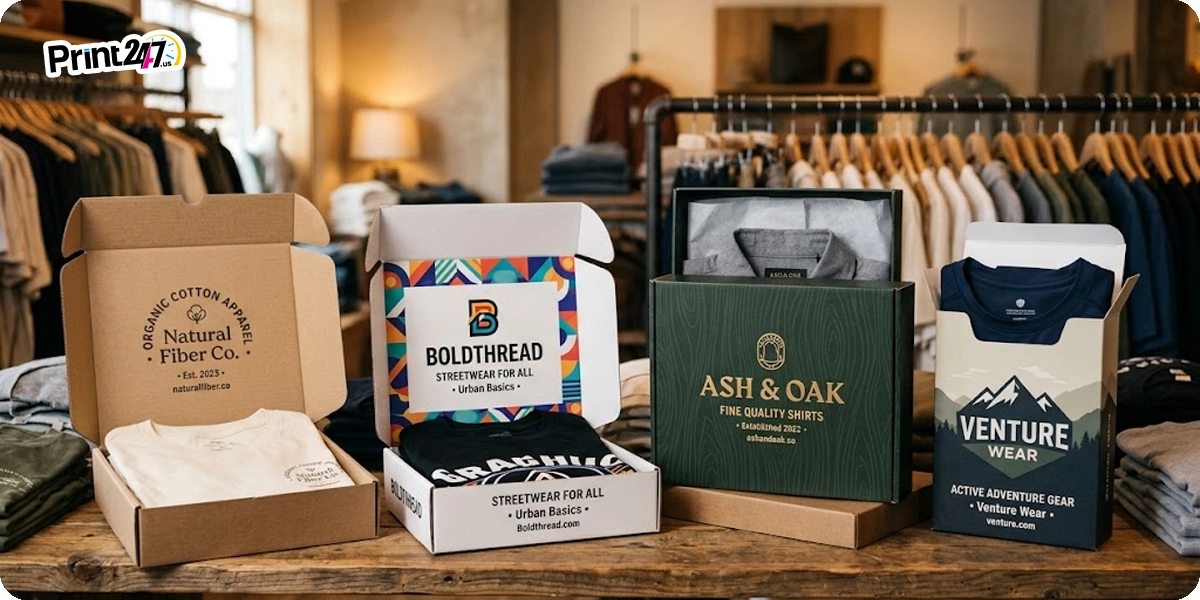
Apparel packaging is part of your customer experience. It is the first part of your brand that a customer sees after placing an online order.
Good packaging can help you to:
Protect clothing from dust and handling.
Keep garments folded and organized.
Reduce wrinkles during shipping.
Uplift your brand recognition.
Improve the unboxing experience.
Support easier returns and exchanges.
Keep fulfillment more consistent.
Present products better in retail stores.
A box that looks well-designed can improve the overall impression while a make-do box can leave a poor impression.
Build an Apparel Packaging System
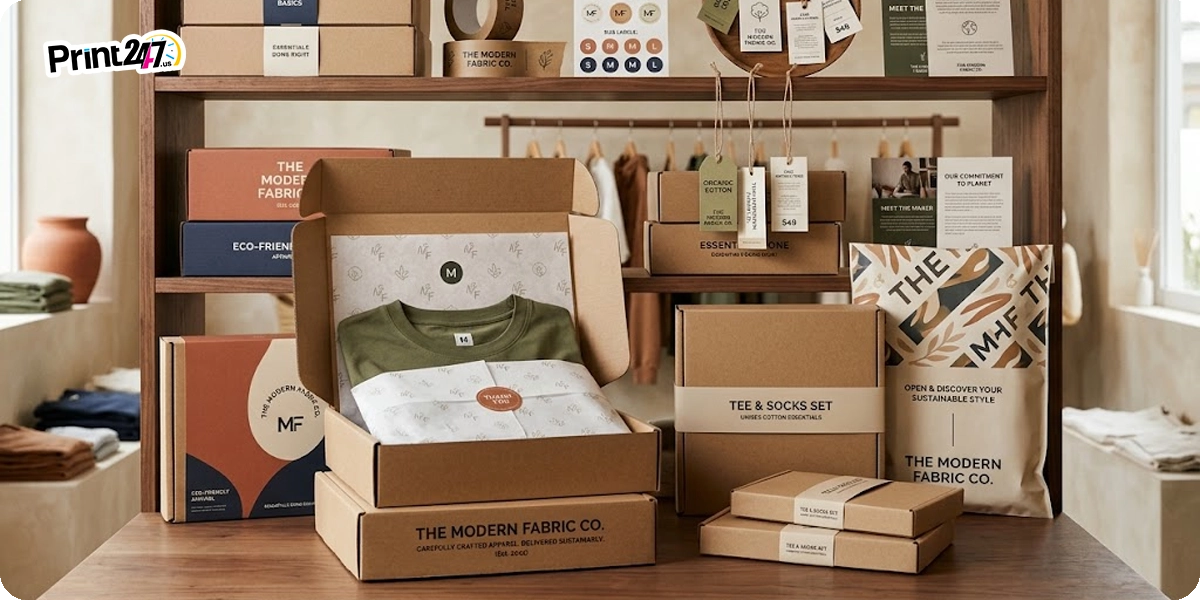
Your packaging should work as a complete system, not as a group of random extras.
A simple apparel packaging flow looks like this:
Fold the garment in a consistent way.
Add tissue paper, a sleeve, or an inner bag when needed.
Add a sticker, insert card, or printed sleeve for branding.
Place the garment inside the right mailer or box.
Add packing or return information.
Essential Apparel Packaging Types for Startups
Startup or not, we would like to recommend the following packaging types for your clothing packaging needs.
Poly and Paper Mailers
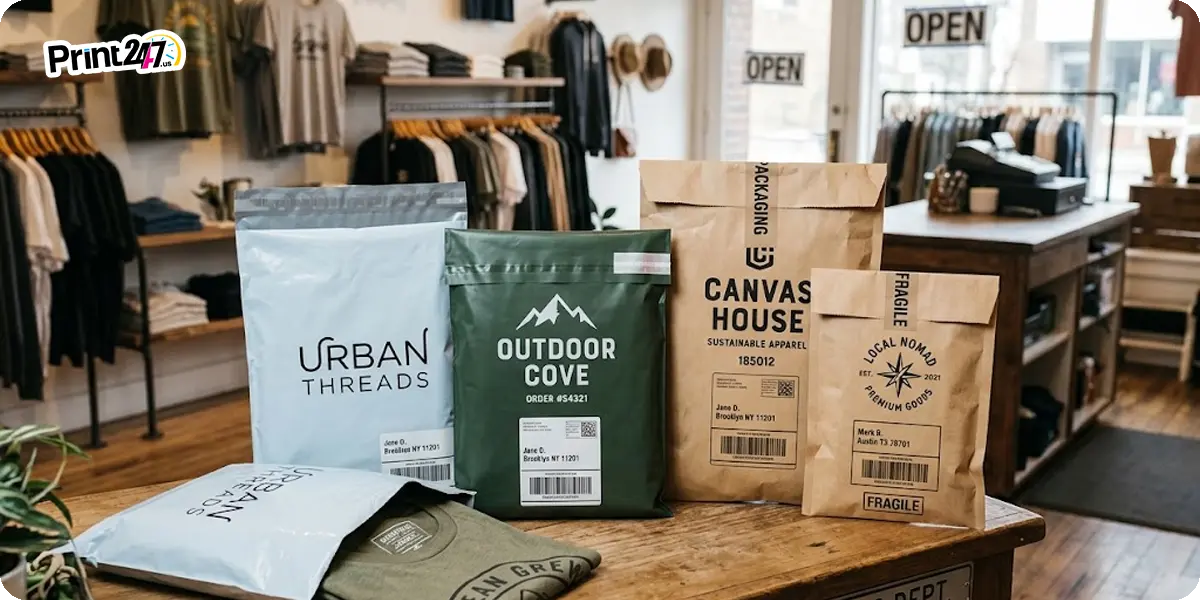
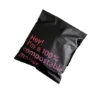
Poly mailers and paper mailers are ideal for shipping lightweight clothing orders. The reasons are simple; they take up less space and can work well for single t-shirts, activewear, and small apparel items. You can also add a branded touch to them with:
A logo sticker.
A printed shipping label.
Tissue paper inside.
A thank-you card.
A branded sleeve.
A custom printed mailer.
Corrugated Mailer Boxes
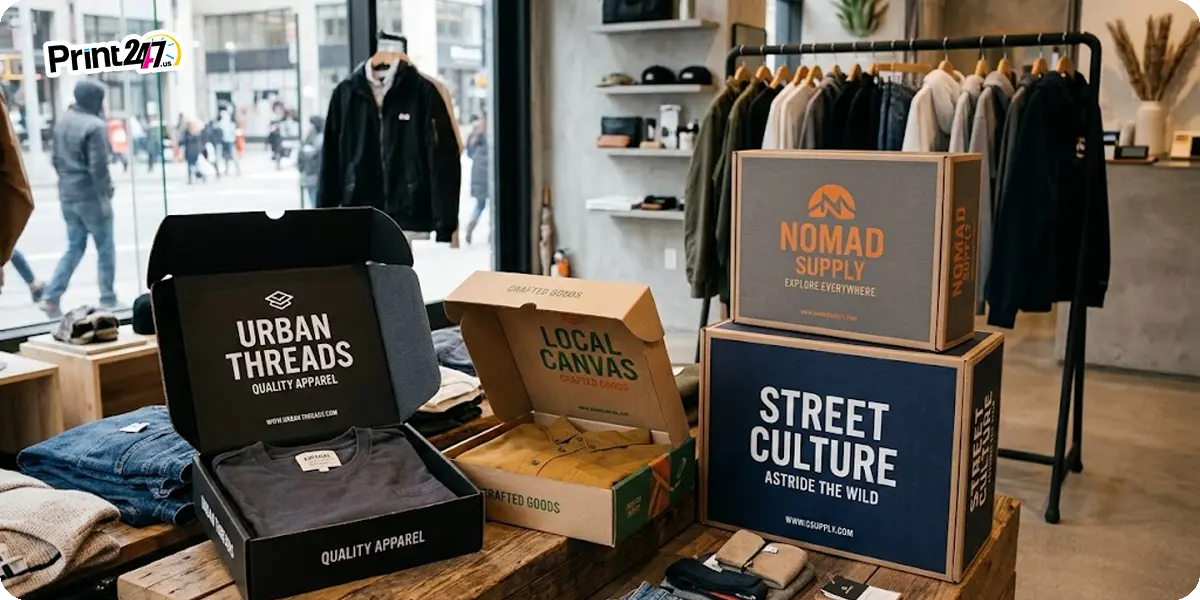
Corrugated mailer boxes are best for sending hoodies, sweatshirts, denim, bundles, and premium online orders. They offer a more durable structure than a thin mailer during shipping.
You can print the outside and inside of the box with your logo, brand colors, product message, or campaign artwork. A custom insert can help keep multiple items separated inside the box.
Folding Cartons
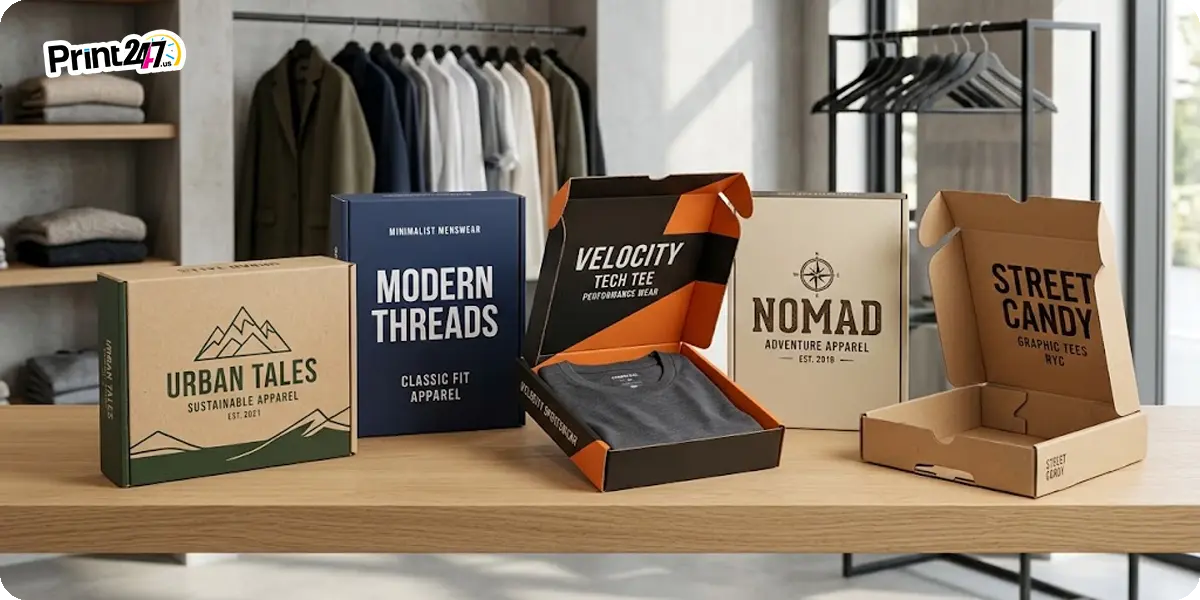
Folding cartons work great to show clothing items on retail shelves such as designer shirts, underwear, socks, gift items, and more.
These boxes provide space for:
Brand artwork.
Product details.
Collection information.
Size details.
Care messages.
QR codes.
Promotional offers.
Rigid Gift Boxes
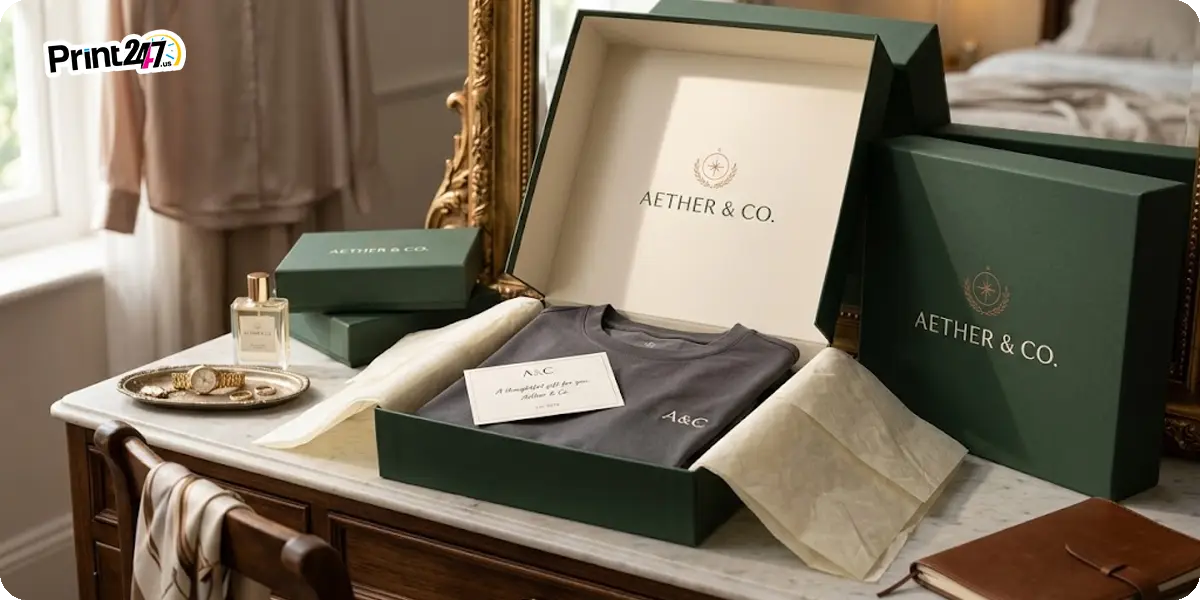
Rigid boxes are made from firm board and create a premium presentation. They are useful for luxury apparel, gift products, limited collections, influencer kits, and special launches.
You can choose two-piece boxes, drawer boxes, magnetic boxes, or sleeve and tray structures. Rigid boxes cost more than regular folding cartons. Plus, they take up more storage space. Use them when the product price and customer experience support the added cost.
Tissue Paper, Stickers, and Seals
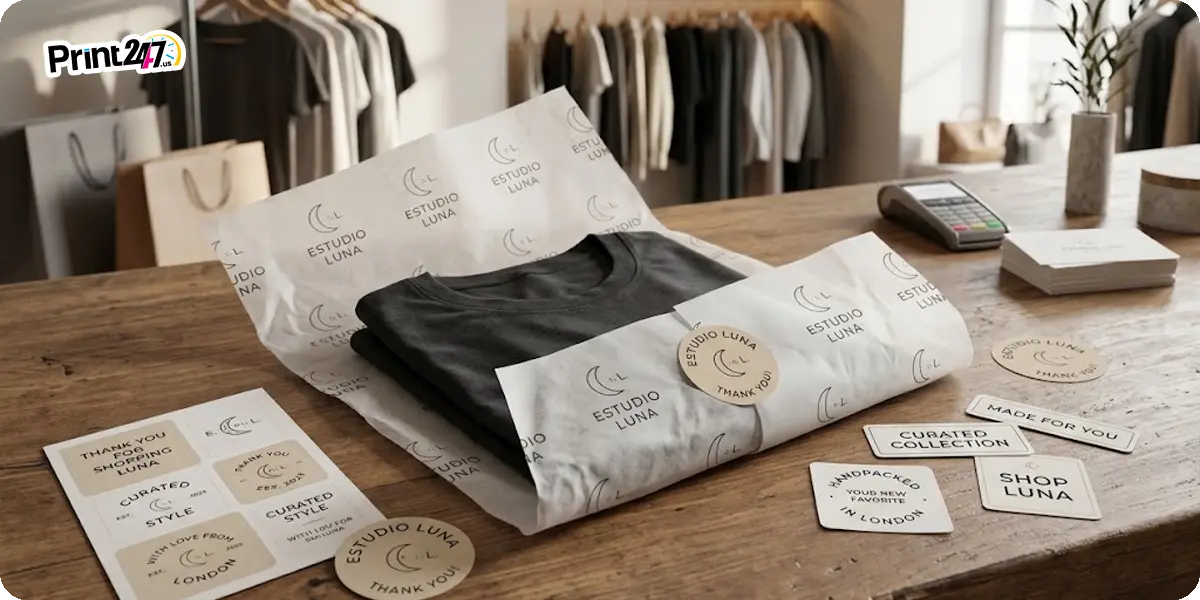
Tissue paper is a simple way to make a folded garment look more polished. It can also provide a light layer of surface protection during packing.
On the other hand, a logo sticker can seal the tissue and add a clear brand detail right in front.
You can print short messages such as:
Thank you for your order.
Made for you everyday.
Open and enjoy.
Tag us in your unboxing.
Keep the message short so it looks clean.
Sleeves, Belly Bands, and Insert Cards
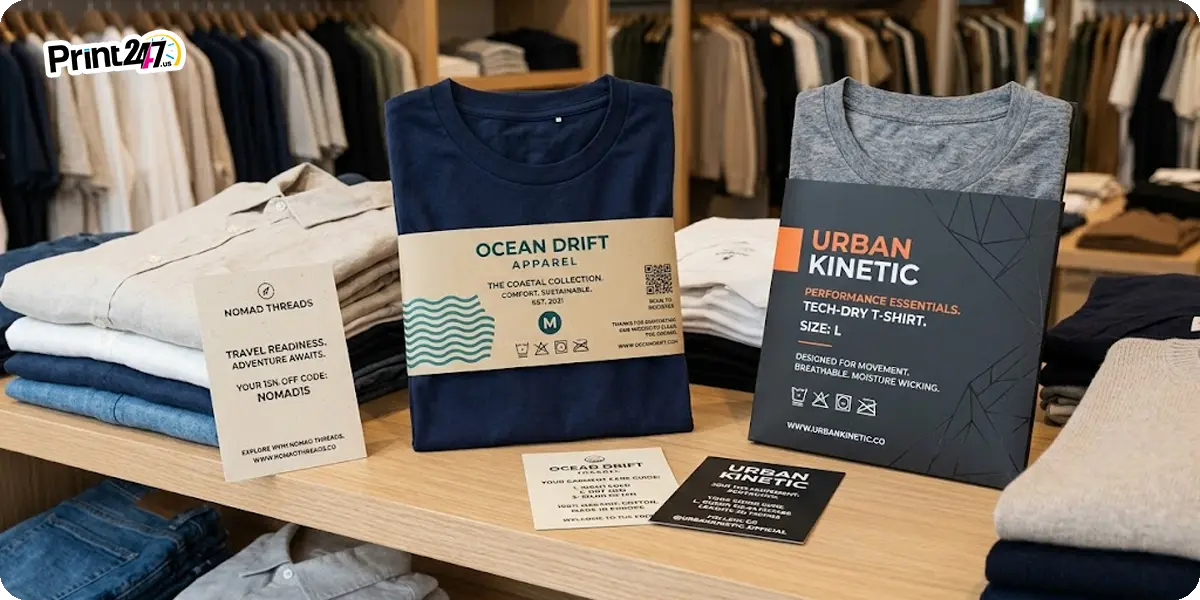
A sleeve or belly band wraps around a folded garment or plain box. It adds branding without requiring a fully printed package.
You can use a sleeve to show your branding credentials, brand story, and product copy.
Insert cards can be added to influence repeat purchases & customer communication.
Apparel Packaging for E-Commerce, Retail, Wholesale, and Gifts
The right package changes based on how customers receive the product.
Sales channel | Main goal | Recommended features |
E-commerce | Safe and efficient delivery | Right-sized mailers, secure closures, return-ready options |
Retail | Product presentation and identification | Printed boxes, sleeves, neat folding, clear size details |
Wholesale | Fast receiving and organized distribution | Consistent unit packs, outer cartons, organized bundles |
Pop-up events | Easy carrying and quick presentation | Bags, tissue, stickers, simple boxes |
Gift and premium | Memorable unboxing | Tissue paper, insert cards, rigid boxes, premium finishes |
Start with a Packaging Budget That Can Grow
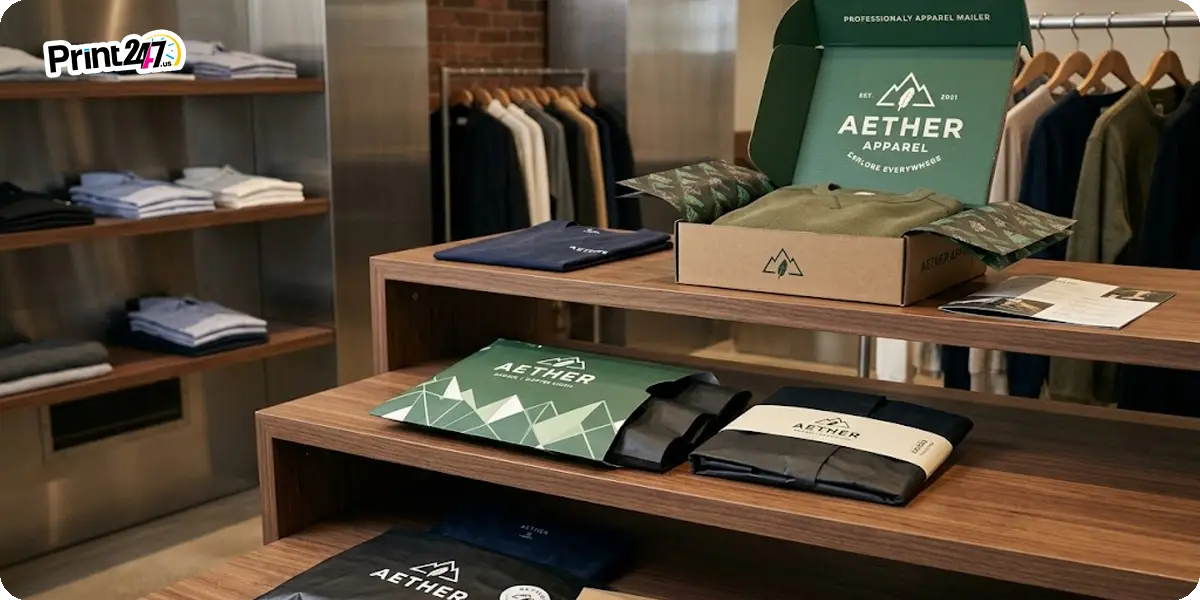
Your packaging should match your product price, order volume, and brand position.
Lean launch
A startup can begin with:
Plain or kraft mailers.
Tissue paper.
Branded stickers.
One insert card.
Standard shipping boxes for larger orders.
This setup creates a consistent experience without a large upfront packaging investment.
Growing brand
As your order volume grows, consider:
Printed mailers.
Custom tissue paper.
Branded sleeves.
Custom insert cards.
Printed boxes for premium products.
Size-specific mailers.
Premium line
A premium apparel line may use:
Rigid boxes.
Magnetic closures.
Custom trays.
Foil logos.
Soft-touch coating.
Reusable garment bags.
Premium tissue and ribbons.
Do not go for additional features just because they can be added. Go for things that customers notice while staying on budget.
Select the Right Size and Material for Your Apparel Packaging
A properly sized package can help:
Reduce empty space.
Limit garment movement.
Lower shipping volume.
Reduce the need for extra filler.
Improve storage.
Create a neater unboxing.
Material choice also matters.
Paperboard works well for folding cartons and retail boxes.
Kraft board supports a natural and simple appearance.
Corrugated board provides stronger support for shipping and heavier garments.
Rigid board creates a premium presentation for luxury and gift products.
At Print247, we offer apparel and fashion packaging materials such as cardboard, white kraft, black kraft, corrugated board, rigid board, and other options for different product packaging and branding needs.
Make Packaging Work for Returns and Exchanges
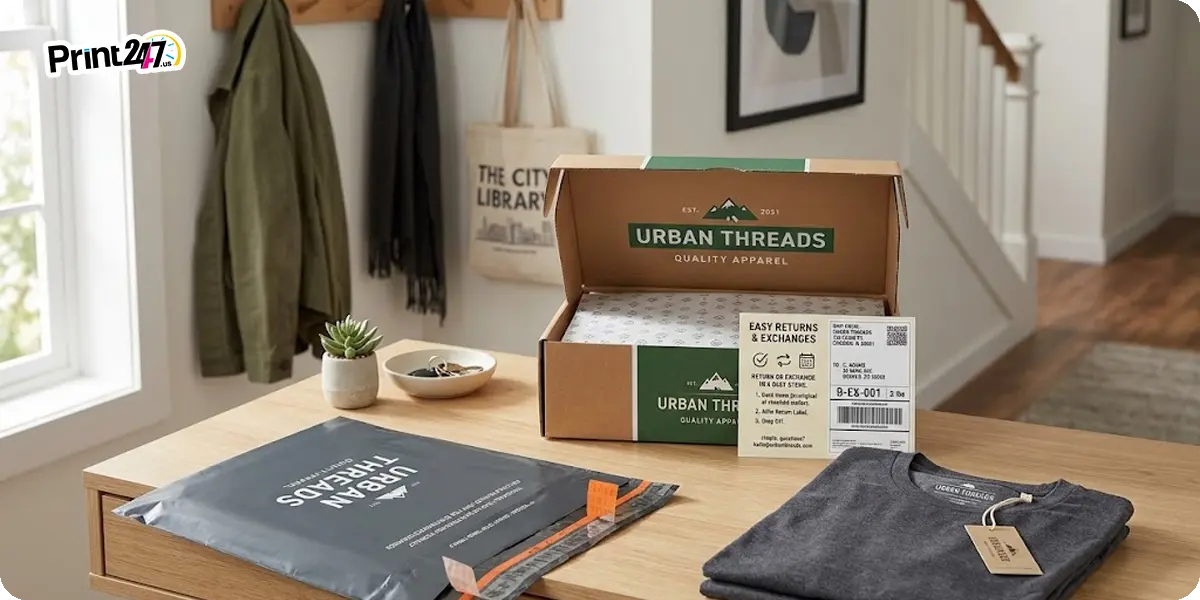
Apparel brands often deal with size exchanges and returns. Your packaging should make the return process easier rather than harder.
Consider:
Resealable mailers.
Boxes that can be closed again.
Return instructions inside the package.
A packing slip with the order number.
Enough space to refold the product.
Packaging that protects the garment during a second shipment.
Avoid closures that are difficult to open without tearing the package. If customers cannot reuse the original packaging, they may use a poor replacement package for the return.
Apparel Packaging Mistakes Startups Should Avoid
Startups should avoid these common problems:
Picking packaging before measuring the folded garment.
Using oversized boxes.
Using subpar packaging.
Overpacking.
Adding too many inserts.
Ignoring return and exchange needs.
Using packaging that does not match the brand.
Making unsupported environmental claims.
Create Custom Apparel Packaging with Print247
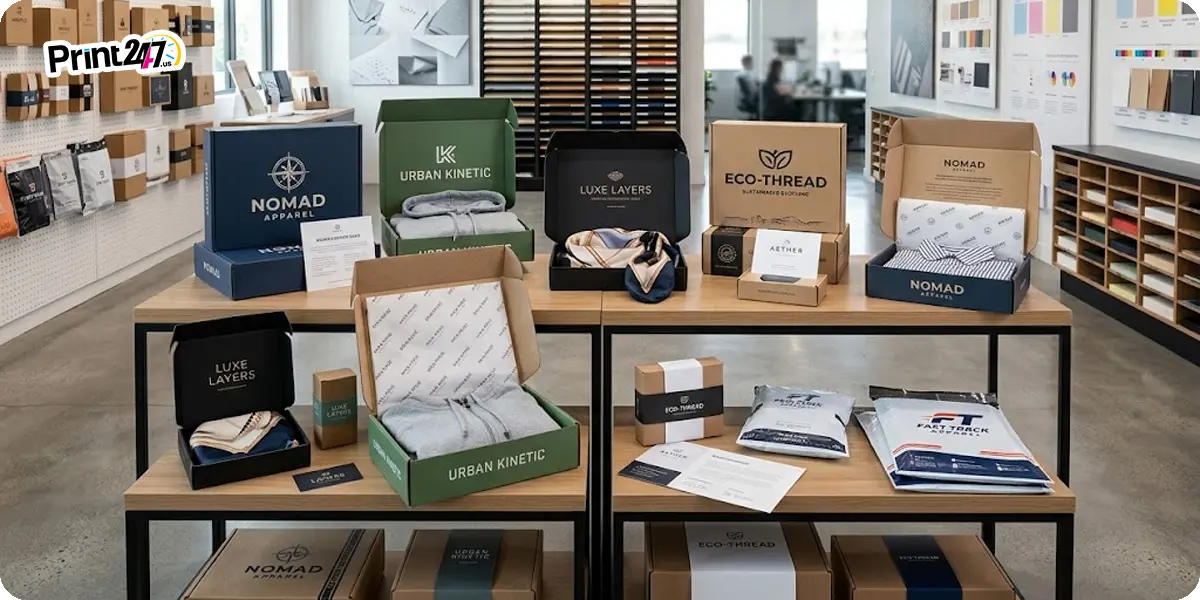
We help startups as well as established clothing brands to create custom apparel and fashion packaging for online orders, retail products, gift sets, and wholesale shipments.
You can order:
Mailer boxes.
Folding cartons.
Corrugated shipping boxes.
Kraft boxes and mailers.
Rigid gift boxes.
Custom sleeves.
Insert cards.
Custom inserts and dividers.
We also give creative freedom to all our customers. You can customize the apparel box size, material, artwork, finish, and style.
Print247 also offers custom t-shirt packaging in styles such as mailer boxes, two-piece boxes, sleeve boxes, tuck-end boxes, and other structures. Custom sizes can be made for single shirts, bundles, and different apparel orders.
Discuss your product dimensions, quantity, artwork, sales channel, and shipping needs with our team. We can help you choose packaging that fits your product and brand perfectly.
Conclusion
The best apparel packaging for a startup doesn’t have to be the most expensive one. It is a package that fits the garment, protects it during delivery, matches your brand, and works with your budget.
Start with simple branded packaging. And as your brand grows, you can further add printed mailers, custom tissue paper, sleeves, rigid boxes, inserts, and much more. The goal is to build packaging that supports your clothing products without adding unnecessary cost.
FAQs
Should I use mailers or boxes for my clothing items?
Both have their own specific uses. You can use mailers for lightweight orders. Or you can use boxes for hoodies, denim, multiple garments, gifts, and products that need more structure.
What is the best packaging for shipping t-shirts?
A poly mailer, paper mailer, kraft mailer, or small custom mailer box can work for t-shirts. The best choice depends on the shirt quantity, product value, shipping method, and desired presentation.
How can a startup make apparel packaging look branded on a budget?
Use tissue paper, a logo sticker, a branded insert card, and a consistent color scheme. These options can make a plain mailer feel more professional without requiring a fully printed box.
How should apparel packaging support returns and exchanges?
Use resealable mailers or boxes that can be closed again. Include clear return instructions and leave enough space for the customer to refold and repack the garment.
Can you create custom apparel packaging for online and retail orders?
Yes. We create custom apparel boxes, mailer boxes, folding cartons, kraft packaging, rigid gift boxes, sleeves, tissue paper, inserts, and other packaging for e-commerce, retail, wholesale, and gift orders.
Get a Quick Quote

More Articles
 Bill ‘Hogg’ Ryan
5 Mushroom Supplement Packaging Ideas That Stand Out in a Crowded Market
 Bill ‘Hogg’ Ryan
Are Electrolyte Stick Packs Better Than Tubs for Your Brand?
 Bill ‘Hogg’ Ryan